
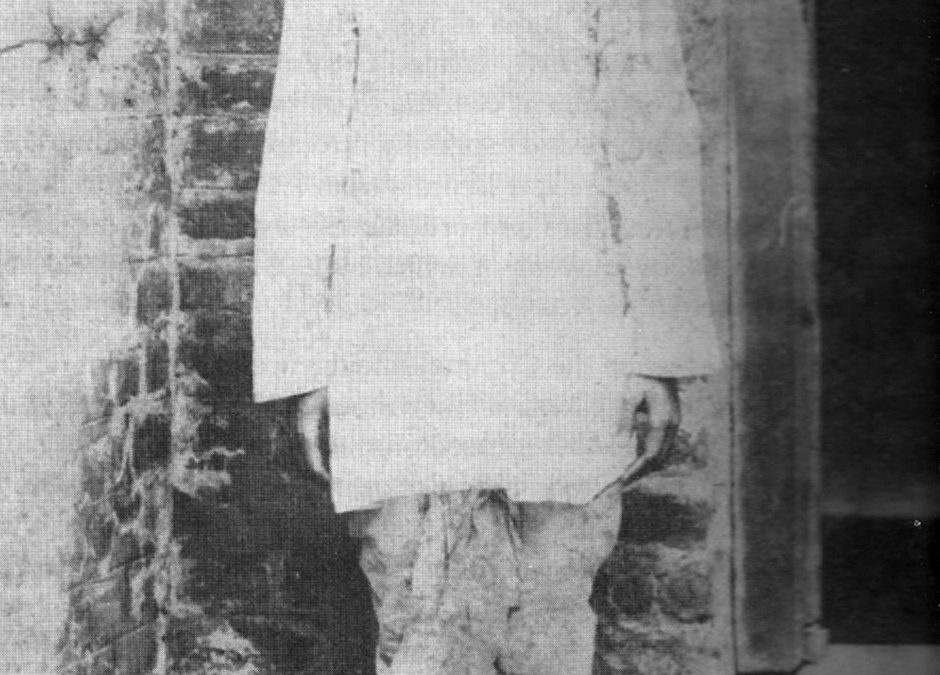
Khudiram Bose (3 December 1889 – 11 August 1908) was an Indian revolutionary from Bengal and one of the youngest people executed by the British in India. In April 1908 he and Prafulla Chaki threw a bomb at a carriage at Muzaffarpur in Bihar, believing it to carry a magistrate notorious for his harsh sentences on nationalists. The carriage held two British women, who died. Khudiram was arrested, tried and hanged at eighteen, and went to the gallows smiling.
Quick Facts
| Full name | Khudiram Bose |
| Born | 3 December 1889, Midnapore district, Bengal |
| Died | 11 August 1908 (aged 18), Muzaffarpur Jail, Bihar |
| Organisation | Jugantar / Anushilan Samiti |
| Known for | Muzaffarpur bombing (1908) |
Early Life
He was born in a village in Midnapore, the only surviving son of Trailokyanath Bose, a revenue official, after three daughters. Following a local custom meant to protect a child whose brothers had died, he was symbolically “sold” to his eldest sister for a handful of grain, khud, from which his name comes. Both parents died before he was seven, and that sister brought him up. He went to school at Tamluk and Midnapore.
As a boy he heard public lectures by visiting nationalists and joined a local gymnasium and society run by revolutionaries. The partition of Bengal in 1905 drew him fully into the movement. He picketed shops selling foreign cloth and distributed seditious pamphlets; arrested for this in 1906, he was let off because of his age.
Muzaffarpur
Douglas Kingsford, the chief presidency magistrate of Calcutta, had sent editors to prison and ordered a fifteen-year-old boy to be flogged. The Jugantar group resolved to kill him. A book bomb sent to him failed, and he was transferred to Muzaffarpur as district judge. Khudiram and Prafulla Chaki were sent after him and watched his movements for about three weeks.
On the evening of 30 April 1908 they waited outside the European Club. A carriage resembling Kingsford’s came out, and Khudiram threw the bomb. It carried the wife and daughter of a barrister, Pringle Kennedy; both died of their injuries. The two young men fled in different directions. Khudiram walked through the night along the railway line and was seized the next morning at a station some twenty-five miles away, where his muddy feet and exhaustion drew attention. Chaki, cornered two days later, shot himself.
Trial and Execution
Khudiram took full responsibility in his statement. Local lawyers defended him without fee and argued that so young a boy could not have made the bomb or planned the attack alone. He was sentenced to death, and the High Court confirmed the sentence. On the morning of 11 August 1908 he was hanged in Muzaffarpur jail. Newspapers reported that he walked to the scaffold erect and cheerful.
Legacy
The deaths of two innocent women were widely regretted, including by nationalists. But the boy’s courage moved the country. Bal Gangadhar Tilak wrote in his defence and was sentenced to six years’ transportation for sedition. In Bengal weavers wove his name into the borders of dhotis, and the folk song “Ekbar biday de Ma”, a farewell to his mother, is still sung. The railway station where he was arrested and the jail where he died now carry his name.
Frequently Asked Questions
When and where was Khudiram Bose born?
Khudiram Bose was born on 3 December 1889 in Midnapore district, Bengal.
When did Khudiram Bose die?
Died: 11 August 1908 (aged 18), Muzaffarpur Jail, Bihar.
What is Khudiram Bose known for?
Known for: Muzaffarpur bombing (1908).
Featured image: Khudiram Bose in 1905. Photo by an unknown photographer, in the public domain, via Wikimedia Commons.



