
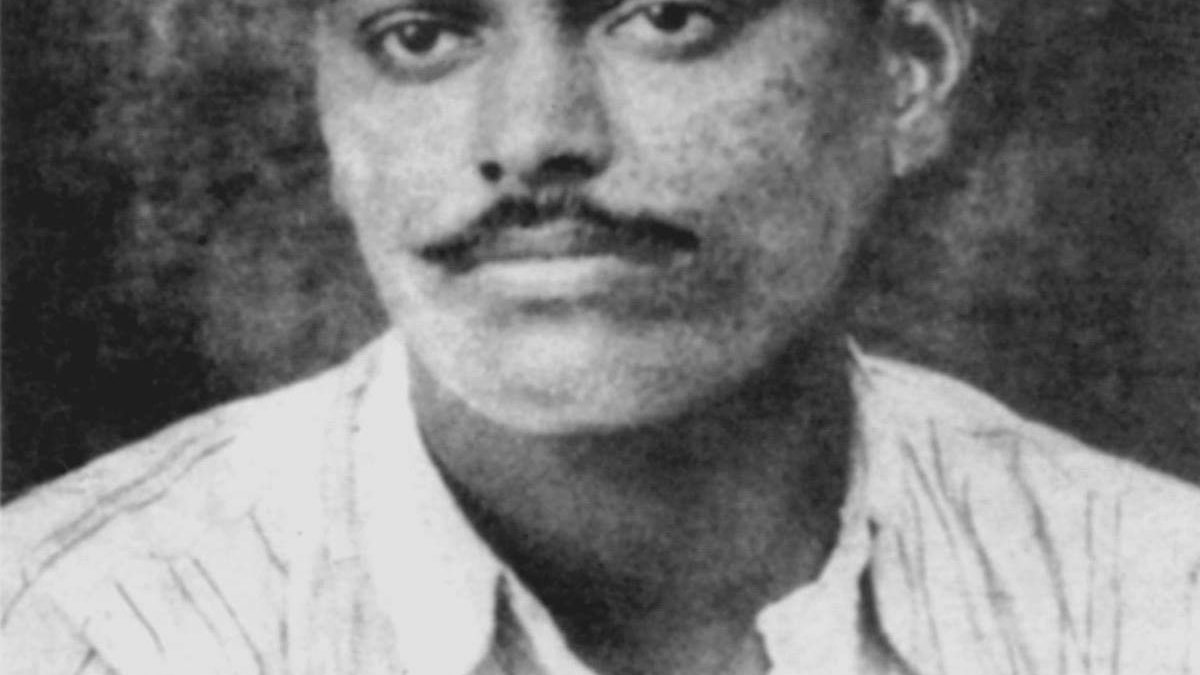
Chandrashekhar Azad (23 July 1906 – 27 February 1931) was an Indian revolutionary and leader of the Hindustan Socialist Republican Association (HSRA). He was a mentor and comrade of Bhagat Singh. Famous for vowing that he would never be captured alive by the British, he took part in the Kakori train action and many other revolutionary acts. He died in a shoot-out with police in Allahabad, true to his word.
Quick Facts
| Birth name | Chandrashekhar Tiwari |
| Born | 23 July 1906, Bhavra, Alirajpur, present-day Madhya Pradesh, India |
| Died | 27 February 1931, Alfred Park, Allahabad (aged 24) |
| Known as | Azad (“the Free”) |
| Organisations | Hindustan Republican Association; Hindustan Socialist Republican Association |
| Comrades | Ram Prasad Bismil, Bhagat Singh, Sukhdev, Rajguru |
| Memorial | Chandrashekhar Azad Park, Prayagraj |
Early Life
Chandrashekhar was born in the village of Bhavra in present-day Madhya Pradesh. His family came from Unnao in Uttar Pradesh. As a teenager he went to Varanasi to study Sanskrit, but he was soon swept up in the national movement.
Becoming “Azad”
In 1921, aged about 15, Chandrashekhar was arrested for taking part in Mahatma Gandhi‘s Non-Cooperation Movement. When a magistrate asked his name, he replied “Azad” (free). He gave his father’s name as “Swatantrata” (independence) and his home as “jail”. He was sentenced to flogging and cried “Bharat Mata ki Jai” with every stroke. From then on he was known as Azad.
Revolutionary Career
After the Non-Cooperation Movement was called off in 1922, Azad joined the Hindustan Republican Association, founded by Ram Prasad Bismil and others. He took part in the Kakori train action of August 1925, in which revolutionaries seized government money from a train. Most of the group were later caught, and Bismil and three others were hanged, but Azad escaped and became the organisation’s leading figure.
In 1928 Azad, Bhagat Singh and their comrades reorganised the group as the Hindustan Socialist Republican Association. Azad took part in the December 1928 shooting of police officer John Saunders in Lahore, covering the escape of Bhagat Singh and Rajguru. He also helped plan an attempt to bomb the Viceroy’s train in 1929. A master of disguise, he evaded the police for years.
Death
On 27 February 1931, while he was meeting a colleague in Alfred Park in Allahabad, police surrounded the park after a tip-off. Azad fought back alone, wounding officers and allowing his companion to escape. Down to his last bullet and determined never to be taken alive, he shot himself. He was 24. The park was later renamed Chandrashekhar Azad Park, and his pistol is displayed at the Allahabad Museum.
Legacy
Frequently Asked Questions
When and where was Chandrashekhar Azad born?
Chandrashekhar Azad was born on 23 July 1906 in Bhavra, Alirajpur, present-day Madhya Pradesh, India.
When did Chandrashekhar Azad die?
Died: 27 February 1931, Alfred Park, Allahabad (aged 24).
Featured image: Chandrashekhar Azad, an archival portrait from the Punjab State Archives. Photo: unknown photographer, Punjab State Archives, licensed under CC BY-SA 4.0, via Wikimedia Commons.



