
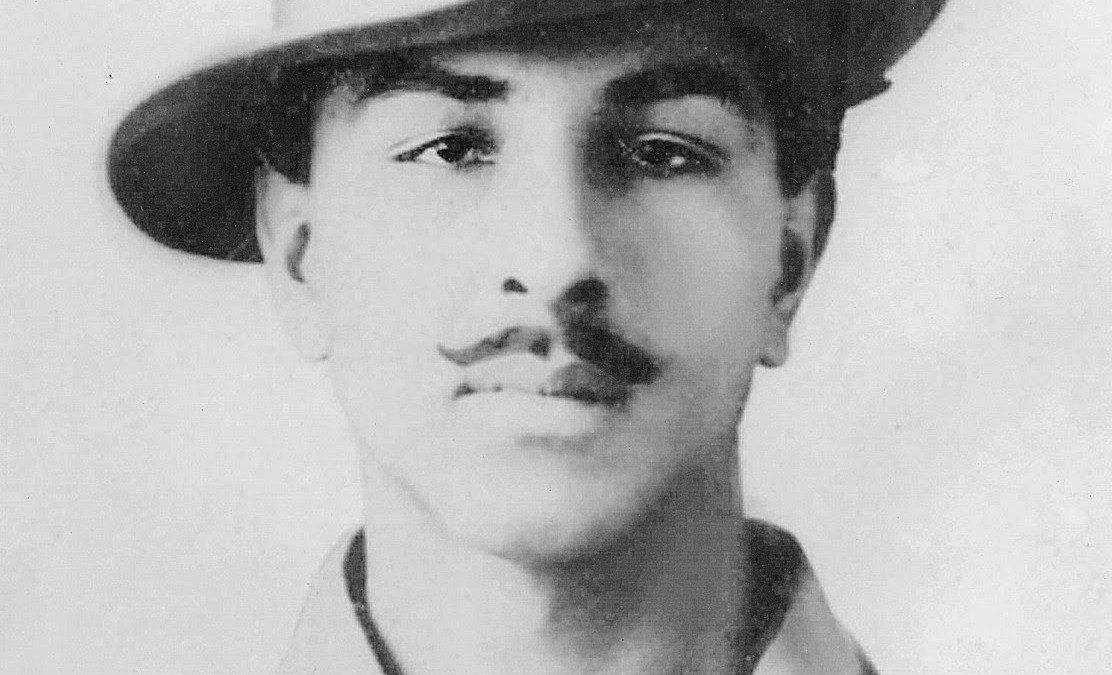
Bhagat Singh (28 September 1907 – 23 March 1931) was an Indian revolutionary and one of the most celebrated heroes of the freedom struggle. Known as Shaheed-e-Azam (“the Greatest Martyr”), he and his comrades carried out bold actions against British rule, including a protest bombing in the Central Legislative Assembly. He was hanged at the age of 23. His courage, his writings and his slogan “Inquilab Zindabad” (“Long live the revolution”) continue to inspire millions.
Quick Facts
| Full name | Bhagat Singh Sandhu |
| Born | 28 September 1907, Banga, Lyallpur district, Punjab (now in Pakistan) |
| Died | 23 March 1931, Lahore Central Jail (aged 23) |
| Known as | Shaheed-e-Azam |
| Organisations | Naujawan Bharat Sabha; Hindustan Socialist Republican Association (HSRA) |
| Comrades | Sukhdev, Rajguru, Chandrashekhar Azad, Batukeshwar Dutt |
| Father | Kishan Singh |
| Famous slogan | “Inquilab Zindabad” |
| Remembered on | 23 March, Shaheed Diwas (Martyrs’ Day) |
Early Life
Bhagat Singh was born into a Sikh family of patriots in Punjab. His father, Kishan Singh, and his uncle, Ajit Singh, were active in the freedom movement. As a 12-year-old he visited Jallianwala Bagh after the 1919 massacre, an experience that shaped his life. He studied at the National College in Lahore, where he read widely on history, socialism and revolutions around the world.
Revolutionary Career
Disillusioned when Mahatma Gandhi called off the Non-Cooperation Movement in 1922, Bhagat Singh turned to revolutionary politics. In 1926 he helped found the Naujawan Bharat Sabha to mobilise young people. In 1928 he joined Chandrashekhar Azad and others in renaming the Hindustan Republican Association as the Hindustan Socialist Republican Association, giving it a socialist goal.
In October 1928 the nationalist leader Lala Lajpat Rai was badly injured in a police baton charge during a protest in Lahore against the Simon Commission, and he died weeks later. Bhagat Singh and his comrades decided to kill the police superintendent they held responsible, James Scott. In December 1928, in a case of mistaken identity, they shot dead a young assistant superintendent, John Saunders. Bhagat Singh escaped Lahore in disguise.
On 8 April 1929, Bhagat Singh and Batukeshwar Dutt threw two low-intensity bombs into the Central Legislative Assembly in Delhi, deliberately aiming away from people. They showered leaflets, shouted “Inquilab Zindabad” and made no attempt to escape. They wanted to use their trial to spread their message: “It takes a loud voice to make the deaf hear.”
In prison Bhagat Singh led a long hunger strike demanding better treatment for political prisoners. The strike drew nationwide support, especially after his comrade Jatin Das died after 63 days of fasting. In the Lahore Conspiracy Case he, Sukhdev and Rajguru were sentenced to death for the Saunders killing. Despite appeals for clemency, the three were hanged in Lahore jail on the evening of 23 March 1931. Their bodies were secretly cremated near Hussainiwala on the banks of the Sutlej.
Ideas and Writings
Bhagat Singh was a deep thinker as well as a revolutionary. He wrote articles and letters on freedom, communalism and social justice, and his prison notebook is still studied. His essay “Why I Am an Atheist”, written in jail in 1930, is one of his best-known works. He believed independence should also mean freedom from exploitation for workers and peasants.
Legacy
Frequently Asked Questions
When and where was Bhagat Singh born?
Bhagat Singh was born on 28 September 1907 in Banga, Lyallpur district, Punjab (now in Pakistan).
When did Bhagat Singh die?
Died: 23 March 1931, Lahore Central Jail (aged 23).
Featured image: Bhagat Singh, photographed in Delhi in April 1929, aged 21. Photo by Ramnath Photographers, Delhi, in the public domain, via Wikimedia Commons.



