
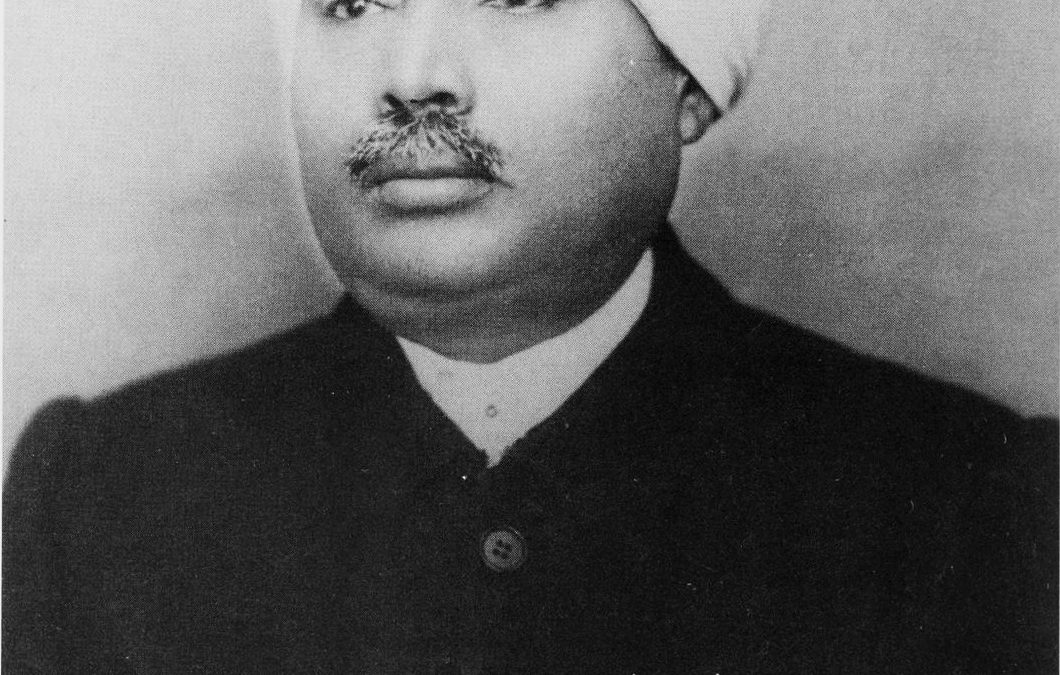
Lala Lajpat Rai (28 January 1865 – 17 November 1928) was an Indian nationalist leader, writer and social reformer from Punjab, known as Punjab Kesari, the Lion of Punjab. With Bal Gangadhar Tilak and Bipin Chandra Pal he formed the trio called Lal-Bal-Pal, the leaders of the assertive wing of the Indian National Congress. He died of injuries received when police beat him during a protest against the Simon Commission.
Quick Facts
| Full name | Lajpat Rai |
| Born | 28 January 1865, Dhudike, Ferozepur district, Punjab (now in Moga district) |
| Died | 17 November 1928, Lahore (aged 63) |
| Occupation | Lawyer, politician, writer, social reformer |
| Known for | Lal-Bal-Pal; Swadeshi movement; protest against the Simon Commission |
| Organisations | Indian National Congress, Arya Samaj, Servants of the People Society, All India Trade Union Congress |
| Notable books | Young India, Unhappy India, England’s Debt to India |
| Spouse | Radha Devi |
Early Life
He was born at his mother’s village, Dhudike. His father, Munshi Radha Krishan, was a teacher of Urdu and Persian in government schools, a man of wide religious curiosity; his mother, Gulab Devi, was a devout Sikh. He studied law at Government College, Lahore, and began practice at Hisar, where he was elected to the municipal board.
The Arya Samaj
At Lahore he joined the Arya Samaj, the Hindu reform movement founded by Dayananda Saraswati, and it shaped his life. He helped found the Dayanand Anglo-Vedic College in Lahore in 1886 and raised money for it across Punjab. He organised relief in the famines of 1897 and 1899 and after the Kangra earthquake of 1905, and set up orphanages so that destitute children would not be taken by missionaries.
He was also among those behind the founding of the Punjab National Bank in 1894.
Career
The extremist leader
After the partition of Bengal in 1905 he became, with Tilak and Pal, the voice of those in the Congress who wanted boycott, swadeshi and self-rule, against the moderates’ policy of petitions. In 1907, after agitation among the peasants of Punjab over land laws, the government deported him to Mandalay in Burma without trial. He was released after six months for want of evidence.
America
He left India in 1914 and, when war broke out, could not return. He spent five years in the United States, where he founded the Indian Home Rule League of America in New York, edited a journal and wrote Young India, which was banned in Britain and India.
Return
He came home in 1920 to a hero’s welcome and presided over the special session of the Congress at Calcutta that adopted Gandhi‘s programme of non-cooperation. The same year he was the first president of the All India Trade Union Congress. He was jailed from 1921 to 1923. He founded the Servants of the People Society in Lahore to train full-time national workers. He disagreed with Gandhi’s suspension of the movement and later with the Congress’s approach to communal questions, joined the Swaraj Party, and worked for a time with the Hindu Mahasabha.
The Simon Commission
In 1928 the British government sent a commission under Sir John Simon to report on constitutional reform. It had no Indian member, and the country boycotted it. On 30 October 1928, when the commission arrived at Lahore, Lajpat Rai led a silent procession carrying black flags. The police charged with lathis, and the superintendent, James Scott, struck him personally on the chest.
That evening he told a meeting: “The blows struck at me today will be the last nails in the coffin of British rule in India.” He never recovered, and died of a heart attack on 17 November.
Aftermath
A group of young revolutionaries led by Bhagat Singh vowed to avenge him. On 17 December 1928, intending to kill Scott, they shot dead another police officer, J. P. Saunders, in Lahore.
Legacy
A hospital for women in Lahore, which he had planned in memory of his mother, a university of veterinary science in Hisar, and markets, colleges and roads across India bear his name. His birthday is observed in Punjab and beyond.
Featured image: Lala Lajpat Rai, from the Punjab State Archives. Photo by Punjab State Archives, in the public domain, via Wikimedia Commons.



