
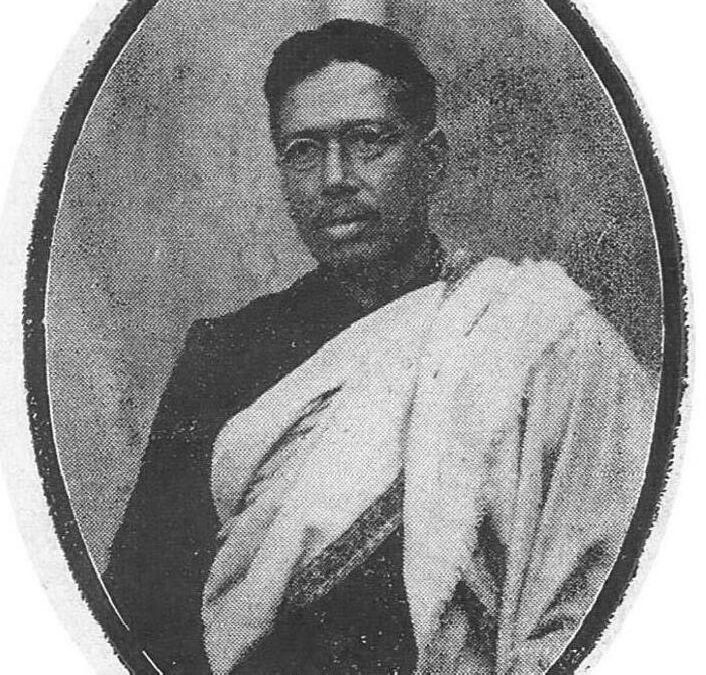
Bipin Chandra Pal (7 November 1858 – 20 May 1932) was an Indian nationalist, orator, journalist and writer, one of the three leaders, with Lala Lajpat Rai and Bal Gangadhar Tilak, known as Lal-Bal-Pal. In the years after the partition of Bengal in 1905 he was the foremost preacher of the new, assertive nationalism: swadeshi, boycott, national education and passive resistance. He was among the first to say that India’s goal must be complete freedom. He ended his life out of step with the movement he had helped to create.
Quick Facts
| Full name | Bipin Chandra Pal |
| Born | 7 November 1858, Poil, Sylhet district, Bengal (now Bangladesh) |
| Died | 20 May 1932, Calcutta (aged 73) |
| Education | Presidency College, Calcutta (did not graduate) |
| Occupation | Journalist, orator, teacher, writer |
| Known for | The Swadeshi movement; the Lal-Bal-Pal trio |
| Journals | Paridarsak, New India, Bande Mataram, Swaraj |
| Children | Niranjan Pal and others |
Early Life
He was born in a village in Sylhet into a prosperous Hindu family; his father was a lawyer and small landowner of orthodox Vaishnava views. He was sent to Calcutta, to Presidency College, and failed his examinations, being more interested in the debates of the city.
Under the influence of the reformer Keshab Chandra Sen he joined the Brahmo Samaj, which rejected idol worship and caste. His father disowned him, and relented only on his deathbed. Pal married a widow, and when she died married another, in defiance of custom.
Teacher and Journalist
He worked as a headmaster in Cuttack, Sylhet and Bangalore, and as a librarian in Calcutta, and wrote for and edited a succession of papers, including the Tribune of Lahore. In 1898 he went to England on a scholarship to study comparative theology at Oxford, and lectured in Britain and America.
He had joined the Congress in 1886 and for years was a moderate, loyal to the British connection.
The Swadeshi Movement
He returned changed. In 1901 he founded a weekly, New India, to preach a nationalism rooted in the country’s own culture.
When the government announced the partition of Bengal in 1905, he became the movement’s most powerful speaker. He argued that petitions and appeals were useless, and that Indians must rely on themselves.
- **Swadeshi:** the use of goods made in India
- **Boycott:** not of British cloth alone but of government schools, courts and titles
- **National education:** schools and colleges under Indian control
- **Passive resistance:** refusal to cooperate with the administration
In August 1906 he started the English daily Bande Mataram, which Aurobindo Ghose soon joined and made the voice of the extremist party. In 1907 Pal made a speaking tour of the Madras Presidency that drew enormous crowds and carried the movement to the south.
With Lala Lajpat Rai of Punjab and Bal Gangadhar Tilak of Maharashtra he formed the leadership of the wing that split the Congress at Surat in 1907.
Prison
In 1907 the government prosecuted Bande Mataram for sedition and called Pal to prove that Aurobindo was its editor. He refused to give evidence, saying that the prosecution was unjust and that his conscience forbade him to help it. He was sentenced to six months for contempt. Aurobindo was acquitted.
England
He spent 1908 to 1911 in England, where he published a journal, Swaraj. He came back with moderated views: he now proposed a federation in which a self-governing India would remain within the Empire, and he opposed the revolutionary violence that some of his former followers had turned to.
Against Gandhi
He rejoined the Congress and supported Tilak’s Home Rule campaign. But he opposed the non-cooperation movement of Mahatma Gandhi in 1920–21, disliking its link with the Khilafat cause and what he saw as its appeal to faith instead of reason. At a provincial conference in 1921 he said that the people were being given magic when they needed logic. He was shouted down, and withdrew from the Congress.
Last Years
He lived by his pen, writing on politics, religion and sociology, and an autobiography, Memories of My Life and Times. He died in Calcutta on 20 May 1932, poor and largely forgotten by the public he had once commanded.
Legacy
Aurobindo called him one of the mightiest prophets of nationalism. The methods he preached between 1905 and 1908 were, in essence, those Gandhi used on a far larger scale fifteen years later. His son, Niranjan Pal, became a playwright and screenwriter and a founder of the Bombay Talkies studio; see Devika Rani.
Featured image: Bipin Chandra Pal, from a portrait published in 1911. Photo by the editors of Andhra Patrika, in the public domain, via Wikimedia Commons.



