
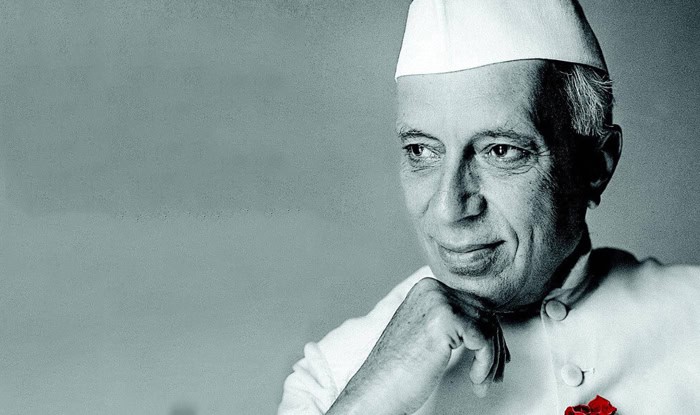
Jawaharlal Nehru (14 November 1889 – 27 May 1964) was a leader of India’s freedom movement and the country’s first Prime Minister. He held the office for almost 17 years, from independence in 1947 until his death in 1964. A close colleague of Mahatma Gandhi, he shaped modern India’s parliamentary democracy, secular constitution, planned economy, scientific institutions and non-aligned foreign policy. Children remember him as “Chacha Nehru”, and his birthday is celebrated as Children’s Day in India.
Quick Facts
| Full name | Jawaharlal Nehru |
| Born | 14 November 1889, Allahabad (now Prayagraj), India |
| Died | 27 May 1964, New Delhi (aged 74) |
| Office | 1st Prime Minister of India (1947–1964) |
| Party | Indian National Congress |
| Education | Harrow School; Trinity College, Cambridge; Inner Temple, London |
| Parents | Motilal Nehru, Swarup Rani |
| Spouse | Kamala Nehru (m. 1916; d. 1936) |
| Child | Indira Gandhi |
| Honour | Bharat Ratna (1955) |
Early Life and Education
Nehru was born in Allahabad into a wealthy Kashmiri Pandit family. His father, Motilal Nehru, was a leading lawyer and later a prominent Congress leader. Jawaharlal was taught at home by private tutors until the age of 15, when he went to England to study at Harrow School. He then read natural sciences at Trinity College, Cambridge, and trained as a barrister at the Inner Temple in London. He returned to India in 1912 to practise law, but his interest soon turned to politics.
Freedom Struggle
Nehru first met Gandhi in 1916 and became one of his most devoted followers. The 1919 Jallianwala Bagh massacre hardened his opposition to British rule. He joined the Non-Cooperation Movement of 1920–22 and was jailed for the first time in 1921. Over the following 25 years he spent roughly nine years in British prisons.
Nehru was elected president of the Indian National Congress at its 1929 Lahore session. There the party adopted the goal of Purna Swaraj, or complete independence. On 31 December 1929 he hoisted the flag of independence on the banks of the Ravi. He took part in the Salt Satyagraha and the Quit India Movement. During his long jail terms he wrote Glimpses of World History, An Autobiography and The Discovery of India.
Prime Minister of India (1947–1964)
At midnight on 14–15 August 1947 Nehru delivered his famous “Tryst with Destiny” speech and became independent India’s first Prime Minister. His early years in office were dominated by the violence of Partition and the integration of the princely states, which he oversaw with his deputy, Sardar Vallabhbhai Patel. He also saw the Constitution adopted in 1950, drafted under the chairmanship of B. R. Ambedkar.
Nehru launched the Five-Year Plans and built up heavy industry, dams and the public sector. He founded institutions such as the Indian Institutes of Technology, AIIMS and the Atomic Energy Commission. Abroad, he was a founding figure of the Non-Aligned Movement and signed the Panchsheel principles with China in 1954. The 1962 war with China, in which India suffered a heavy defeat, was the greatest setback of his final years. He died in office in May 1964.
Personal Life
Nehru married Kamala Kaul in 1916. Their only child, Indira, was born in 1917 and later became Prime Minister herself. Kamala died of tuberculosis in 1936. Nehru was known for his love of books, his writing and the red rose he wore on his jacket.
Legacy and Honours
Frequently Asked Questions
When and where was Jawaharlal Nehru born?
Jawaharlal Nehru was born on 14 November 1889 in Allahabad (now Prayagraj), India.
When did Jawaharlal Nehru die?
Died: 27 May 1964, New Delhi (aged 74).



