
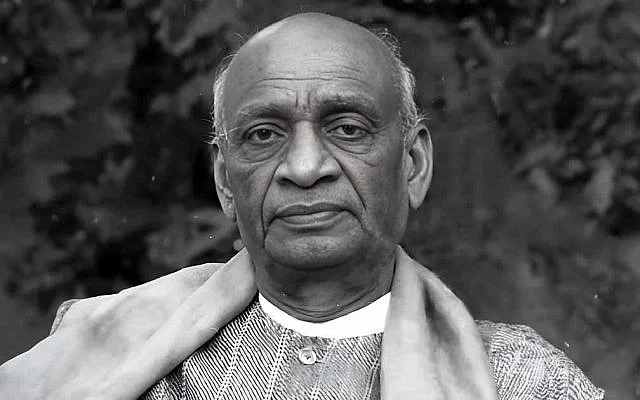
Sardar Vallabhbhai Patel (31 October 1875 – 15 December 1950) was a leader of India’s freedom struggle and the country’s first Deputy Prime Minister and Home Minister. Known as the “Iron Man of India”, he persuaded or pressured more than 560 princely states to join the Indian Union after independence. That feat gave India its political shape. The world’s tallest statue, the 182-metre Statue of Unity in Gujarat, was built in his honour, and his birthday is celebrated as National Unity Day.
Quick Facts
| Full name | Vallabhbhai Jhaverbhai Patel |
| Born | 31 October 1875, Nadiad, Gujarat, India |
| Died | 15 December 1950, Bombay (now Mumbai) (aged 75) |
| Offices | 1st Deputy Prime Minister and Home Minister of India (1947–1950) |
| Known as | Sardar, Iron Man of India |
| Education | Middle Temple, London (barrister) |
| Spouse | Jhaverba (d. 1909) |
| Children | Maniben Patel, Dahyabhai Patel |
| Honour | Bharat Ratna (1991, posthumous) |
Early Life
Patel was born in Nadiad and grew up in Karamsad, Gujarat, in a family of farmers. He finished school late and largely taught himself law, becoming a district pleader in Gujarat. His wife, Jhaverba, died in 1909 while he was in court, and he chose never to remarry. After saving money for years he went to London, where he studied at the Middle Temple, topped his examinations and was called to the bar. He returned to Ahmedabad in 1913 as a successful barrister.
Freedom Struggle
At first sceptical of Mahatma Gandhi, Patel became one of his most loyal lieutenants. In 1918 he helped Gandhi organise the Kheda Satyagraha for farmers who could not pay taxes after crop failure. In 1928 he led the Bardoli Satyagraha against a steep rise in land revenue. The campaign was so successful that the women of Bardoli gave him the title “Sardar”, meaning leader.
Patel presided over the Karachi session of the Indian National Congress in 1931, which adopted a resolution on fundamental rights. He was jailed repeatedly, including during the Salt Satyagraha and the Quit India Movement. He was the Congress party’s chief organiser and fundraiser.
Unifying India (1947–1950)
When India became independent in 1947, Patel became Deputy Prime Minister and Home Minister under Jawaharlal Nehru. He also took charge of the princely states. With his secretary V. P. Menon, he persuaded more than 560 states to sign the Instrument of Accession, using diplomacy, patriotism and, where necessary, pressure. Junagadh was integrated after a plebiscite. Hyderabad joined after a police action, Operation Polo, in September 1948.
Patel also managed refugee resettlement after Partition and restored order. He strongly backed creating the Indian Administrative Service and Indian Police Service, which he called India’s “steel frame”. In the Constituent Assembly he chaired the committee on fundamental rights, minorities and tribal areas. He died of a heart attack in Bombay in December 1950.
Personal Life
Patel had two children, a daughter, Maniben, who served as his companion and secretary, and a son, Dahyabhai. His elder brother, Vithalbhai Patel, was also a prominent nationalist and president of the Central Legislative Assembly.
Legacy and Honours
Frequently Asked Questions
When and where was Sardar Vallabhbhai Patel born?
Sardar Vallabhbhai Patel was born on 31 October 1875 in Nadiad, Gujarat, India.
When did Sardar Vallabhbhai Patel die?
Died: 15 December 1950, Bombay (now Mumbai) (aged 75).



