
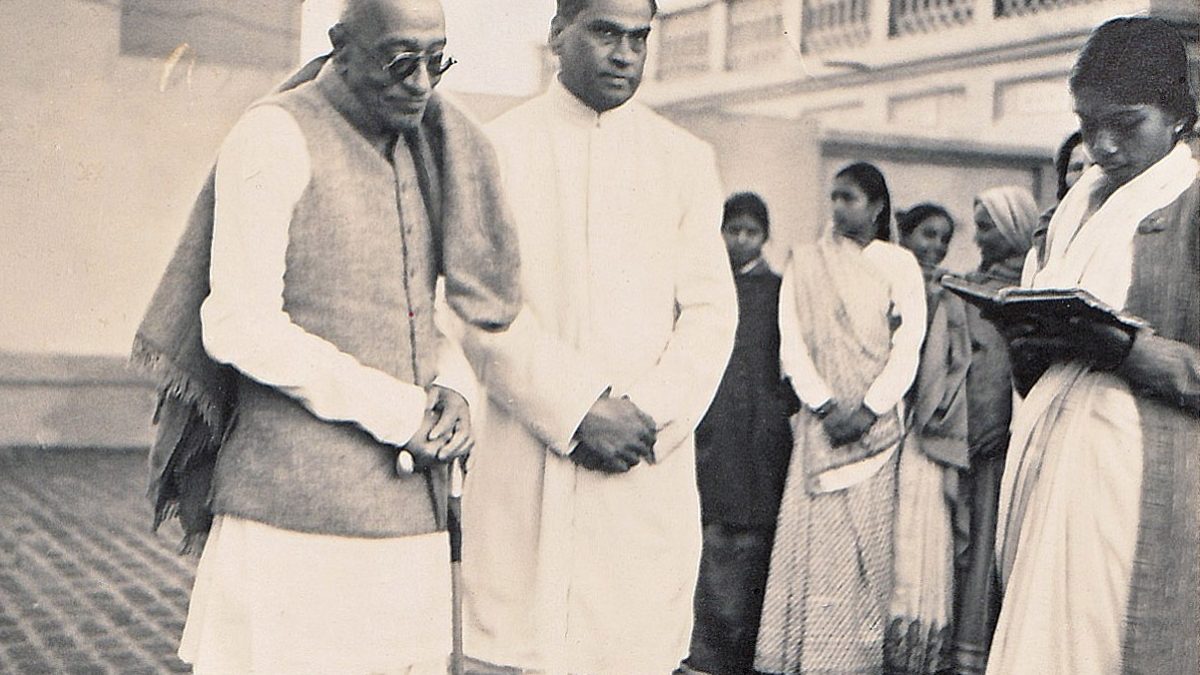
Chakravarti Rajagopalachari (10 December 1878 – 25 December 1972), known as Rajaji or C. R., was an Indian statesman, lawyer and writer. He was the last Governor-General of India and the only Indian to hold that office, twice headed the government of Madras, served as Union Home Minister and, at eighty, founded an opposition party. Mahatma Gandhi called him “the keeper of my conscience”. He was among the first three recipients of the Bharat Ratna in 1954.
Quick Facts
| Full name | Chakravarti Rajagopalachari |
| Born | 10 December 1878, Thorapalli, Salem district, Madras Presidency (now in Krishnagiri district, Tamil Nadu) |
| Died | 25 December 1972, Madras (aged 94) |
| Occupation | Lawyer, politician, writer |
| Offices | Governor-General of India (1948–1950); Premier of Madras (1937–1939); Chief Minister of Madras (1952–1954); Union Home Minister (1950–1951); Governor of West Bengal (1947–1948) |
| Parties | Indian National Congress; Swatantra Party (founder, 1959) |
| Awards | Bharat Ratna (1954), Sahitya Akademi Award (1958) |
| Spouse | Alamelu Mangamma (m. 1897; died 1916) |
Early Life
He was born at Thorapalli, a village near Hosur, the son of the village munsiff. A weak child, he was not expected to live. He was educated at Central College, Bangalore, and Presidency College, Madras, and began practising law at Salem in 1900, where he quickly became the leading criminal lawyer. As chairman of the Salem municipality he opened a public tap to Dalits, to the anger of the orthodox.
Career
With Gandhi
He met Gandhi in 1919, gave up his practice and joined the non-cooperation movement. In April 1930, as Gandhi marched to Dandi, Rajaji led a march of about a hundred volunteers from Tiruchirappalli to Vedaranyam on the Tamil coast to make salt, and was jailed. He founded an ashram at Tiruchengode to work for khadi, temperance and the removal of untouchability.
Premier of Madras
After the elections of 1937 he headed the first Congress government of the Madras Presidency. He opened temples to Dalits by law, introduced prohibition in Salem district and gave relief to indebted farmers. His decision to make Hindi compulsory in schools set off the first anti-Hindi agitation in Tamil country.
Dissenter
He often went against his party. In 1942 he opposed the Quit India movement, believing that the Congress should come to terms with the Muslim League and support the war effort, and resigned. In 1944 he proposed the “C. R. formula”, which accepted the principle of a plebiscite on partition as a basis for talks with Jinnah.
High office
At independence he became Governor of West Bengal. In June 1948 he succeeded Lord Mountbatten as Governor-General and held the post until India became a republic on 26 January 1950. He then served in Jawaharlal Nehru‘s cabinet, becoming Home Minister after the death of Sardar Patel. From 1952 to 1954 he was Chief Minister of Madras, resigning after a storm over a scheme under which children would spend half the school day learning their parents’ trades.
The Swatantra Party
Alarmed by Nehru’s turn towards state control of the economy, he founded the Swatantra Party in 1959 to defend private enterprise and the farmer. It was he who coined the phrase “licence-permit raj”. The party became the largest opposition group in the Lok Sabha in 1967, and in Madras his support helped the DMK to defeat the Congress.
In 1962, aged eighty-three, he led a delegation to President Kennedy to plead for a ban on nuclear tests.
Writer
He wrote in Tamil and English. His retellings of the Mahabharata and the Ramayana, written for ordinary readers, have sold in very large numbers; the Tamil Ramayana won the Sahitya Akademi Award in 1958. His devotional song “Kurai Onrum Illai” was made famous by M. S. Subbulakshmi.
Personal Life
His wife died in 1916, leaving five children, whom he brought up alone. His daughter Lakshmi married Devdas Gandhi, the Mahatma’s youngest son. He died in Madras on Christmas Day 1972, aged ninety-four.
Featured image: C. Rajagopalachari (left), then Governor-General, with V. A. Sundaram in Varanasi, 1948. Photo by an unknown photographer, in the public domain, via Wikimedia Commons.



