
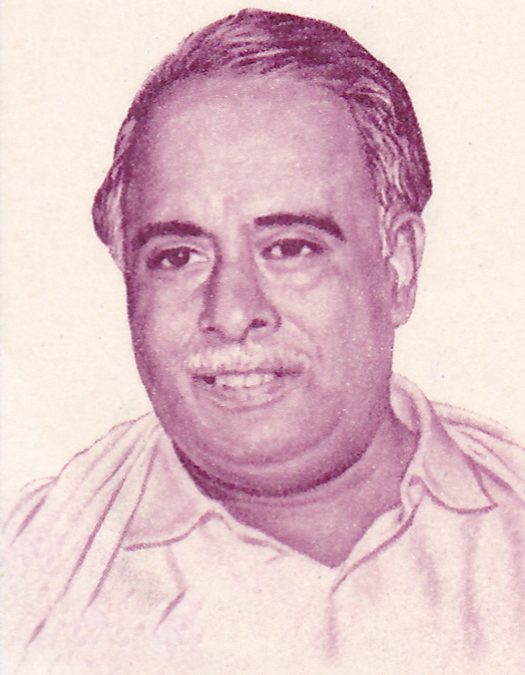
Conjeevaram Natarajan Annadurai (15 September 1909 – 3 February 1969), known as Anna, “elder brother”, was an Indian politician, writer and orator who founded the Dravida Munnetra Kazhagam. In 1967 he led it to victory in Madras State, the first time a regional party had won a state on its own, and became Chief Minister. He renamed the state Tamil Nadu. He died after less than two years in office.
Quick Facts
| Full name | Conjeevaram Natarajan Annadurai |
| Born | 15 September 1909, Kanchipuram, Madras Presidency |
| Died | 3 February 1969, Madras (aged 59) |
| Education | Pachaiyappa’s College, Madras (M.A. in economics and politics) |
| Occupation | Politician, journalist, playwright, screenwriter |
| Party | Dravida Munnetra Kazhagam (founder, 1949) |
| Offices | Chief Minister of Madras State, renamed Tamil Nadu (1967–1969); Member of the Rajya Sabha (1962–1967) |
| Spouse | Rani Annadurai |
Early Life
He was born in the temple town of Kanchipuram into a family of the weaver community; his father was a handloom weaver. He was brought up largely by an aunt. He worked as a clerk in the town’s municipal office to pay for his education, and took a master’s degree in economics and politics at Pachaiyappa’s College in Madras.
With Periyar
He joined the Justice Party and in the mid-1930s became the chief lieutenant of Periyar E. V. Ramasamy, the leader of the Self-Respect Movement, which attacked caste, Brahmin dominance and religious superstition. He edited the movement’s journals and was jailed in the first agitation against compulsory Hindi in 1938. In 1944 the party was renamed the Dravidar Kazhagam.
The DMK
He came to differ with Periyar, who would have nothing to do with elections and had called independence day a day of mourning. When Periyar, aged seventy, married a woman of thirty-one and named her his heir, Annadurai and most of the younger leaders left. On 17 September 1949 they founded the Dravida Munnetra Kazhagam.
Writer and Orator
He was the finest Tamil speaker of his time, in a style full of alliteration, and audiences paid to hear him. He used the stage and the cinema to carry his ideas. His plays and the films made from them, among them Velaikkari and Or Iravu, attacked priests, landlords and caste. Writers and actors such as M. Karunanidhi and M. G. Ramachandran joined the party, which grew through its hold on Tamil films.
Career
From separatism to state autonomy
The party at first demanded a separate Dravida Nadu for south India. After the war with China in 1962 and a constitutional amendment barring secessionist parties from elections, he dropped the demand and spoke instead of greater rights for the states. He entered the Rajya Sabha in 1962.
The anti-Hindi agitation
In 1965, when Hindi was due to become the sole official language of the Union, Madras erupted in protests and riots led by students. The central government retreated and assured the continued use of English.
Chief Minister
In the election of February 1967 the DMK and its allies routed the Congress. He was sworn in on 6 March.
- He renamed Madras State as Tamil Nadu.
- He established a two-language policy of Tamil and English in schools, removing Hindi.
- He gave legal recognition to self-respect marriages, conducted without priests.
- He began a scheme of subsidised rice.
Death
He was found to have cancer and died on 3 February 1969. His funeral procession in Madras drew a crowd estimated at many millions, said to be the largest gathering for a funeral ever recorded.
Legacy
Both of Tamil Nadu’s main parties claim him. M. G. Ramachandran named his breakaway party the All India Anna DMK in 1972. No national party has won the state since 1967. Anna University, the Anna Centenary Library and the main road of Chennai, Anna Salai, are named after him.
Featured image: C. N. Annadurai, from a 1970 postage stamp of India. Photo by India Post, Government of India, licensed under Government Open Data License – India, via Wikimedia Commons.



