
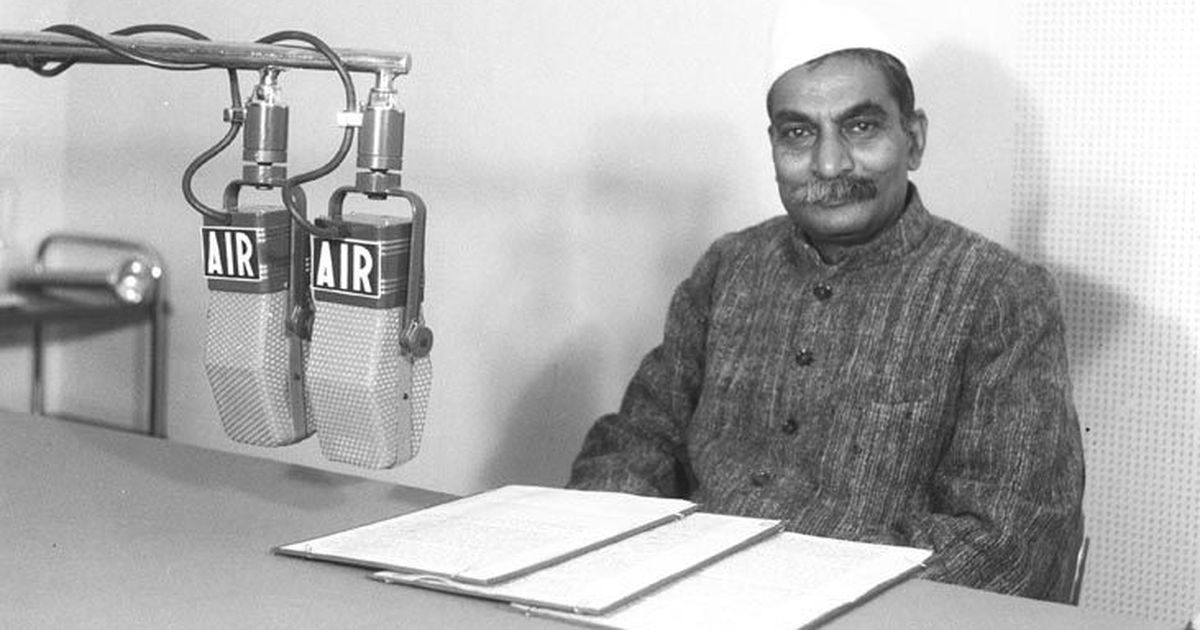
Rajendra Prasad (3 December 1884 – 28 February 1963) was an Indian lawyer, freedom fighter and statesman who served as the first President of India from 1950 to 1962. A devoted follower of Mahatma Gandhi, he gave up a successful legal practice to join the freedom struggle. He was president of the Constituent Assembly that drafted India’s Constitution and remains the only President to have served two full terms. He received the Bharat Ratna in 1962.
Quick Facts
| Full name | Rajendra Prasad |
| Born | 3 December 1884, Ziradei, Siwan district, Bihar, India |
| Died | 28 February 1963, Patna, Bihar (aged 78) |
| Office | 1st President of India (1950–1962) |
| Party | Indian National Congress |
| Education | Presidency College, Calcutta; University of Calcutta (M.A., law) |
| Spouse | Rajvanshi Devi |
| Honour | Bharat Ratna (1962) |
| Notable works | India Divided, Atmakatha, Satyagraha in Champaran |
Early Life and Education
Prasad was born in the village of Ziradei in Bihar. His father, Mahadev Sahai, was a scholar of Persian and Sanskrit. He was married at the age of 12 to Rajvanshi Devi. An outstanding student, he came first in the University of Calcutta’s entrance examination and studied at Presidency College. A famous story says an examiner once wrote on his answer sheet, “The examinee is better than the examiner.” He took a master’s degree in economics, then studied law, winning a gold medal, and later earned a doctorate in law.
Lawyer and Freedom Fighter
Prasad practised law at the Calcutta High Court and, from 1916, at the new Patna High Court. In 1917 he joined Gandhi in Champaran, Bihar, to help indigo farmers who were being exploited by British planters, and the experience changed his life. In 1920 he gave up his practice to join the Non-Cooperation Movement. He became the leading Congress figure in Bihar and was jailed several times.
His work organising relief after the Bihar earthquake of 1934 won him national respect, and later that year he was elected president of the Congress. He led the party again in 1939, after Subhas Chandra Bose resigned, and in 1947. He was imprisoned for nearly three years after the Quit India movement began in 1942. In 1946 he joined Jawaharlal Nehru‘s interim government as Minister for Food and Agriculture.
Constituent Assembly and Presidency
In December 1946 Prasad was elected president of the Constituent Assembly, which drafted the Constitution under the chairmanship of B. R. Ambedkar‘s drafting committee. When India became a republic on 26 January 1950, he became its first President. He was re-elected in 1952 and 1957 and served until May 1962. As President he acted independently of party politics, and at times he disagreed with Nehru, notably over the Hindu Code Bill. He was succeeded by Sarvepalli Radhakrishnan.
Later Life and Death
After retiring, Prasad returned to Patna and lived simply at the Sadaqat Ashram. His wife died in September 1962, and he died on 28 February 1963, aged 78.
Legacy
Frequently Asked Questions
When and where was Rajendra Prasad born?
Rajendra Prasad was born on 3 December 1884 in Ziradei, Siwan district, Bihar, India.
When did Rajendra Prasad die?
Died: 28 February 1963, Patna, Bihar (aged 78).
Featured image: Rajendra Prasad at the microphones of All India Radio.



