
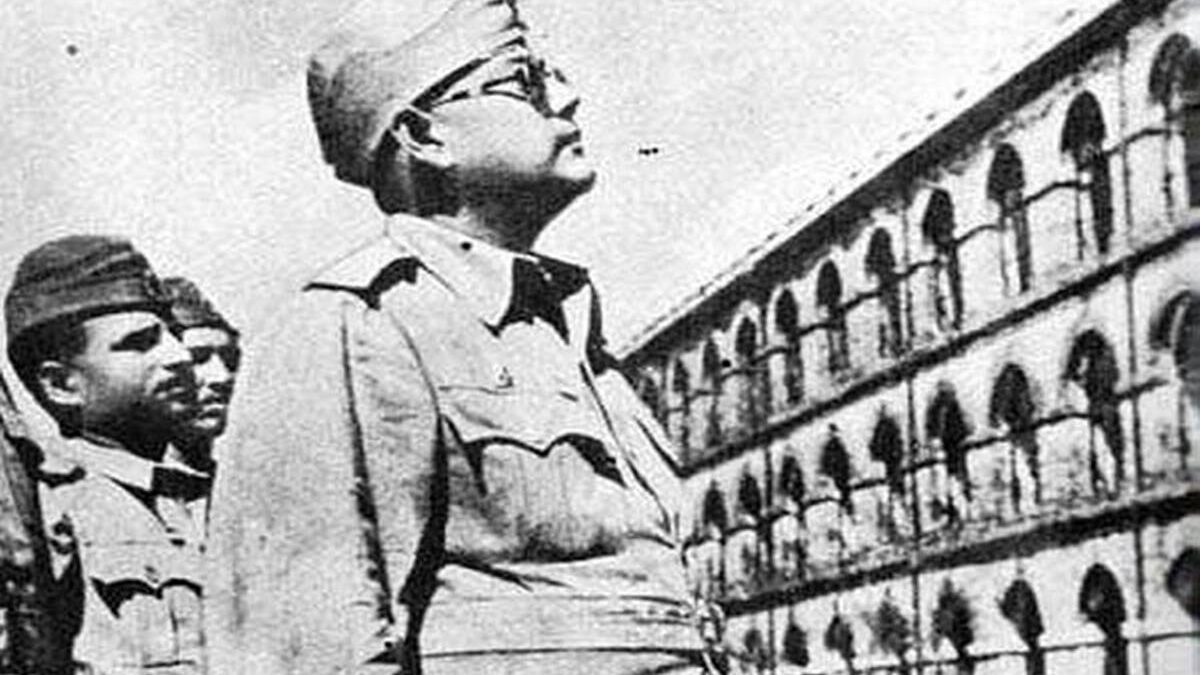
Subhas Chandra Bose (23 January 1897 – 18 August 1945), widely known as Netaji, was an Indian nationalist and one of the most important leaders of the freedom struggle. He gave up a place in the Indian Civil Service to join the national movement and was twice elected president of the Indian National Congress. Believing that armed struggle was needed to end British rule, he escaped from India during the Second World War, sought help from Germany and Japan, and led the Indian National Army (Azad Hind Fauj). His slogans “Jai Hind” and “Give me blood, and I will give you freedom!” are still famous across India.
Quick Facts
| Full name | Subhas Chandra Bose |
| Born | 23 January 1897, Cuttack, Orissa Division, Bengal Presidency (now Odisha), India |
| Died | 18 August 1945, Taihoku, Japanese Taiwan (aged 48) |
| Known as | Netaji |
| Education | Presidency College and Scottish Church College, Calcutta; Fitzwilliam College, Cambridge |
| Parents | Janakinath Bose, Prabhavati Devi |
| Spouse | Emilie Schenkl |
| Child | Anita Bose Pfaff |
| Organisations | Indian National Congress, Forward Bloc, Indian National Army |
Early Life and Education
Bose was born in Cuttack, the ninth of 14 children of Janakinath Bose, a successful lawyer, and Prabhavati Devi. He was a gifted student and was deeply influenced by the teachings of Swami Vivekananda. At Presidency College, Calcutta, he was expelled in 1916 for his alleged role in an attack on a British professor who had made insulting remarks about Indians. He completed his degree in philosophy at Scottish Church College in 1918 and went to Cambridge, where he passed the Indian Civil Service examination in 1920. In 1921 he resigned from the service, saying he could not serve the British government.
Freedom Struggle
In India Bose became a follower of the Bengali leader Chittaranjan Das and worked with him in the Swaraj Party. He was jailed several times by the British, including in Mandalay in Burma, and was elected mayor of Calcutta in 1930. With Jawaharlal Nehru he represented the younger, more radical wing of the Congress. He was elected Congress president at Haripura in 1938, and in 1939 he won re-election at Tripuri against Pattabhi Sitaramayya, the candidate backed by Mahatma Gandhi. Faced with opposition from Gandhi’s supporters, he resigned and formed the Forward Bloc.
After he was placed under house arrest in Calcutta, Bose escaped in January 1941 disguised as a Pathan insurance agent and travelled through Afghanistan and the Soviet Union to Germany. In Berlin he set up the Free India Centre and Azad Hind Radio and raised the Indian Legion from Indian prisoners of war. Germans and Indians there began calling him “Netaji”, meaning “respected leader”.
In 1943 Bose travelled by German and Japanese submarines to Southeast Asia, where he took over the leadership of the Indian National Army from Rash Behari Bose. On 21 October 1943 in Singapore he proclaimed the Provisional Government of Free India (Azad Hind). In December 1943 he visited the Andaman and Nicobar Islands, then held by Japan, and raised the Indian flag in Port Blair. The INA, including a women’s regiment named after Rani Lakshmibai, fought alongside the Japanese in Burma and at Imphal and Kohima in 1944, but it was forced to retreat as Japan lost the war.
Death
On 18 August 1945, days after Japan’s surrender, Bose was badly burned when his plane crashed after take-off at Taihoku (now Taipei) in Taiwan, and he died in a hospital there that night. His ashes are kept at the Renkoji Temple in Tokyo. Many Indians refused to believe he had died, and several government inquiries examined the question over the following decades. Most historians accept that he died in the crash.
Personal Life
In Austria in 1934 Bose met Emilie Schenkl, who worked as his secretary. They married secretly in 1937, and their daughter, Anita, was born in Vienna in 1942. Anita Bose Pfaff became an economist in Germany.
Legacy
After the war the British trials of INA officers at the Red Fort in 1945–46 caused protests across India and contributed to the end of British rule. Netaji’s birthday, 23 January, is celebrated as Parakram Diwas (Day of Valour), and in 2022 a large statue of him was unveiled under the canopy at India Gate in New Delhi. Kolkata’s international airport and the Netaji Subhas Chandra Bose Island in the Andamans are named after him.
Frequently Asked Questions
When and where was Subhas Chandra Bose born?
Subhas Chandra Bose was born on 23 January 1897 in Cuttack, Orissa Division, Bengal Presidency (now Odisha), India.
When did Subhas Chandra Bose die?
Died: 18 August 1945, Taihoku, Japanese Taiwan (aged 48).
Featured image: Subhas Chandra Bose during his visit to Port Blair, Andaman Islands, December 1943. Photo by Unknown author, in the public domain, via Wikimedia Commons.



