
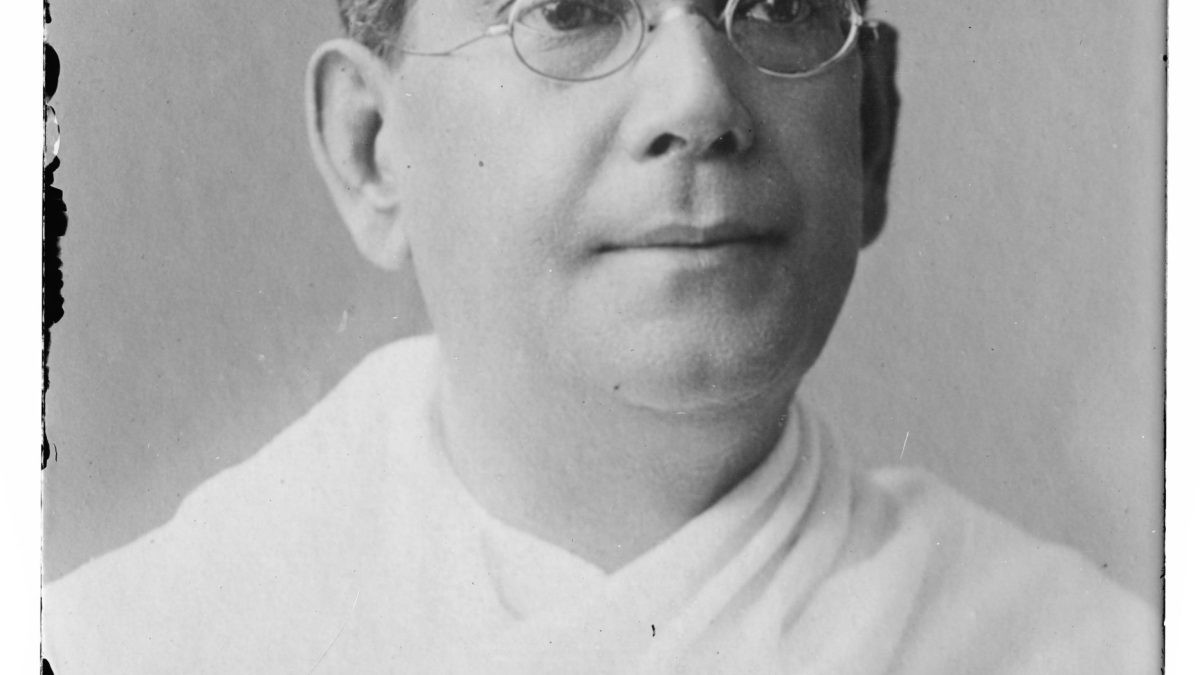
Chittaranjan Das (5 November 1870 – 16 June 1925), known as Deshbandhu, “friend of the country”, was an Indian lawyer, poet and nationalist leader, the dominant figure in the politics of Bengal in the early 1920s. He won fame defending Aurobindo Ghose, gave up one of the largest legal practices in India to join the Non-Cooperation Movement, founded the Swaraj Party, became the first elected Mayor of Calcutta and was the political mentor of Subhas Chandra Bose.
Quick Facts
| Full name | Chittaranjan Das |
| Born | 5 November 1870, Calcutta, Bengal |
| Died | 16 June 1925 (aged 54), Darjeeling |
| Known as | Deshbandhu |
| Occupation | Barrister, politician, poet |
| Offices | President, Indian National Congress (1922); Mayor of Calcutta (1924–1925) |
| Known for | Swaraj Party; Bengal Pact |
| Education | Presidency College, Calcutta; Inner Temple, London |
| Spouse | Basanti Devi |
Early Life
Das was born in Calcutta into a Brahmo family that came from Bikrampur in eastern Bengal. His father was a solicitor and journalist who fell into debt. Chittaranjan graduated from Presidency College in 1890 and went to England, where he failed the Indian Civil Service examination, qualified as a barrister at the Inner Temple and made speeches for Dadabhai Naoroji’s election to Parliament. He returned to Calcutta in 1893.
Lawyer
For years he struggled, and he and his father were declared insolvent; he later paid every creditor in full, though the law no longer required it. His turning point came in 1908, when he took up the defence of Aurobindo Ghose in the Alipore Bomb Case for a nominal fee and gave it his whole time for months. His closing address, asking the court to see the accused as the poet of patriotism and the prophet of nationalism, and the acquittal that followed, made his name. He went on to defend many political prisoners while building a civil practice that earned him a princely income. He also published several volumes of Bengali verse and edited a literary magazine.
Political Career
He entered national politics during the protests against the Rowlatt Act and served on the Congress inquiry into the Punjab atrocities of 1919. When Mahatma Gandhi called for non-cooperation he at first objected, then at Nagpur in 1920 moved the resolution himself. He gave up his practice overnight, exchanged his luxuries for homespun and led the boycott in Bengal. In 1921 his wife, Basanti Devi, and his son were arrested for selling khadi on the streets of Calcutta, an event that brought thousands of volunteers forward; he followed them to prison and so could not preside over that year’s Congress, to which he had been elected.
Released, he presided over the Gaya Congress of 1922, where he argued that the fight should be carried into the legislatures. Defeated, he resigned and with Motilal Nehru formed the Swaraj Party. In Bengal it became the largest party in the council and twice refused office, bringing the system of dyarchy there to a halt.
Convinced that freedom depended on Hindu–Muslim unity, he negotiated the Bengal Pact of 1923, which promised Muslims a majority share of seats and of new government appointments in a province where they were the larger and poorer community. It was rejected by the national Congress but won him lasting trust among Bengali Muslims. In 1924 his party swept the Calcutta Corporation elections. He became the city’s first elected mayor, with Subhas Chandra Bose as chief executive officer, and set out a programme of free primary schools, clinics and housing for the poor. He also founded the newspaper Forward.
Death
Overwork ruined his health. Shortly before his death he made over his house in Calcutta to the nation for a women’s hospital. He died at Darjeeling on 16 June 1925. Hundreds of thousands followed his funeral in Calcutta, led by Gandhi.
Legacy
Rabindranath Tagore wrote a couplet in his memory saying that he had brought with him a deathless life and in dying had given it away. The hospital on the site of his home, a locomotive works and its township, and avenues in many cities are named Chittaranjan after him.
Frequently Asked Questions
When and where was Chittaranjan Das born?
Chittaranjan Das was born on 5 November 1870 in Calcutta, Bengal.
When did Chittaranjan Das die?
Died: 16 June 1925 (aged 54), Darjeeling.
What is Chittaranjan Das known for?
Known for: Swaraj Party; Bengal Pact.
Featured image: Chittaranjan Das, photograph from the Bain News Service collection, Library of Congress. Photo by Bain News Service, in the public domain, via Wikimedia Commons.



