
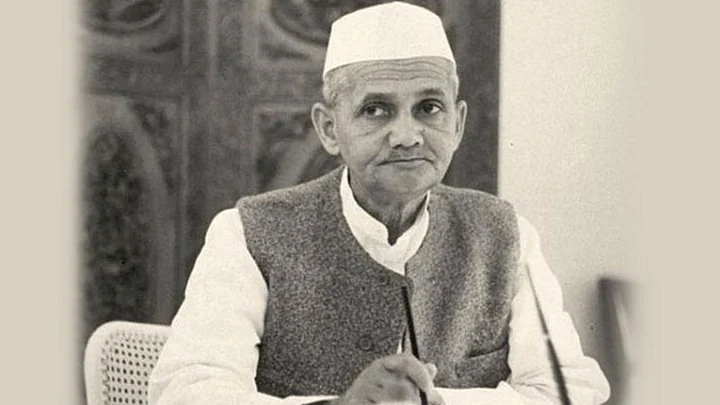
Lal Bahadur Shastri (2 October 1904 – 11 January 1966) was an Indian statesman who served as the second Prime Minister of India from 1964 to 1966. A modest man known for his integrity, he led India through the 1965 war with Pakistan and gave the country the slogan “Jai Jawan, Jai Kisan” (“Hail the soldier, hail the farmer”). He died suddenly in Tashkent hours after signing a peace agreement with Pakistan.
Quick Facts
| Full name | Lal Bahadur Shastri |
| Born | 2 October 1904, Mughalsarai, Uttar Pradesh, India |
| Died | 11 January 1966, Tashkent, Uzbekistan, USSR (aged 61) |
| Office | 2nd Prime Minister of India (1964–1966) |
| Party | Indian National Congress |
| Education | Kashi Vidyapith, Varanasi (“Shastri” degree) |
| Spouse | Lalita Shastri |
| Slogan | “Jai Jawan, Jai Kisan” |
| Honour | Bharat Ratna (1966, posthumous) |
Early Life
Shastri was born in Mughalsarai and lost his father as an infant. He grew up in modest circumstances and, according to popular accounts, sometimes swam across the Ganga to reach school. He dropped his caste surname, and the title “Shastri” came from his degree at Kashi Vidyapith in Varanasi. Inspired by Mahatma Gandhi, whose birthday he shared, he joined the freedom movement as a teenager and spent years in British jails.
Political Career
After independence Shastri served as a minister in Uttar Pradesh and then in Jawaharlal Nehru‘s Union cabinet. As Railway Minister he resigned in 1956, taking moral responsibility for a deadly train accident, an act still cited as an example of political integrity. He later served as Home Minister.
After Nehru’s death, Shastri became Prime Minister in June 1964. He faced food shortages and encouraged self-sufficiency, supporting the early Green Revolution and the White Revolution in milk production. In 1965 he led India through a war with Pakistan, raising the rallying cry “Jai Jawan, Jai Kisan”.
Death in Tashkent
In January 1966 Shastri travelled to Tashkent in the Soviet Union for peace talks with Pakistan’s President Ayub Khan. On 10 January they signed the Tashkent Declaration. Early the next morning Shastri died, officially of a heart attack. His sudden death led to lasting public questions. He was succeeded by Indira Gandhi and was the first person to be awarded the Bharat Ratna posthumously.
Legacy
Frequently Asked Questions
When and where was Lal Bahadur Shastri born?
Lal Bahadur Shastri was born on 2 October 1904 in Mughalsarai, Uttar Pradesh, India.
When did Lal Bahadur Shastri die?
Died: 11 January 1966, Tashkent, Uzbekistan, USSR (aged 61).



