
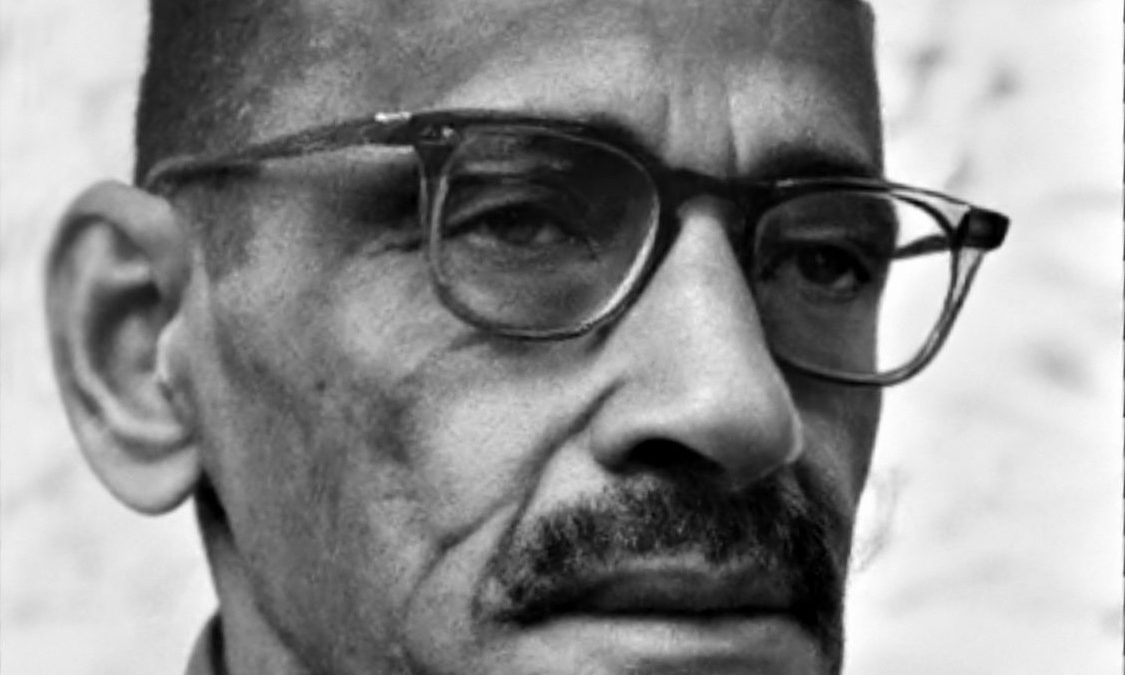
Gulzarilal Nanda (4 July 1898 – 15 January 1998) was an Indian economist, labour leader and politician who twice served as acting Prime Minister of India, for thirteen days each time: after the death of Jawaharlal Nehru in 1964 and of Lal Bahadur Shastri in 1966. A Gandhian who spent twenty years organising textile workers, he held the planning, labour and home portfolios in the Union Cabinet. He lived and died without property and was awarded the Bharat Ratna in 1997.
Quick Facts
| Full name | Gulzarilal Nanda |
| Born | 4 July 1898, Sialkot, Punjab (now in Pakistan) |
| Died | 15 January 1998, Ahmedabad (aged 99) |
| Education | Forman Christian College, Lahore; University of Allahabad (M.A., LL.B.) |
| Party | Indian National Congress |
| Offices | Acting Prime Minister (27 May – 9 June 1964; 11–24 January 1966); Union Home Minister (1963–1966); Deputy Chairman, Planning Commission |
| Awards | Padma Vibhushan (1991), Bharat Ratna (1997) |
| Spouse | Lakshmi Devi |
Early Life
He was born at Sialkot into a Punjabi Hindu family and was educated at Lahore, Agra and Allahabad, where he did research on labour problems. In 1921 he became professor of economics at the National College in Bombay, one of the institutions set up for students who had left government colleges.
Labour Leader
He met Mahatma Gandhi that year and gave up teaching. In 1922 he became secretary of the Textile Labour Association of Ahmedabad, the union Gandhi had helped to found on the principle that disputes should be settled by arbitration. He held the post until 1946 and lived among the mill workers.
He was jailed in the civil disobedience movement in 1932 and again from 1942 to 1944.
Bombay
As a legislator and, from 1946 to 1950, labour minister of the Bombay government, he carried a law on industrial relations that became a model. He helped to found the Indian National Trade Union Congress in 1947 and represented India at international labour conferences.
The Centre
Jawaharlal Nehru made him Deputy Chairman of the new Planning Commission in 1950 and Minister of Planning the next year. He was closely involved in the first three Five-Year Plans and at various times also held the portfolios of irrigation and power and of labour and employment. He became Home Minister in 1963 and launched a campaign against corruption in the administration.
Acting Prime Minister
As the senior member of the Cabinet he was sworn in as Prime Minister on 27 May 1964, hours after Nehru’s death, and held the office until the Congress chose Lal Bahadur Shastri. When Shastri died at Tashkent on 11 January 1966 he was sworn in again and served until Indira Gandhi was elected.
Each time he was a possible candidate for the post itself, and each time the party’s managers passed him over as too unbending.
Resignation
On 7 November 1966 a large demonstration demanding a ban on cow slaughter tried to storm Parliament; the police fired and several people were killed. Nanda, a believer in cow protection who was held to have handled the affair badly, resigned as Home Minister. He was later Minister of Railways for a time and left active politics in the early 1970s.
Kurukshetra
In retirement he gave his energy to the restoration of the holy places of Kurukshetra, as chairman of its development board, and to a movement for moral renewal in public life.
A Simple Life
He owned no house, car or bank balance worth the name. For years he refused the pension offered to freedom fighters, and accepted it only when friends insisted that he had nothing to live on. In his nineties, newspapers reported, he was asked to leave a rented house in Delhi because the rent had not been paid, and he went to live with his daughter in Ahmedabad.
Death
He was awarded the Bharat Ratna in 1997 and died in Ahmedabad on 15 January 1998, aged ninety-nine. He remains a byword in Indian politics for personal honesty.
Featured image: Gulzarilal Nanda. Photo by an unknown photographer, licensed under CC BY-SA 3.0, via Wikimedia Commons.



