
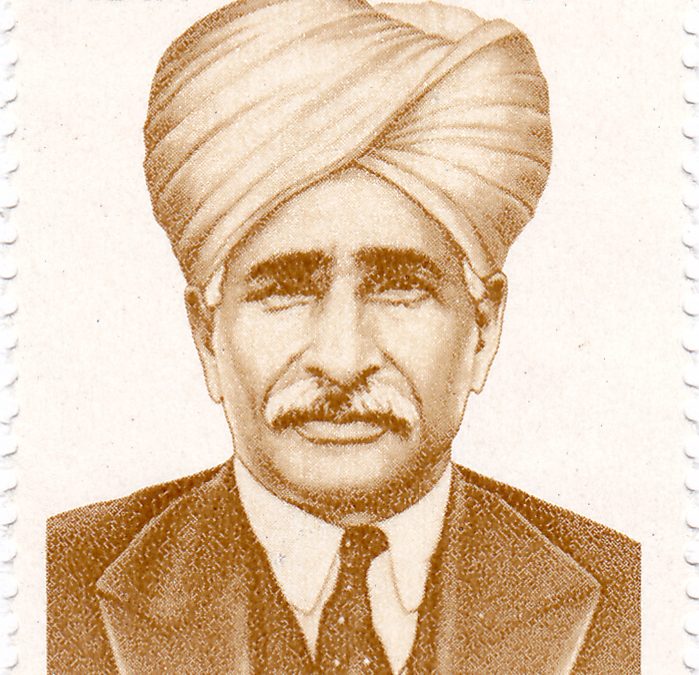
Sir Chhotu Ram (24 November 1881 – 9 January 1945) was an Indian politician and lawyer of the undivided Punjab, the champion of its farmers. As a founder of the Unionist Party and a minister in the provincial government, he carried a series of laws in the 1930s that broke the hold of the moneylender on the peasant and created regulated markets for farm produce. He is known as Deenbandhu, friend of the poor, and is honoured across Haryana, Punjab and western Uttar Pradesh.
Quick Facts
| Birth name | Ram Richpal |
| Born | 24 November 1881, Garhi Sampla, Rohtak district (now Haryana) |
| Died | 9 January 1945, Lahore (aged 63) |
| Community | Jat |
| Education | St Stephen’s College, Delhi (B.A., 1905); law degree, Agra (1910) |
| Occupation | Lawyer, journalist, politician |
| Party | Unionist Party (co-founder, 1923) |
| Offices | Minister in the Punjab government for agriculture, development and revenue |
| Titles | Deenbandhu; Rahbar-e-Azam; knighted 1937 |
Early Life
He was born in the village of Garhi Sampla into a small Jat farming family deep in debt. He was the youngest of the brothers, and “Chhotu”, the little one, became his name. As a boy he went with his father to a moneylender to ask for a loan for his schooling and saw his father ordered to pull the fan and otherwise humiliated. He often recalled it.
With help from a philanthropist he studied at a mission school in Delhi and at St Stephen’s College, graduating in 1905 with distinction in Sanskrit. He worked as a secretary to a landowner, edited a newspaper, took a law degree and began practice at Rohtak in 1912.
Journalist and Organiser
He founded an Urdu weekly, the Jat Gazette, in 1916, and Jat schools and associations. In articles later collected under the title Bechara Zamindar, “the poor farmer”, he told the peasant to give up his meekness and his fatalism and learn to fight for his rights. During the First World War he helped to recruit soldiers from the region.
He was president of the Congress committee of Rohtak district, and left the party in 1920, holding that Gandhi’s programme of refusing taxes would ruin the cultivators.
The Unionist Party
In 1923, with the Muslim leader Fazl-i-Husain, he formed the Unionist Party, an alliance of the farming communities of Punjab, Muslim, Hindu and Sikh, against the urban commercial classes. It governed the province until the eve of Partition. He was a minister from 1924 to 1926 and again from 1937 until his death, and leader of the party in the legislature.
The Laws
- **The Punjab Relief of Indebtedness Act (1934)** set up boards to scale down old debts and laid down that a debtor who had paid twice the principal was free
- **The Debtors’ Protection Act (1936)** stopped the sale of a farmer’s land, house and cattle to meet a debt
- **The Registration of Moneylenders Act (1938)** required lenders to hold a licence and keep proper accounts
- **The Restitution of Mortgaged Lands Act (1938)** returned to their owners lands mortgaged before 1901, without payment; several hundred thousand acres were restored
- **The Agricultural Produce Markets Act (1939)** created regulated markets run by committees on which farmers had the majority, with fixed charges and honest weights. It is the origin of the mandi system of northern India.
The commercial press called them the black laws. For the peasantry they were a charter of freedom.
Bhakra
He revived the long-shelved plan for a dam on the Sutlej at Bhakra to irrigate the dry south-east of the province, and concluded the agreement with the Raja of Bilaspur, in whose state the reservoir would lie, shortly before his death. The dam was built after independence.
Against Partition
He held that the interests of the farmer were the same whatever his religion, and opposed the Muslim League’s demand for Pakistan. While he lived, the League could make little headway in rural Punjab. He kept Muhammad Ali Jinnah at a distance and refused to let him control the Unionist ministry.
Death
He died at Lahore on 9 January 1945 and was cremated at the Jat school he had founded at Rohtak. Within two years his party had collapsed and Punjab was divided.
Legacy
A university of science and technology at Murthal and a large statue at his birthplace, unveiled in 2018, bear his name. The agricultural revolution that later came to the region is described in the lives of Partap Singh Kairon and M. S. Swaminathan.
Featured image: Sir Chhotu Ram, from a 1995 postage stamp of India. Photo by India Post, Government of India, licensed under Government Open Data License – India, via Wikimedia Commons.



