
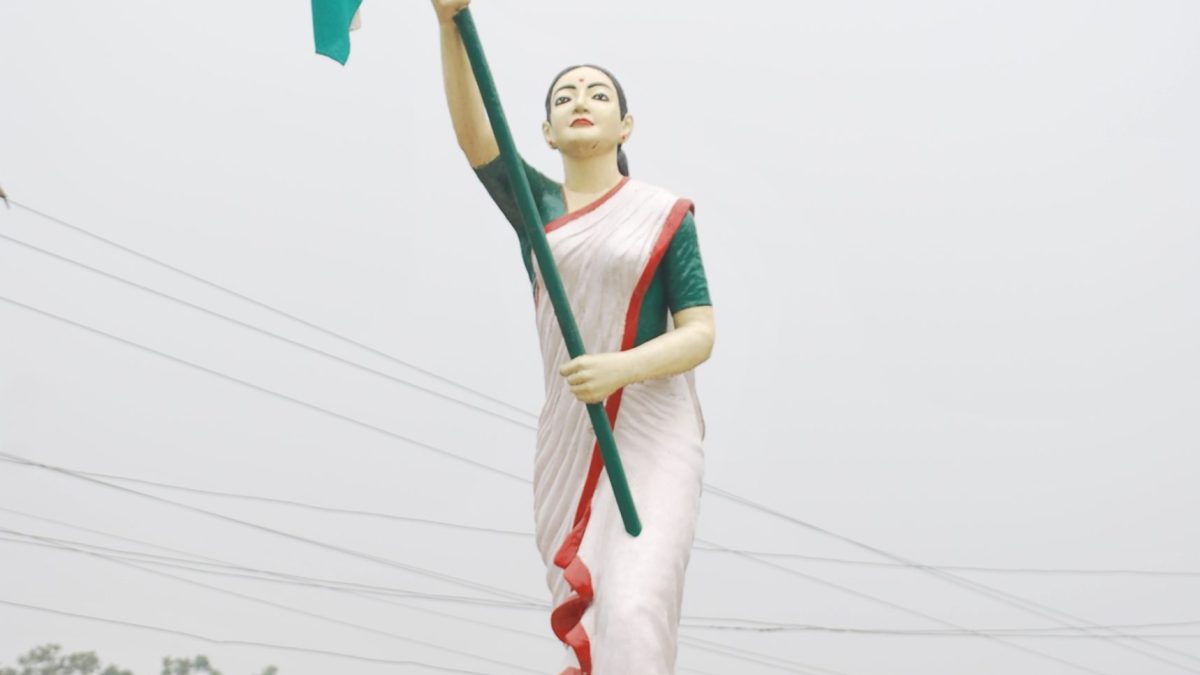
Kanaklata Barua (22 December 1924 – 20 September 1942) was an Indian freedom fighter from Assam. During the Quit India movement she led a procession of unarmed villagers to raise the national flag over the police station at Gohpur, and was shot dead by the police as she walked forward carrying it. She was seventeen. In Assam she is called Birbala, the brave girl, and Shaheed, the martyr.
Quick Facts
| Born | 22 December 1924, Borangabari, Gohpur, Darrang district, Assam |
| Died | 20 September 1942, Gohpur (aged 17) |
| State | Assam |
| Known for | Leading the flag procession at Gohpur police station during the Quit India movement |
| Organisation | Mrityu Bahini |
| Titles | Birbala, Shaheed |
Early Life
She was born in the village of Borangabari, near Gohpur on the north bank of the Brahmaputra, to Krishna Kanta Barua and Karneshwari Barua. Her mother died when she was five. Her father married again and died when she was thirteen. She left school after the third class to look after her younger brothers and sisters and the household.
The Freedom Movement
The district had a strong Congress organisation. As a girl she was moved by the songs and speeches of the Assamese nationalist leaders, among them the poet and film-maker Jyoti Prasad Agarwala, whose family estate lay nearby and who organised the volunteers of the area.
When the Quit India movement began in August 1942 and the national leaders were arrested, the young people of Assam formed the Mrityu Bahini, the “death squad”, whose members pledged to carry out acts of defiance whatever the cost. She wanted to join the Azad Hind Fauj, but was under age; she was accepted into the Mrityu Bahini, though she was not yet eighteen.
20 September 1942
The Congress committee of the area decided that on 20 September the national flag would be hoisted at police stations across the north bank. At Gohpur, a procession of several thousand unarmed men and women marched to the police station. Kanaklata led the women’s column, the flag in her hands.
The officer in charge of the station warned them to stop. She told him, by the accounts handed down, that they had come only to raise the flag and would do no harm, and that he might do his duty as she would do hers. She walked on. The police fired. She was hit and fell. A young man, Mukunda Kakati, took the flag from her and was shot dead in turn. Others carried it forward, and it was raised.
On the same day police fired on a similar procession at Dhekiajuli, further west, killing a number of villagers, among them a girl of about twelve, Tileswari Barua.
Remembrance
Her body was carried back to Borangabari and cremated on her family’s land, where a memorial now stands.
- The Indian Coast Guard has named fast patrol vessels after her.
- A life-size statue was put up at Gauripur in 1997, and a park at Tezpur shows the scene of the firing in sculpture.
- Her story has been filmed in Assamese and in Hindi.
- Schools, roads and awards in Assam bear her name.
Her Place in History
She is one of the youngest of the martyrs of 1942 and, with Matangini Hazra of Bengal, who was shot the same month carrying a flag at the age of seventy-two, one of the best remembered of the women who died in the movement. In the North-East her name stands beside that of the Naga leader Rani Gaidinliu as a reminder of the region’s part in the struggle for freedom.
Featured image: A statue of Kanaklata Barua in Assam. Photo by Dwijenmahanta, licensed under CC BY-SA 3.0, via Wikimedia Commons.



