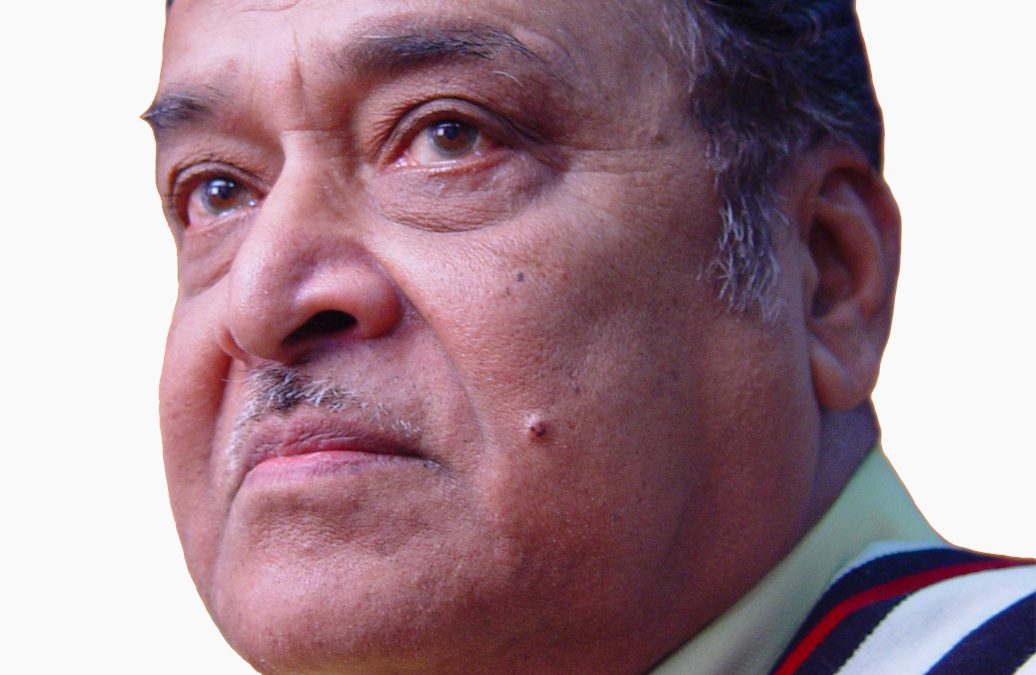
Bhupen Hazarika (8 September 1926 – 5 November 2011) was an Indian singer, lyricist, composer, poet and film-maker from Assam. In a deep baritone he sang, mostly in Assamese and also in Bengali and Hindi, of the Brahmaputra, of the hill and plains peoples of the North-East and of human brotherhood. He is called Sudhakantha, “the nectar-voiced”, and the Bard of the Brahmaputra. He was awarded the Bharat Ratna in 2019.
Quick Facts
| Full name | Bhupen Hazarika |
| Born | 8 September 1926, Sadiya, Assam |
| Died | 5 November 2011, Mumbai (aged 85) |
| State | Assam |
| Occupation | Singer, lyricist, composer, film-maker, poet |
| Education | Cotton College, Guwahati; Banaras Hindu University (M.A.); Columbia University (Ph.D., 1952) |
| Known for | Manuhe Manuhor Babe, Bistirno Parore, Dil Hoom Hoom Kare, Ganga Behti Ho Kyun |
| Awards | Dadasaheb Phalke Award (1992), Padma Vibhushan (2012), Bharat Ratna (2019) |
| Spouse | Priyamvada Patel (m. 1950) |
Early Life
He was born at Sadiya, at the far eastern end of the Brahmaputra valley, the eldest of ten children of a schoolteacher. The family moved to Guwahati, Dhubri and then Tezpur, where the boy’s singing was noticed by two of the great figures of Assamese culture, the film-maker Jyoti Prasad Agarwala and the poet and revolutionary Bishnu Prasad Rabha. He recorded his first song at ten and sang and acted in Agarwala’s film Indramalati in 1939.
Education
He studied at Cotton College in Guwahati and took a master’s degree in political science at Banaras Hindu University. In 1949 he went to Columbia University in New York on a scholarship and received a doctorate in 1952 for a thesis on the use of audio-visual methods in adult education.
In New York he became a friend of the singer and civil rights campaigner Paul Robeson. Robeson’s “Ol’ Man River”, about the Mississippi, became in Hazarika’s hands “Bistirno Parore”, addressed to the Brahmaputra, which flows on unmoved while people suffer on its banks. He later sang it in Bengali and in Hindi as “Ganga Behti Ho Kyun”.
Career
Songs
He wrote more than a thousand songs. He drew on the folk music of Assam, of the tea-garden workers and of the tribes of the hills, and wrote of social injustice and of unity among communities.
- “Manuhe Manuhor Babe”: “If man will not think of man with a little sympathy, who will?”, named in a BBC poll in Bangladesh among the best Bengali songs of all time
- “Sagar Sangamat”, “Buku Hom Hom Kare”, “Moi Eti Jajabor” (“I am a wanderer”)
- songs for the Indian People’s Theatre Association, with which he worked in the 1950s
Films
He directed Assamese films beginning with Era Bator Sur (1956), and won the President’s medal for Shakuntala, Pratidhwani and Lotighoti. He won the National Film Award for music direction for Chameli Memsaab (1975). In Hindi he composed for Ek Pal, Rudaali (1993), which included “Dil Hoom Hoom Kare”, Darmiyaan and Gaja Gamini.
Public life
He was an independent member of the Assam legislative assembly from 1967 to 1972, and stood unsuccessfully for the Lok Sabha as a candidate of the Bharatiya Janata Party in 2004. He was chairman of the Sangeet Natak Akademi from 1998 to 2003.
Honours
- Padma Shri (1977), Padma Bhushan (2001) and Padma Vibhushan (2012, posthumous)
- Dadasaheb Phalke Award for 1992
- Bharat Ratna (2019, posthumous)
Personal Life
He married Priyamvada Patel, whom he met in New York, in 1950; they had a son, Tez, and later separated. For the last four decades of his life his companion was the film director Kalpana Lajmi, for whose films he composed.
He died in Mumbai on 5 November 2011. His body was flown to Guwahati, where several hundred thousand people filed past it, and he was cremated beside the Brahmaputra.
Legacy
The bridge across the Lohit river near his birthplace, the longest in India when it opened in 2017, is named the Bhupen Hazarika Setu. A memorial and museum stand at the site of his cremation in Guwahati. Later Assamese musicians, above all Zubeen Garg, grew up on his songs.
Featured image: Bhupen Hazarika in his later years. Photo by Utpal Baruah, licensed under CC BY-SA 3.0, via Wikimedia Commons.