Pandit Bhimsen Gururaj Joshi (4 February 1922 – 24 January 2011) was an Indian vocalist in the Hindustani classical tradition, the most celebrated khayal singer of his time. His powerful voice, long breath and passionate delivery, in classical ragas and in devotional songs in Marathi, Kannada and Hindi, won him a following far beyond the usual audience for classical music. He received the Bharat Ratna, India’s highest civilian honour.
Quick Facts
| Full name | Bhimsen Gururaj Joshi |
| Born | 4 February 1922, Ron, Dharwad district, Bombay Presidency (now in Gadag district, Karnataka) |
| Died | 24 January 2011, Pune (aged 88) |
| Tradition | Kirana gharana |
| Guru | Sawai Gandharva (Rambhau Kundgolkar) |
| Known for | Khayal; abhangs (Santavani); Kannada devotional songs; Mile Sur Mera Tumhara |
| Awards | Padma Shri (1972), Padma Bhushan (1985), Padma Vibhushan (1999), Bharat Ratna (2008) |
| Children | 7 |
Early Life
He was born at Ron and grew up at Gadag in north Karnataka, the eldest of sixteen children of a schoolteacher and Sanskrit scholar, Gururaj Joshi. As a small child he would follow any procession with music and fall asleep wherever it left him; his father took to writing “son of teacher Joshi” on his shirts so that he could be brought home.
A gramophone record of Ustad Abdul Karim Khan singing a thumri in raga Jhinjhoti, heard in a shop, decided his life.
The Runaway
In 1933, aged eleven, he left home without a word to look for a teacher. He travelled without tickets, singing for his fare, to Bijapur, Pune, Gwalior, Calcutta, Delhi and Jalandhar, learning what he could from musicians along the way and working for a time as a servant. After three years his father traced him and brought him back.
Training
In 1936 he was accepted as a pupil by Sawai Gandharva, the leading disciple of Abdul Karim Khan, at Kundgol near his home. He lived in his teacher’s house for about four years, fetching water and doing the chores, and learning in the old manner. His fellow student was Gangubai Hangal.
Career
He gave his first public concert in 1941 and made his first record soon after. He worked as a radio artist in Bombay, and his reputation grew through the 1940s and 1950s until he was the best-known singer of the Kirana style, which is noted for the slow, note-by-note development of a raga.
- **Ragas:** he was especially associated with Shuddha Kalyan, Miyan ki Todi, Puriya Dhanashri, Multani, Darbari and Ramkali
- **Santavani:** programmes of abhangs, the devotional poems of the Marathi saints, which drew huge crowds
- **Kannada devotional songs:** including “Bhagyada Lakshmi Baramma”
- **Mile Sur Mera Tumhara (1988):** his voice opens the national integration song shown on television, which made his face familiar to the whole country
- **Duets:** with the Carnatic singer M. Balamuralikrishna
The Festival
In 1953 he founded the Sawai Gandharva music festival in Pune in memory of his teacher. Held each December, it became one of the most important events in Indian classical music, and he ran it for half a century. It now carries his name as well.
Honours
- Padma Shri (1972), Padma Bhushan (1985) and Padma Vibhushan (1999)
- Sangeet Natak Akademi Award (1975) and Fellowship (1998)
- Bharat Ratna, announced in November 2008
Personal Life
He married Sunanda Katti, a cousin, in 1944, and later Vatsala Mudholkar, who had acted with him in a Kannada play; he had seven children from the two marriages. His son Shrinivas Joshi is a vocalist. He loved fast cars and drove himself long distances to concerts. He lived in Pune and died there in January 2011.
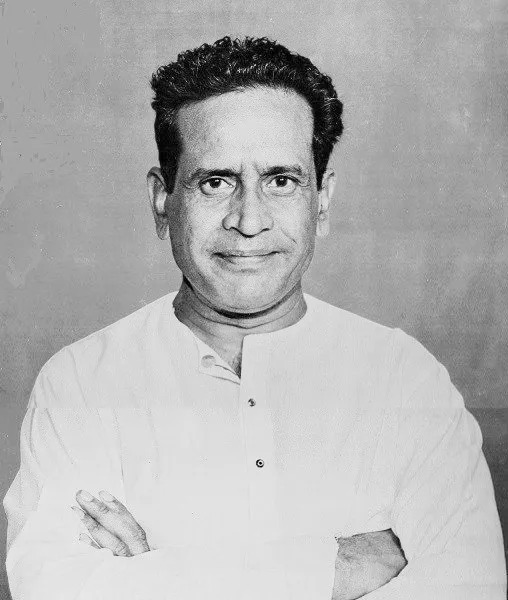
Featured image: Bhimsen Joshi at a recording session in 1962. Photo by the British Institute of Recorded Sound, in the public domain, via Wikimedia Commons.