
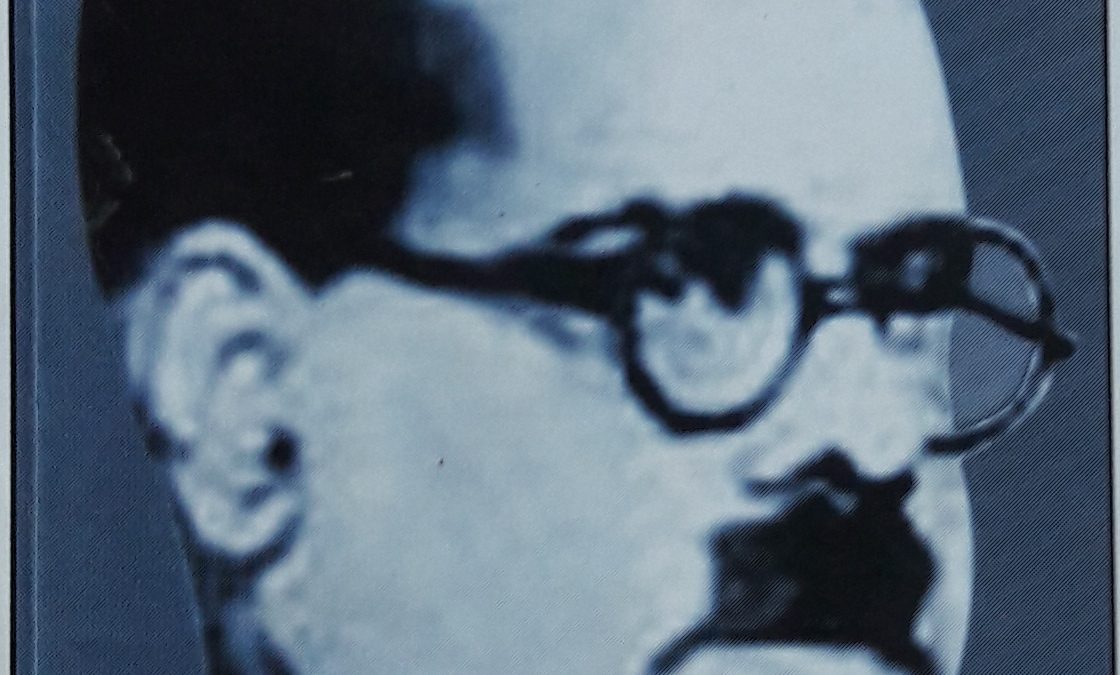
Bharathidasan (29 April 1891 – 21 April 1964), born Kanakasabai Subburathinam, was a Tamil poet, playwright and teacher from Pondicherry. A disciple of the poet Subramania Bharati, whose name he took as his own, he became the leading poetic voice of the Self-Respect and Dravidian movements. He is known as Puratchi Kavignar, the Revolutionary Poet, and Pavendar, the king of poets, and his verses on the Tamil language, the equality of women and the abolition of caste are known to every Tamil schoolchild.
Quick Facts
| Birth name | Kanakasabai Subburathinam |
| Pen name | Bharathidasan |
| Born | 29 April 1891, Pondicherry, French India |
| Died | 21 April 1964 (aged 72), Madras (now Chennai) |
| Occupation | Poet, playwright, teacher |
| Language | Tamil |
| Known as | Puratchi Kavignar; Pavendar |
| Notable works | Pandiyan Parisu, Kudumba Vilakku, Azhagin Sirippu, Irunda Veedu, Tamizhachiyin Kathi, Pisiranthaiyar |
| Awards | Sahitya Akademi Award (1969, posthumous) |
Early Life
He was born in Pondicherry, then a French possession, the son of a well-to-do merchant. He studied Tamil literature, grammar and Saiva philosophy under traditional scholars and attended the French-run school. At eighteen he qualified as a Tamil teacher and was appointed to a government school at Karaikal; he taught in the schools of French India for nearly four decades, retiring in 1946.
Bharati’s Disciple
In 1908 Subramania Bharati, pursued by the British police, took refuge in Pondicherry and remained for ten years. The young teacher met him at a wedding, where he sang one of Bharati’s songs without knowing that the author was in the room. He became one of the poet’s closest companions, helped to shelter other nationalist exiles and adopted the name Bharathidasan, “servant of Bharati”. His early poems, on devotional and nationalist themes, follow his master’s manner.
The Revolutionary Poet
In the late 1920s he was drawn to Periyar E. V. Ramasamy and the Self-Respect Movement, and became an atheist and a fierce opponent of caste and priestcraft. The first collected volume of his poems appeared in 1938. Periyar hailed him as the poet of the movement, and C. N. Annadurai gave him the title Puratchi Kavignar and organised a public fund in his honour in 1946.
His subjects were the glory and sweetness of Tamil, the dignity of labour, the beauty of the natural world and above all the freedom of women. He wrote against child marriage, for the remarriage of widows and for the education of girls, and insisted that a household is a partnership of equals. The line “Tamizhukkum amudhendru per”, “nectar too is a name for Tamil”, is among the most quoted in the language.
Major Works
- Pandiyan Parisu, a narrative poem of intrigue and adventure around a stolen royal casket;
- Kudumba Vilakku (“The Lamp of the Family”), in five parts, the portrait of an educated woman at the centre of an ideal household, with its dark companion Irunda Veedu (“The Darkened House”);
- Azhagin Sirippu (“The Smile of Beauty”), poems on the sea, the forest, the sunset and the river;
- Tamizhachiyin Kathi (“The Tamil Woman’s Dagger”) and Edhirparadha Mutham;
- Kuyil Paattu and the journal Kuyil, which he edited;
- plays including Pisiranthaiyar, about a poet of the ancient Tamil country and his friendship with a king, which won the Sahitya Akademi Award in 1969, five years after his death.
He also wrote stories, screenplays and songs for Tamil films from the 1930s.
Public Life
After Pondicherry joined India he was elected to its Representative Assembly in 1954. He later moved to Madras, where he tried, without success, to make a film of Pandiyan Parisu. He died there on 21 April 1964.
Legacy
A song of his in praise of the Tamil language is the official state song of the Union Territory of Puducherry. Tamil Nadu named a university at Tiruchirappalli after him in 1982 and gives an annual award in his name, and his house in Puducherry is a memorial museum. Later Tamil poets, including several who took names ending in “-dasan” in his honour, form what is called the Bharathidasan school.
Featured image: Bharathidasan, undated photograph. Photo by an unknown photographer, in the public domain, via Wikimedia Commons.



