Bankim Chandra Chatterjee (26 June 1838 – 8 April 1894), also written Chattopadhyay, was an Indian novelist, essayist and poet who is regarded as the father of the modern novel in Bengali and one of the makers of Indian nationalism. His novel Anandamath contains the song “Vande Mataram”, which became the anthem of the freedom movement and is the national song of India. He is known in Bengal as Sahitya Samrat, the emperor of literature.
Quick Facts
| Full name | Bankim Chandra Chattopadhyay |
| Born | 26 June 1838, Kanthalpara, Naihati, Bengal |
| Died | 8 April 1894 (aged 55), Calcutta |
| Occupation | Novelist, essayist, civil servant |
| Language | Bengali (first novel in English) |
| Education | Hooghly College; Presidency College; University of Calcutta (B.A., 1858; B.L.) |
| Notable works | Durgeshnandini, Kapalkundala, Vishabriksha, Krishnakanter Will, Anandamath, Devi Chaudhurani |
| Known for | Vande Mataram |
Early Life
He was born at Kanthalpara, near Naihati on the Hooghly, into an orthodox Brahmin family. His father was a deputy collector. He studied at Hooghly College and Presidency College, and in 1858 was one of the first two graduates of the newly founded University of Calcutta. He was appointed a deputy magistrate and deputy collector the same year and served in the districts of Bengal for thirty-three years, retiring in 1891. His independence brought him into conflict with British superiors more than once, and promotion came slowly.
Writing
After youthful verse and an English novel, Rajmohan’s Wife, he found his form with Durgeshnandini (1865), a historical romance that is counted as the first successful novel in Bengali. Kapalkundala (1866), about a girl raised in the wild by an ascetic, and Mrinalini followed. He then turned to contemporary society. Vishabriksha (“The Poison Tree”, 1873) and Krishnakanter Will (1878) are studies of marriage, desire and widowhood that showed what psychological fiction in an Indian language could do. His last novels, Anandamath (1882), Devi Chaudhurani (1884) and Sitaram (1887), use history to preach discipline, devotion and service to the country.
In 1872 he founded the monthly Bangadarshan, in which most of his novels were serialised alongside essays on history, science, religion and society. It formed the taste of a generation; the young Rabindranath Tagore later described waiting impatiently for each issue. His satirical sketches, Kamalakanter Daptar, written in the voice of an opium-eating philosopher, are among the wittiest things in the language.
Anandamath is set during the famine of 1770 and the rising of warrior ascetics that followed. Its band of “children” worship the motherland as a goddess and sing “Vande Mataram”, a hymn, partly in Sanskrit and partly in Bengali, that Bankim had written some years earlier. Tagore sang it at the Congress session of 1896, and during the agitation against the partition of Bengal in 1905 it became the cry of the nationalist movement, banned by the authorities and shouted by protesters facing the police. The novel’s treatment of Muslim rulers has made it controversial. In 1950 the first two verses of the song were adopted as India’s national song.
In his later years he wrote Krishna Charitra, an attempt to recover the historical Krishna as an ideal man, and Dharmatattva, on the cultivation of all human faculties as the essence of religion.
Death and Legacy
He died in Calcutta on 8 April 1894. His novels have been translated into every major Indian language and filmed many times, and his house at Naihati is a museum and research centre. Almost every later Bengali novelist began by reading him.
Frequently Asked Questions
When and where was Bankim Chandra Chatterjee born?
Bankim Chandra Chatterjee was born on 26 June 1838 in Kanthalpara, Naihati, Bengal.
When did Bankim Chandra Chatterjee die?
Died: 8 April 1894 (aged 55), Calcutta.
What is Bankim Chandra Chatterjee known for?
Known for: Vande Mataram.
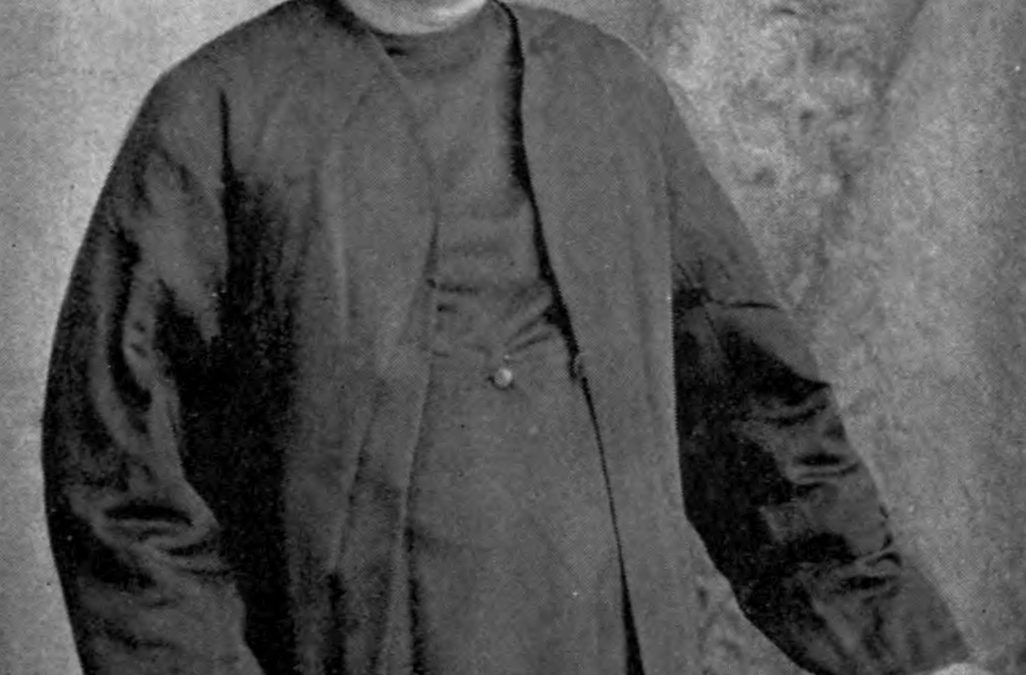
Featured image: Bankim Chandra Chatterjee, nineteenth-century photograph. Photo by an unknown photographer, in the public domain, via Wikimedia Commons.