
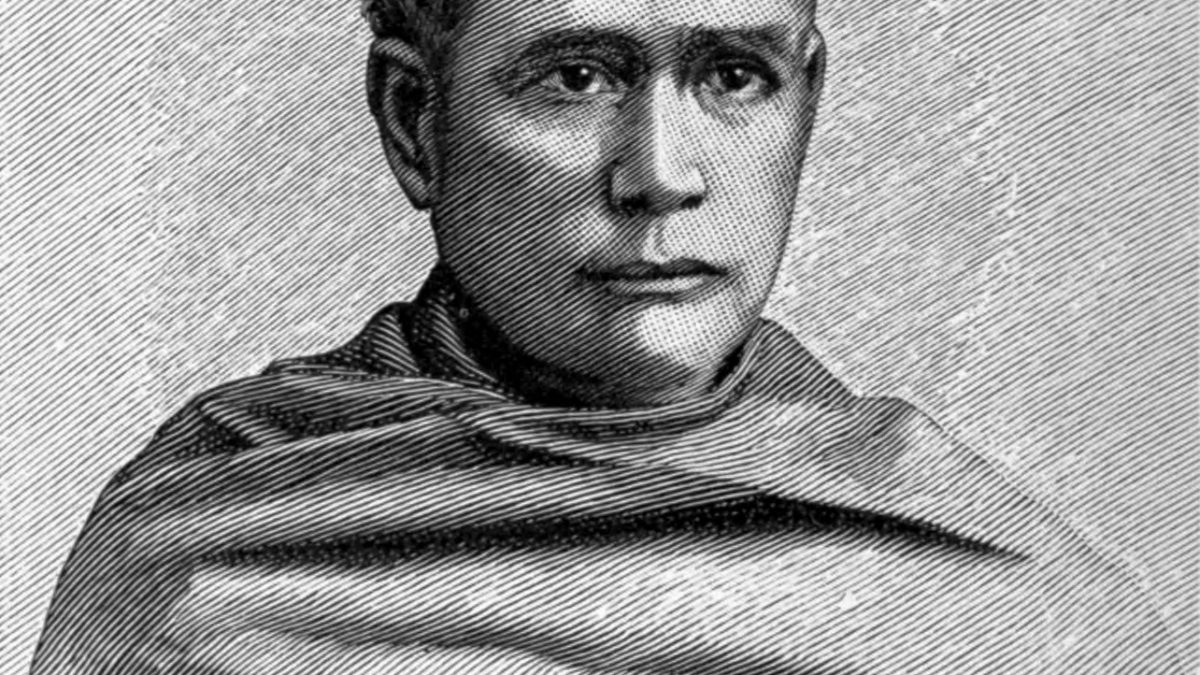
Ishwar Chandra Vidyasagar (26 September 1820 – 29 July 1891), born Ishwar Chandra Bandyopadhyay, was an Indian scholar, educator and social reformer and one of the central figures of the Bengal Renaissance. His campaign led to the Hindu Widows’ Remarriage Act of 1856. He opened Sanskrit learning to all castes, founded dozens of schools for girls, wrote the primer from which generations of Bengalis learned to read and gave Bengali prose its modern form. He was known as much for his generosity as for his learning.
Quick Facts
| Birth name | Ishwar Chandra Bandyopadhyay |
| Born | 26 September 1820, Birsingha, Midnapore district, Bengal |
| Died | 29 July 1891 (aged 70), Calcutta |
| Occupation | Scholar, educator, social reformer, writer |
| Known for | Hindu Widows’ Remarriage Act (1856); Barnaparichay; women’s education |
| Title | Vidyasagar (“ocean of learning”), conferred 1839 |
| Institution | Sanskrit College, Calcutta (Principal, 1851–1858) |
Early Life
He was born into a poor Brahmin family in the village of Birsingha. His father, Thakurdas, worked as a clerk in Calcutta for a few rupees a month. At eight the boy walked with him to the city, and is said to have learned the English numerals from the milestones on the way. He studied at Sanskrit College for twelve years, often reading under street lamps because the family could not afford oil, and in 1839 received the title Vidyasagar for his mastery of grammar, literature, logic and law.
Career
He became head pandit at Fort William College in 1841 and joined the Sanskrit College in 1846, becoming its principal in 1851. He admitted students who were not Brahmins, introduced English and Western science alongside Sanskrit and simplified the teaching of grammar. As a special inspector of schools he set up twenty model schools in the districts and, between 1857 and 1858, thirty-five schools for girls, several of which he supported from his own pocket when official funds were refused. He resigned in 1858 after differences with the education authorities. He later founded the Metropolitan Institution in Calcutta, run entirely by Indians, which is now Vidyasagar College.
Girls in Bengal were commonly married in childhood, often to much older men, and widows, some of them still children, were condemned to a life of austerity. In 1855 Vidyasagar published two tracts arguing from the scriptures themselves that the remarriage of widows was permitted, and he sent a petition to the government. Orthodox society answered with counter-petitions carrying many times more signatures, with abuse and with threats to his life. The Hindu Widows’ Remarriage Act was passed on 26 July 1856. He arranged and paid for many of the first such marriages, falling into debt, and in 1870 his only son married a widow. He also campaigned against the polygamy practised by Kulin Brahmins and against child marriage.
His Barnaparichay (1855), an introduction to the Bengali alphabet in two parts, rearranged the letters on rational lines and remains in print. Through textbooks and retellings such as Betal Panchabinsati, Shakuntala and Sitar Banabas he created a clear, rhythmical prose with consistent punctuation that later writers built on.
Character
Stories of his kindness are part of Bengali folklore: he nursed cholera patients, paid the school fees of strangers and sent money for years to the poet Michael Madhusudan Dutt, stranded in Europe. People called him Dayar Sagar, the ocean of compassion.
Last Years
Wearied by the ingratitude and hypocrisy he met in Calcutta society, he spent much of his last two decades at Karmatar, in what is now Jharkhand, among the Santhal people, running a school for girls and a free homeopathic dispensary. He died in Calcutta on 29 July 1891.
Legacy
Rabindranath Tagore wondered how God, in making forty million Bengalis, had produced a man. A university, a bridge across the Hooghly and countless schools bear his name.
Frequently Asked Questions
When and where was Ishwar Chandra Vidyasagar born?
Ishwar Chandra Vidyasagar was born on 26 September 1820 in Birsingha, Midnapore district, Bengal.
When did Ishwar Chandra Vidyasagar die?
Died: 29 July 1891 (aged 70), Calcutta.
What is Ishwar Chandra Vidyasagar known for?
Known for: Hindu Widows’ Remarriage Act (1856); Barnaparichay; women’s education.
Featured image: Ishwar Chandra Vidyasagar, engraving from a book by Sivanath Sastri. Photo by an unknown artist, in the public domain, via Wikimedia Commons.



