
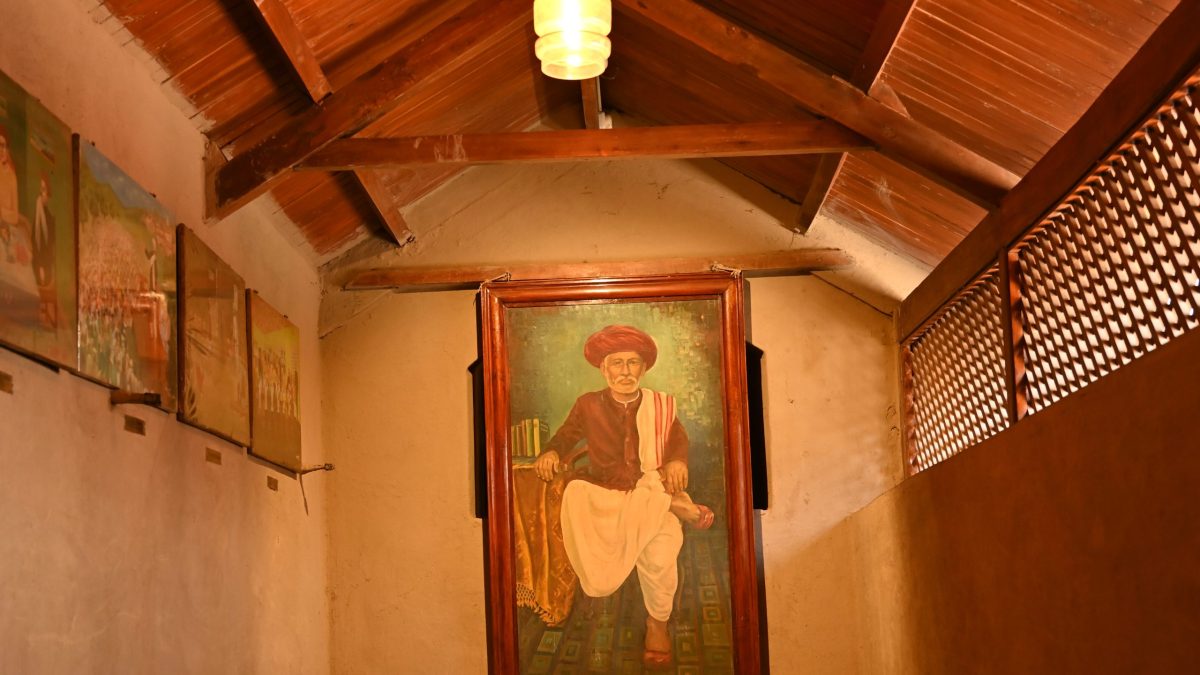
Jyotirao Govindrao Phule (11 April 1827 – 28 November 1890), known as Mahatma Phule and Jyotiba, was an Indian social reformer, thinker and writer from Maharashtra. He was the first in modern India to mount a sustained attack on the caste system from below. With his wife, Savitribai, he opened a school for girls in Pune in 1848 and schools for the so-called untouchables soon after, and in 1873 he founded the Satyashodhak Samaj, the Society of Seekers of Truth.
Quick Facts
| Full name | Jyotirao Govindrao Phule |
| Born | 11 April 1827, Pune, Maharashtra |
| Died | 28 November 1890, Pune (aged 63) |
| Community | Mali |
| Occupation | Social reformer, writer, businessman |
| Founded | Satyashodhak Samaj (1873) |
| Notable works | Gulamgiri, Shetkaryacha Asud, Tritiya Ratna, Sarvajanik Satya Dharma |
| Title | Mahatma (conferred 1888) |
| Spouse | Savitribai Phule |
Early Life
He was born in Pune into a family of the Mali caste, gardeners and growers of vegetables and flowers, who had supplied flowers to the court of the Peshwas, from which the name Phule comes. His mother died before he was a year old. He was taken out of school to work on the family’s plot, but a Muslim teacher and a Christian neighbour persuaded his father that the boy was too able to waste, and he completed his English schooling at the Scottish Mission High School in 1847.
He was married at thirteen to Savitribai, then nine.
The Turning Point
In 1848 he was invited to the wedding of a Brahmin friend. When he joined the procession, relatives of the bridegroom insulted him and ordered him out as a Shudra who did not know his place. He went home shaken, and concluded that caste was not a matter of manners but a system of slavery. In the same period he read Thomas Paine’s Rights of Man.
Schools
In 1848 he opened a school for girls at Bhide Wada in Pune, generally reckoned the first run by Indians. He taught his wife to read and write, and she became its teacher; see Savitribai Phule. Orthodox neighbours threw stones and dung at her on her way to class. Under pressure from the community, his father turned the couple out of the house. A friend, Usman Sheikh, and his sister Fatima Sheikh gave them shelter and a room for the school.
By 1852 they were running several schools, including ones for children of the Mahar and Mang castes.
Widows and Children
- In 1863 he opened a home where pregnant widows, who faced disgrace or worse, could give birth in safety, and a refuge for their infants. He and Savitribai adopted one such child, Yashwant, who became a doctor.
- He supported widow remarriage and organised a strike of barbers against the shaving of widows’ heads.
- In 1868 he opened the water tank in his own courtyard to the untouchables.
Satyashodhak Samaj
On 24 September 1873 he founded the Satyashodhak Samaj. Its members pledged to worship one creator, to reject the authority of priests and scriptures that taught inequality, and to work for the education of the lower castes and women. It conducted marriages without Brahmin priests, with simple vows in Marathi, a practice upheld by the courts. The movement spread through rural Maharashtra.
Writings
- Tritiya Ratna (1855), a play on how priests exploit an ignorant peasant couple
- a ballad on Shivaji, whom he presented as a king of the peasants
- Gulamgiri (“Slavery”, 1873), his best-known book, which he dedicated to the people of the United States who had fought to free the slaves. It argues that the lower castes were the original people of the land, subjugated by invaders whose myths were made to justify their rule.
- Shetkaryacha Asud (“The Cultivator’s Whipcord”, 1883), on the poverty of the farmer under moneylender, priest and official
- Sarvajanik Satya Dharma, a statement of his faith, published after his death
He is credited with giving currency to the word Dalit, “broken” or “crushed”, for the oppressed castes.
Public Life
He earned his living as a contractor and merchant, supplying materials for public works, and was a member of the Pune municipal council from 1876 to 1883. He told the education commission of 1882 that primary schooling should be made compulsory and free. He supported the mill workers’ leader N. M. Lokhande and the farmers’ agitations of his time.
At a public meeting in Bombay in 1888 he was given the title Mahatma.
Death
A stroke that year paralysed his right side; he finished his last book writing with his left hand. He died in Pune on 28 November 1890.
Legacy
B. R. Ambedkar named him as one of his three teachers, with the Buddha and Kabir. In the line of Maharashtra’s reformers he was followed by D. K. Karve and others.
Featured image: A portrait of Jyotirao Phule at Phule Wada, his home in Pune, now a memorial. Photo by Wander-earth, licensed under CC BY-SA 4.0, via Wikimedia Commons.



