
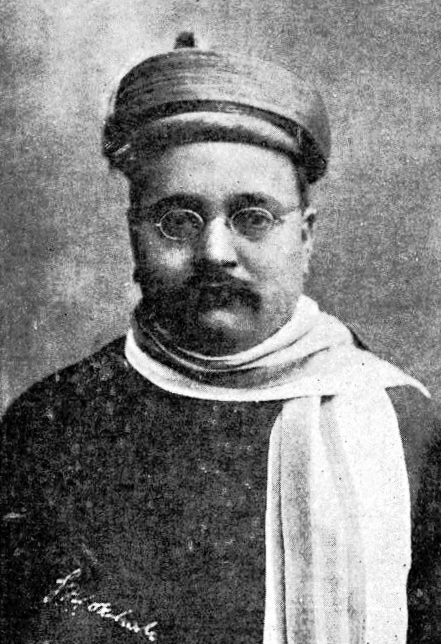
Gopal Krishna Gokhale (9 May 1866 – 19 February 1915) was an Indian political leader and social reformer, the foremost of the Moderates in the early Indian National Congress. A teacher by profession, he became the most effective critic of British financial policy in the Viceroy’s council and founded the Servants of India Society. Mahatma Gandhi called him his political guru.
Quick Facts
| Full name | Gopal Krishna Gokhale |
| Born | 9 May 1866, Kotluk, Ratnagiri district, Bombay Presidency (now Maharashtra) |
| Died | 19 February 1915, Poona (aged 48) |
| Occupation | Professor, politician, social reformer |
| Known for | Moderate leadership of the Congress; Servants of India Society; mentor of Gandhi |
| Offices | President, Indian National Congress (1905); Member, Imperial Legislative Council (1902–1915) |
| Mentor | Mahadev Govind Ranade |
Early Life
He was born in a village of the Konkan into a poor Chitpavan Brahmin family. His father died when he was thirteen, and his elder brother gave up his own schooling and took a clerk’s job to pay for Gopal’s education. He graduated from Elphinstone College, Bombay, in 1884, one of the first generation of Indians to receive a university degree.
The Teacher
In 1885 he joined the Deccan Education Society in Poona, whose members pledged to teach for twenty years on a small salary. He taught mathematics, English, history and economics at Fergusson College and retired in 1902.
In Poona he became the disciple of Justice Mahadev Govind Ranade, the scholar and reformer, who trained him in the patient study of public questions and in the habit of mastering the facts before speaking.
Career
The Congress
He rose quickly in the Congress and gave evidence on Indian finance before a royal commission in London in 1897. He believed that self-government would be won by stages, through education, argument and the winning of British opinion, and that social reform must go with political advance. This set him against his fellow townsman Bal Gangadhar Tilak, who wanted mass agitation; their rivalry divided Poona and then the Congress, which split at Surat in 1907.
He was President of the Congress at Benares in 1905.
The legislator
Elected to the Imperial Legislative Council in 1902, he made the annual budget debate his platform. His speeches, packed with figures, attacked the salt tax, the cost of the army and the neglect of education, and were read with respect even by the officials he criticised. In 1911 he introduced a bill for free and compulsory primary education; the government defeated it.
He visited England several times and helped shape the Morley-Minto reforms of 1909, which enlarged the councils.
The Servants of India Society
In 1905 he founded the Servants of India Society in Poona. Its members took vows of poverty and gave their lives to public work, in education, famine relief, sanitation and the uplift of the depressed classes. “Public life must be spiritualised,” he said.
Gandhi
In 1912 he went to South Africa at Gandhi’s invitation to support the Indian community’s struggle there. When Gandhi returned to India in 1915, Gokhale advised him to spend a year travelling the country with “his ears open and his mouth shut” before taking up any cause, advice Gandhi followed. Gandhi wrote that Gokhale was to him what the Ganga is to a pilgrim. Muhammad Ali Jinnah, too, said in his youth that his ambition was to be the Muslim Gokhale.
Death
He was made a Companion of the Order of the Indian Empire in 1904 and later declined a knighthood. Overwork and diabetes wore him out, and he died in Poona on 19 February 1915, aged forty-eight. Tilak, his lifelong opponent, said at the funeral that India had lost a diamond.
Legacy
The Gokhale Institute of Politics and Economics in Pune, founded by the Servants of India Society, is one of the country’s leading research centres. The society he founded is still at work.
Featured image: Gopal Krishna Gokhale in 1909. Photo by an unknown photographer, in the public domain, via Wikimedia Commons.



