
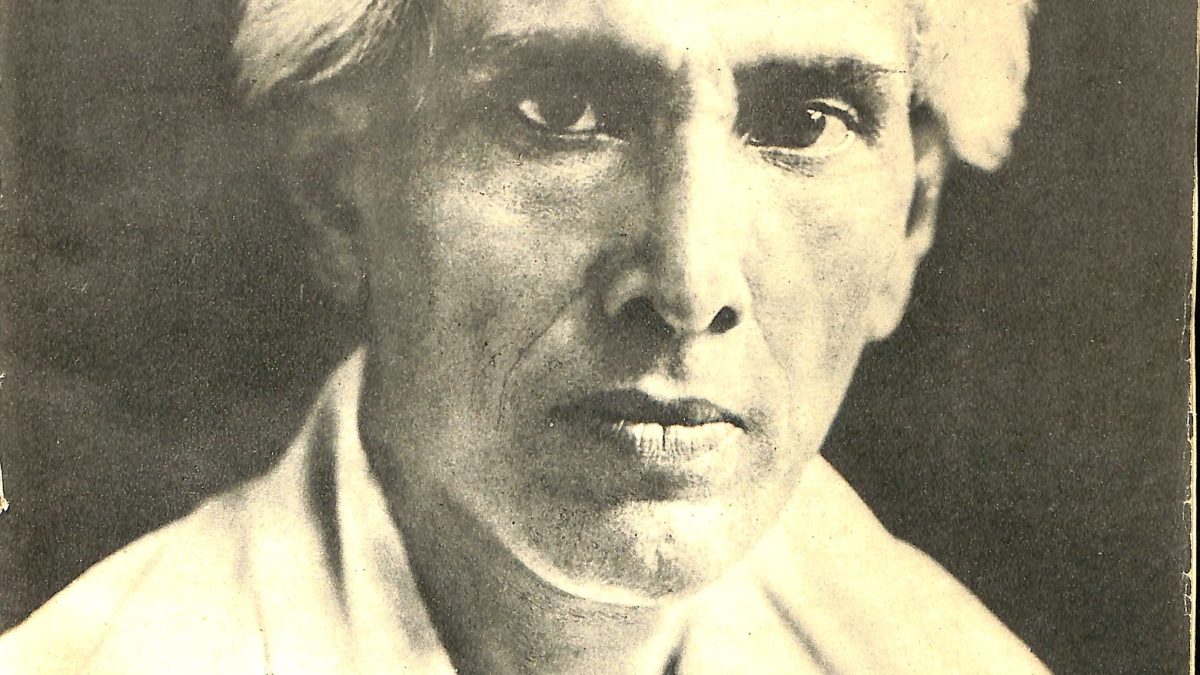
Sarat Chandra Chattopadhyay (15 September 1876 – 16 January 1938), also written Chatterjee, was an Indian novelist and short-story writer in Bengali. He remains the most popular, most translated and most filmed Indian novelist: Devdas, Parineeta, Srikanta, Charitraheen and Palli Samaj have been read across the country for a century. He wrote about village and small-town Bengal, and above all about women trapped by caste, custom and poverty, with a sympathy that made him loved by ordinary readers.
Quick Facts
| Full name | Sarat Chandra Chattopadhyay |
| Born | 15 September 1876, Debanandapur, Hooghly district, Bengal |
| Died | 16 January 1938 (aged 61), Calcutta |
| Occupation | Novelist, short-story writer |
| Language | Bengali |
| Notable works | Devdas, Parineeta, Srikanta, Charitraheen, Palli Samaj, Grihadaha, Pather Dabi |
| Honours | Jagattarini Gold Medal (1923); D.Litt., University of Dacca (1936) |
Early Life
He was born in the village of Debanandapur into a Brahmin family that was always short of money. His father was a dreamer who began many stories and finished none and could not hold a job. The family lived for long periods with his mother’s relatives at Bhagalpur in Bihar, where Sarat Chandra went to school. He had to give up college because the fees could not be paid. He acted in amateur theatre, sang, played the flute, wrote stories that he did not publish, and for a time wandered about as a mendicant.
Burma
After his parents’ deaths he went to Rangoon in 1903 and worked as a clerk in a government accounts office for about thirteen years. He lived in a quarter of mechanics and labourers. His first wife and infant son died there of plague. Stories he had left behind with friends in Calcutta began to appear in magazines, and Bardidi, serialised in 1907, was so accomplished that some readers took it for the work of Tagore under another name.
Writing
He returned to Bengal in 1916 and settled in Howrah, living by his pen. The novels came quickly. Parineeta (1914) is a story of love between neighbours across a gap of wealth. Palli Samaj (1916) shows a village poisoned by caste rules and faction. Devdas, written when he was a young man and published in 1917, tells of a landlord’s son who cannot marry his childhood love and drinks himself to death at her gate. Charitraheen (1917) defended women whom society called fallen and was attacked as immoral. Srikanta, in four parts from 1917 to 1933, is a loosely autobiographical account of a wanderer’s life and of his long bond with the singer Rajlakshmi. Grihadaha (1920) and Shesh Prashna (1931) take up marriage and the freedom of women directly.
Pather Dabi (1926), a novel about a secret revolutionary society in Burma, was banned by the government.
Public Life
He supported the national movement, was president of the Howrah district Congress for many years and was close to Chittaranjan Das and Subhas Chandra Bose. In 1926 he built a house at Samtaber on the bank of the Rupnarayan, where he lived simply among villagers and treated the sick with homeopathic medicine.
Death and Legacy
He died of cancer in Calcutta on 16 January 1938. His books have been adapted for the screen dozens of times in many languages. Devdas alone has been filmed repeatedly, with the title role played by, among others, Dilip Kumar in 1955 and Shah Rukh Khan in 2002. His houses at Debanandapur and Samtaber are preserved as memorials.
Frequently Asked Questions
When and where was Sarat Chandra Chattopadhyay born?
Sarat Chandra Chattopadhyay was born on 15 September 1876 in Debanandapur, Hooghly district, Bengal.
When did Sarat Chandra Chattopadhyay die?
Died: 16 January 1938 (aged 61), Calcutta.
What is Sarat Chandra Chattopadhyay’s occupation?
Occupation: Novelist, short-story writer.
What honours has Sarat Chandra Chattopadhyay received?
Jagattarini Gold Medal (1923); D.Litt., University of Dacca (1936).
Featured image: Sarat Chandra Chattopadhyay, about 1930. Photo by an unknown photographer, in the public domain, via Wikimedia Commons.



