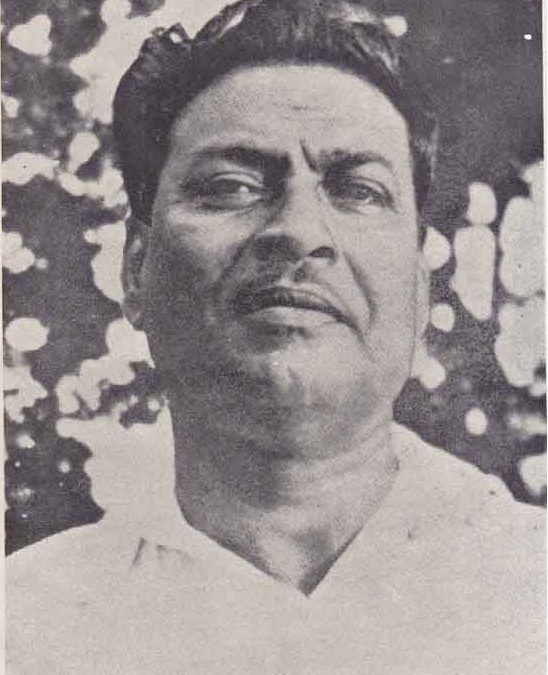
Bibhutibhushan Bandyopadhyay (12 September 1894 – 1 November 1950) was an Indian novelist and short-story writer in Bengali, one of the best-loved writers in the language. His first novel, Pather Panchali, the story of a poor Brahmin family in a village and of the boy Apu and his sister Durga, is a classic of Indian literature and the source of Satyajit Ray’s celebrated film. No Indian novelist has written of nature, childhood and the lives of the rural poor with greater tenderness.
Quick Facts
| Full name | Bibhutibhushan Bandyopadhyay |
| Born | 12 September 1894, Muratipur, near Kalyani, Bengal |
| Died | 1 November 1950, Ghatshila (now in Jharkhand) (aged 56) |
| Language | Bengali |
| Education | Bongaon High School; Ripon College, Calcutta (B.A., 1918) |
| Occupation | Novelist, schoolteacher |
| Notable works | Pather Panchali, Aparajito, Aranyak, Chander Pahar, Adarsha Hindu Hotel, Ichhamati, Ashani Sanket |
| Awards | Rabindra Puraskar (1951, posthumous) |
| Spouse | Gouri Devi (d. 1918); Rama Devi (m. 1940) |
| Children | Taradas Bandyopadhyay |
Early Life
He was born at his mother’s family home near Kalyani and grew up in the village of Barakpur, near Bongaon, in what is now the North 24 Parganas district. His father, Mahananda, was a Sanskrit scholar who earned an uncertain living as a priest and as a kathak, a reciter of sacred stories, and was often away. The family was very poor.
He was a brilliant student, passed out of the high school at Bongaon in the first division, and graduated with distinction from Ripon College in Calcutta in 1918.
Loss and Wandering
He married while a student. His wife, Gouri, died within a year, in the cholera and influenza of 1918. He gave up his postgraduate studies and for many years lived alone.
He taught in schools, worked as a travelling publicist for a cow-protection society, which took him across Bengal, Assam and Burma, and as a private tutor and secretary to a landowning family. From 1924 to 1930 he was assistant manager of their estate in the Bhagalpur district of Bihar, whose forests were being cleared for cultivation.
Pather Panchali
He wrote his first novel in the evenings in the forest lodge. It was serialised in a Calcutta magazine in 1928 and published as a book in 1929. It follows Harihar, a priest who cannot provide for his family; his wife, Sarbajaya, worn down by want; the old aunt Indir; the wild, generous daughter Durga, who dies; and the boy Apu, whose eyes open on the world. There is almost no plot. The village, its seasons, its hunger and its small joys are simply seen, with complete truth.
Aparajito (1932) continues the story through Apu’s youth in Benares and Calcutta, his marriage, his wife’s death and his reunion with his own small son.
Satyajit Ray, who as a young illustrator had drawn the pictures for a children’s edition of the book, made Pather Panchali (1955), Aparajito (1956) and Apur Sansar (1959) from the two novels. The films took the writer’s name round the world.
Other Works
- Aranyak (1939): a young man from Calcutta is sent to manage a forest estate and to parcel it out to settlers; he falls in love with the wilderness he has been employed to destroy. It is among the earliest novels anywhere on that theme.
- Chander Pahar (1937): an adventure story for young readers about a Bengali boy in the mountains of central Africa, a continent the author never saw; it is still a favourite
- Adarsha Hindu Hotel (1940): the rise of a humble cook
- Debjan, a novel of the afterlife
- Ichhamati (1950): life along a river in the days of the indigo planters; it won the Rabindra Puraskar after his death
- Ashani Sanket, on the Bengal famine of 1943, left unfinished and filmed by Ray in 1973
- more than two hundred short stories, travel books and diaries
The Man
He was a schoolmaster for most of his life, at Calcutta and then at a village school near his home. He was absent-minded, loved long walks, knew the names of plants and stars, and kept a diary in which he recorded what he had seen in the fields. He believed that the wonder a child feels before the world is the truest thing in human life.
In 1940 he married Rama Devi; their son, Taradas, born in 1947, became a novelist.
Death
He bought a house at Ghatshila, among the hills and forests of the Subarnarekha valley, and died there of a heart attack on 1 November 1950.
Legacy
His house at Ghatshila and the family home at Barakpur are memorials, and a wildlife sanctuary near Bongaon bears his name. He stands with Sarat Chandra Chattopadhyay among the novelists who are read in every Bengali home.
Featured image: Bibhutibhushan Bandyopadhyay. Photo by an unknown photographer, in the public domain, via Wikimedia Commons.