
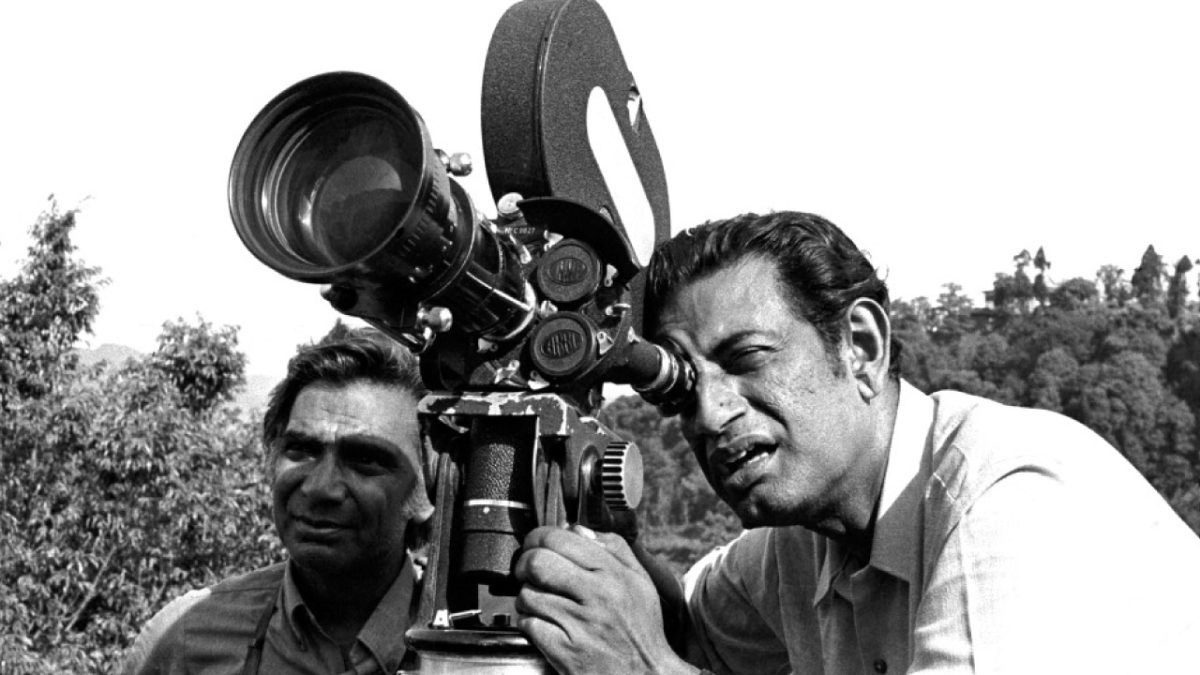
Satyajit Ray (2 May 1921 – 23 April 1992) was an Indian filmmaker, writer, illustrator and composer. He is widely regarded as one of the greatest directors in the history of world cinema. His debut film, Pather Panchali (1955), brought Indian cinema to international attention. Over almost four decades he made 36 films, including features, documentaries and shorts. He was also a celebrated author of Bengali fiction, the creator of the detective Feluda and the inventor-scientist Professor Shonku. He is the only Indian to have received an honorary Academy Award, which he was given in 1992, weeks before his death.
Quick Facts
| Full name | Satyajit Ray |
| Born | 2 May 1921, Calcutta (now Kolkata), India |
| Died | 23 April 1992, Calcutta (aged 70) |
| Profession | Film director, screenwriter, author, illustrator, composer, graphic designer |
| Education | Presidency College, Calcutta; Visva-Bharati University, Santiniketan |
| Father | Sukumar Ray (poet and writer) |
| Spouse | Bijoya Ray (m. 1949) |
| Son | Sandip Ray (filmmaker) |
| Debut film | Pather Panchali (1955) |
| Honours | Honorary Academy Award (1992), Bharat Ratna (1992), Dadasaheb Phalke Award (1984) |
Early Life and Education
Ray was born in Calcutta into one of Bengal’s most distinguished literary and artistic families. His grandfather, Upendrakishore Ray Chowdhury, was a writer, illustrator and printing pioneer who founded the children’s magazine Sandesh. His father, Sukumar Ray, was a much-loved poet famous for his nonsense verse. Sukumar died in 1923, when Satyajit was only two, and he was raised by his mother, Suprabha.
Ray studied economics at Presidency College in Calcutta. At his mother’s urging, he then spent two years studying fine arts at Rabindranath Tagore’s Visva-Bharati University in Santiniketan. There he learned from the painter Nandalal Bose and developed a deep appreciation of Indian and Far Eastern art.
Career
Advertising and book design
In 1943 Ray joined the British-run advertising agency D. J. Keymer as a junior visualiser, where he became a respected commercial artist. He also designed book covers for Signet Press. One of his assignments was to illustrate a children’s edition of Bibhutibhushan Bandyopadhyay’s novel Pather Panchali, and the story stayed with him.
The road to cinema
A passionate film lover, Ray co-founded the Calcutta Film Society in 1947. In 1949 he met the French director Jean Renoir, who was in Bengal shooting The River and encouraged him. On a work trip to London in 1950 he watched dozens of films, including Vittorio De Sica’s Bicycle Thieves. He returned determined to make Pather Panchali with a similar realistic style, using real locations and many non-professional actors.
Pather Panchali and the Apu Trilogy
Making Pather Panchali took about three years. Ray shot on weekends with an inexperienced crew and pawned his wife’s jewellery to keep going, until the West Bengal government stepped in with funding. Released in 1955 with music by Ravi Shankar, the film was a triumph. At the 1956 Cannes Film Festival it won an award as the “Best Human Document”. Its sequels, Aparajito (1956), which won the Golden Lion at Venice, and Apur Sansar (1959), completed the Apu Trilogy. It is often ranked among the greatest achievements in cinema.
A master at work
Ray followed the trilogy with a remarkable range of films, including:
Both Mahanagar and Charulata won the Silver Bear for Best Director at the Berlin Film Festival. From Teen Kanya (1961) onwards he composed the music for his own films. He also wrote his own screenplays, designed his own posters and often operated the camera himself.
Films for children and the Calcutta Trilogy
The musical fantasy Goopy Gyne Bagha Byne (1969) became one of the most popular Bengali films ever made, and its sequel, Hirak Rajar Deshe (1980), carried a sharp political message. Ray also brought his detective Feluda to the screen in Sonar Kella (1974) and Joi Baba Felunath (1979). In the 1970s his Calcutta Trilogy, Pratidwandi, Seemabaddha and Jana Aranya, examined unemployment, ambition and corruption in the modern city. Ashani Sanket (1973), about the Bengal famine of 1943, won the Golden Bear at Berlin.
Hindi films and final years
Ray’s only Hindi-Urdu feature, Shatranj Ke Khilari (1977), was set in 1850s Lucknow. It starred Sanjeev Kumar, Saeed Jaffrey and Richard Attenborough and was narrated by Amitabh Bachchan. He also made the Hindi television film Sadgati (1981). After heart attacks in the early 1980s, he worked more slowly, often in studios, and made Ghare Baire (1984), Ganashatru (1989), Shakha Proshakha (1990) and his final film, Agantuk (1991).
Writer and Designer
In 1961 Ray revived his grandfather’s magazine, Sandesh. For it he wrote and illustrated stories, including those featuring the scientist-inventor Professor Shonku and, from 1965, the sharp-witted private detective Feluda. These books remain bestsellers in Bengali and are widely read in translation. Ray was also a talented graphic designer who created typefaces and designed the covers and posters for his work.
Personal Life and Death
Ray married Bijoya Das, his cousin and longtime companion, in 1949. Their only son, Sandip Ray, became a filmmaker and has continued the Feluda films. In early 1992 Ray was hospitalised with heart problems. That March he accepted an honorary Oscar for lifetime achievement by video from his hospital bed in Calcutta, and days later he was awarded the Bharat Ratna. He died on 23 April 1992, aged 70.
Legacy
Ray’s films influenced generations of filmmakers in India and abroad. The Japanese master Akira Kurosawa famously said that not to have seen Ray’s cinema was like living without ever seeing the sun or the moon. The Satyajit Ray Film and Television Institute in Kolkata is named after him. The International Film Festival of India also presents a lifetime achievement award in his name. His birth centenary was celebrated in 2021.
Awards and Honours
Selected Filmography
Frequently Asked Questions
When and where was Satyajit Ray born?
Satyajit Ray was born on 2 May 1921 in Calcutta (now Kolkata), India.
When did Satyajit Ray die?
Died: 23 April 1992, Calcutta (aged 70).
What honours has Satyajit Ray received?
Honorary Academy Award (1992), Bharat Ratna (1992), Dadasaheb Phalke Award (1984).



