
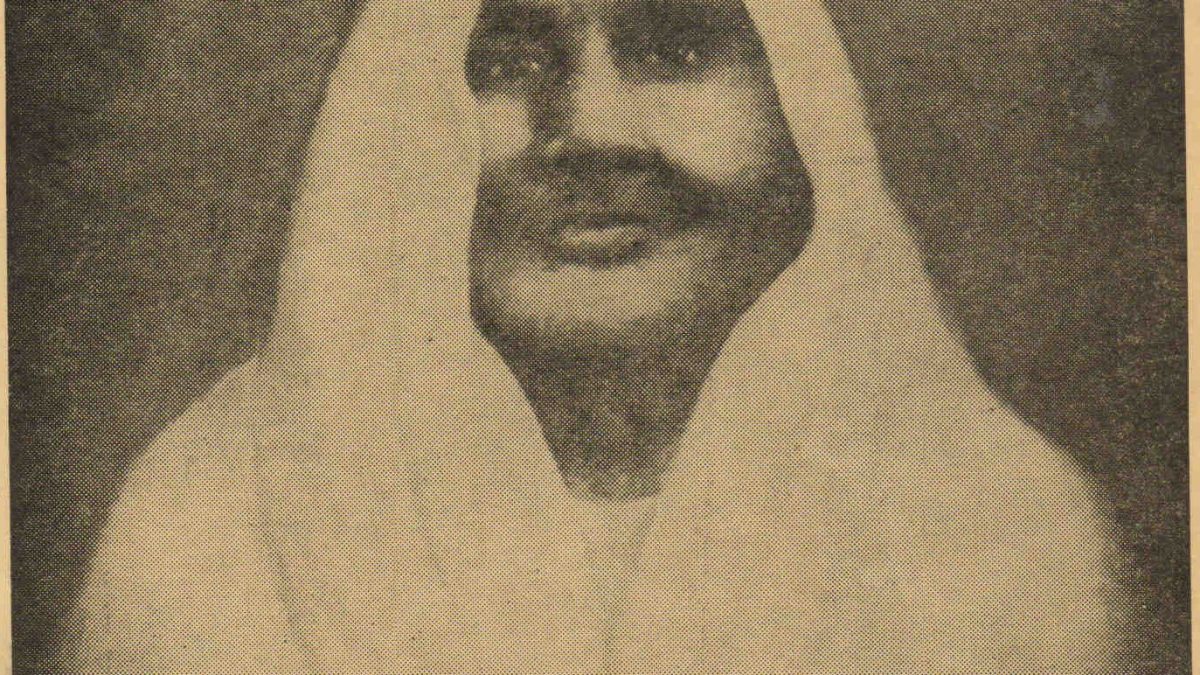
Matangini Hazra (c. 1870 – 29 September 1942) was an Indian freedom fighter from the Midnapore district of Bengal. A poor, unlettered widow who joined the national movement in her sixties, she was known as Gandhi Buri, “old lady Gandhi”. During the Quit India Movement she led a procession to seize the police station at Tamluk and was shot dead by police, still holding the national flag. She was seventy-two.
Quick Facts
| Full name | Matangini Hazra |
| Born | c. 1870, Hogla, near Tamluk, Midnapore district, Bengal |
| Died | 29 September 1942 (aged about 72), Tamluk |
| Known as | Gandhi Buri |
| Known for | Leading the Quit India procession at Tamluk |
| Movements | Civil Disobedience; Quit India |
Early Life
Little is recorded of her early years. She was born into a poor peasant family in the village of Hogla and received no schooling. She was married as a child to Trilochan Hazra, a widower many years her senior, and was widowed at eighteen without children. She returned to live alone in a hut near her parents’ village, supporting herself by husking paddy, and became known for helping neighbours in sickness and need.
Freedom Movement
Midnapore was one of the most politically active districts in India. In 1932, when a procession of Congress volunteers passed her hut, she joined it. She took part in the breaking of the salt law, was arrested and released, and then joined the campaign against the chowkidari tax levied on villagers to pay for the police. For taking part in a march to the governor’s court she was sentenced to six months’ imprisonment in Baharampur jail.
After her release she became a member of the Congress, took up spinning and wore only khadi. In 1933 she attended a banned Congress conference at Serampore and was injured when police charged the crowd with batons. She nursed victims of a smallpox epidemic in her area. Her devotion to Mahatma Gandhi‘s methods earned her the name by which she is remembered.
After the Quit India resolution of August 1942 the Congress workers of Tamluk subdivision planned to take over the police stations, courts and offices and establish their own government. On 29 September columns of villagers converged on Tamluk from several directions. Hazra led one of them, of about six thousand people, many of them women.
At the edge of the town the police ordered the marchers to halt. She stepped ahead with the flag and appealed to them not to fire on the crowd. She was shot in the hand, and moved the flag to the other; she was shot again, and then a third time in the forehead. Witnesses said she went on repeating “Vande Mataram” and that the flag was still upright in her grip when she fell.
Aftermath
Her death strengthened resistance in the district. In December 1942 the Tamluk nationalists set up the Tamralipta Jatiya Sarkar, a parallel government with its own courts, relief and volunteer corps, which functioned until 1944.
Legacy
In 1977 a statue of Matangini Hazra was unveiled on the Maidan in Kolkata, the first statue of a woman to be placed there. Hazra Road in the city, many schools and a postage stamp issued in 2002 honour her, and her story is told in Bengal as proof that the freedom struggle belonged as much to the poorest villagers as to its famous leaders.
Frequently Asked Questions
When and where was Matangini Hazra born?
Birth details: c. 1870, Hogla, near Tamluk, Midnapore district, Bengal.
When did Matangini Hazra die?
Died: 29 September 1942 (aged about 72), Tamluk.
What is Matangini Hazra known for?
Known for: Leading the Quit India procession at Tamluk.
Featured image: Matangini Hazra, known as Gandhi Buri. Photo by an unknown photographer, licensed under CC BY-SA 2.5, via Wikimedia Commons.



