
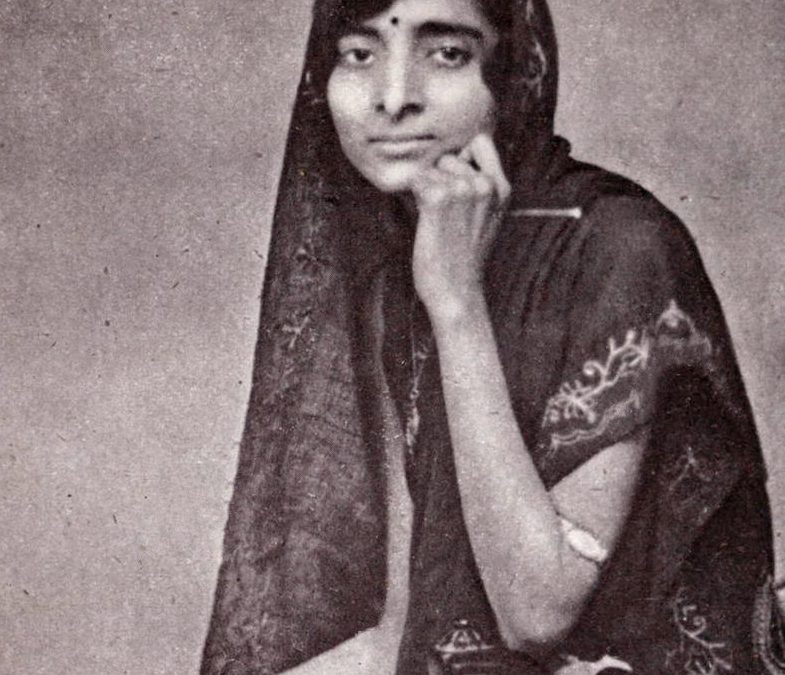
Kamala Nehru (1 August 1899 – 28 February 1936) was an Indian freedom fighter, the wife of Jawaharlal Nehru and the mother of Indira Gandhi. A shy girl from a traditional family, married into the most westernised household in India, she found her own role in the national movement, organising the women of Allahabad and going to prison. She suffered from tuberculosis for most of her adult life and died in Switzerland at thirty-six.
Quick Facts
| Full name | Kamala Kaul Nehru |
| Born | 1 August 1899, Delhi |
| Died | 28 February 1936, Lausanne, Switzerland (aged 36) |
| Known for | Leading women in the freedom movement in Allahabad |
| Spouse | Jawaharlal Nehru (m. 1916) |
| Children | Indira Gandhi |
| Memorials | Kamala Nehru Memorial Hospital, Allahabad |
Early Life
She was born in the old city of Delhi into a middle-class family of Kashmiri Brahmins, the eldest child of a businessman, Jawaharmal Kaul. She was brought up in the old way, taught at home, and spoke Hindi and Urdu and almost no English.
Marriage
Motilal Nehru, looking for a bride for his only son, chose her when she was not quite seventeen. Before the wedding she was brought to Allahabad to be tutored by the family’s English governesses. She married Jawaharlal Nehru on 8 February 1916, the day of the spring festival.
Anand Bhavan, the Nehru house, was large, rich and anglicised. Her husband had spent seven years at Harrow, Cambridge and the Inns of Court. She was reserved, religious and unused to Western ways, and some of the women of the family, her sister-in-law Vijaya Lakshmi in particular, made her feel it. Her husband, absorbed in politics, hardly noticed. Their daughter, Indira, was born on 19 November 1917. A son born in 1924 lived only a few days.
The Movement
Nehru wrote later that he had not understood his wife until she showed him who she was. When the family joined Mahatma Gandhi‘s non-cooperation movement in 1921 and gave up its luxuries, she took to the change more readily than anyone. She urged her husband on when others in the family hesitated.
- **1921:** she organised the women of Allahabad to picket shops selling foreign cloth and liquor
- **1930:** with the men of the family in prison during the civil disobedience movement, she became a leader of the Congress in the city, addressing meetings and leading processions in the summer heat. When her husband was arrested for a speech, she is said to have gone to the meeting and read the rest of it herself.
- **1 January 1931:** she was arrested and held in Lucknow jail for some weeks
She turned part of the family’s old house, which Motilal had given to the Congress, into a dispensary for those injured in police charges. It grew into a hospital that now bears her name.
Nehru was astonished at her energy and courage, and the marriage, which had been distant, became close in these years. Much of it was lived through letters, since he was so often in prison.
Illness
She had developed tuberculosis by 1919. In 1926 he took her to Switzerland for treatment, and they spent nearly two years in Europe. She recovered for a time, but the exertions of 1930 and 1931 broke her health again.
In 1934 she was moved to a sanatorium at Bhowali in the Kumaon hills; Nehru, then in jail at Almora, was allowed out under escort to visit her. In 1935 she was taken to a clinic at Badenweiler in Germany. The government released him in September so that he could join her. She died at Lausanne on 28 February 1936, with her husband and daughter beside her.
He took her ashes home in an urn, which he kept by him for the rest of his life. His autobiography, published that year, is dedicated “To Kamala who is no more”.
Her Daughter
Indira Gandhi was eighteen when her mother died. She had watched her mother’s slights and her courage, and was fiercely protective of her. She said in later years that her mother’s influence on her had been greater than her father’s, and that from her she had learnt not to let herself be hurt.
Among those who stood by Kamala in her illness was a young Congress worker from Allahabad, Feroze Gandhi, who later married Indira.
Legacy
Hospitals, colleges, parks and roads across India are named after her, and a postage stamp was issued in her honour. She is remembered less for any office or speech than as an example of the many women of ordinary upbringing whom the freedom movement drew out of seclusion and into public life.
Featured image: Kamala Nehru. Photo by an unknown photographer, in the public domain, via Wikimedia Commons.



