
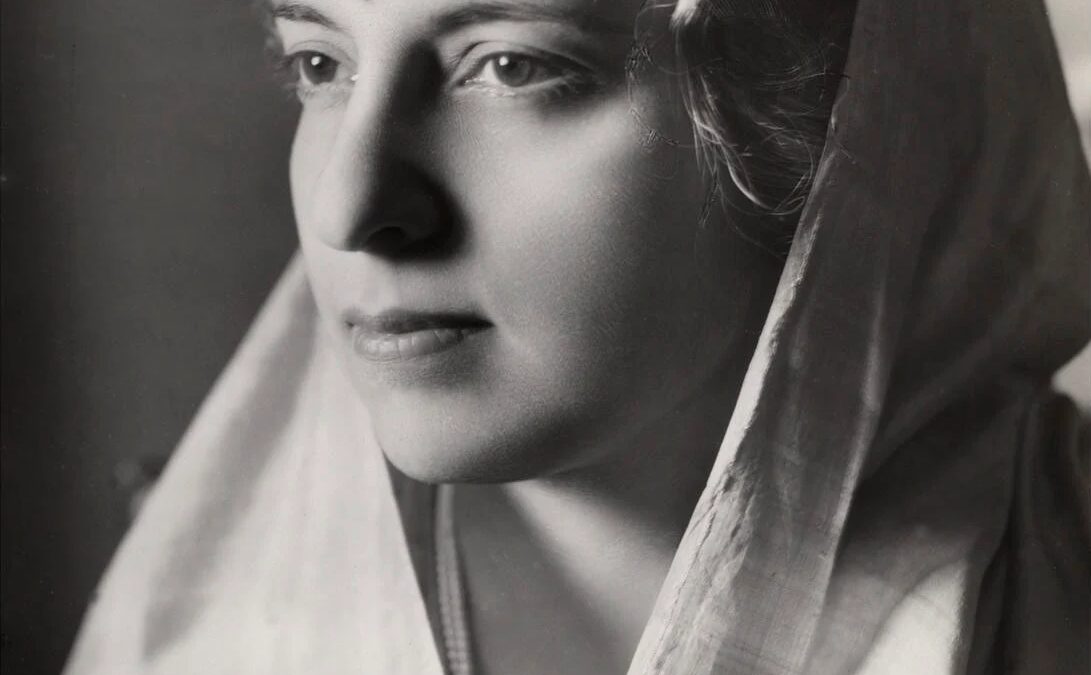
Vijaya Lakshmi Pandit (18 August 1900 – 1 December 1990) was an Indian freedom fighter, politician and diplomat. In 1937 she became a minister in the government of the United Provinces, the first Indian woman to hold cabinet office. After independence she was ambassador to the Soviet Union and the United States and High Commissioner in London, and in 1953 she was elected President of the United Nations General Assembly, the first woman to hold that post.
Quick Facts
| Birth name | Swarup Kumari Nehru |
| Born | 18 August 1900, Allahabad (now Prayagraj), Uttar Pradesh, India |
| Died | 1 December 1990 (aged 90), Dehradun |
| Occupation | Politician, diplomat |
| Offices | Minister, United Provinces (1937–39, 1946–47); President, UN General Assembly (1953–54); Governor of Maharashtra (1962–64) |
| Spouse | Ranjit Sitaram Pandit (m. 1921; d. 1944) |
| Children | 3 daughters, including Nayantara Sahgal |
| Relatives | Motilal Nehru (father), Jawaharlal Nehru (brother) |
Early Life
She was born at Anand Bhavan in Allahabad, the elder daughter of Motilal Nehru and eleven years younger than her brother Jawaharlal Nehru. She was educated at home by governesses and tutors and never attended school or university. In 1921 she married Ranjit Sitaram Pandit, a barrister and Sanskrit scholar from Kathiawar, and took the name Vijaya Lakshmi.
Freedom Movement
She joined the Non-Cooperation Movement with the rest of her family and was imprisoned three times, in 1932, 1940 and 1942. Her husband, also repeatedly jailed, died in 1944 shortly after his release. Under the law of the time a Hindu widow without a son had no right to her husband’s property, an injustice she fought and which helped drive later reform of inheritance law.
Provincial Politics
She was elected to the Allahabad Municipal Board in 1935. In the elections of 1937 she won a seat in the legislature of the United Provinces, and in the Congress ministry of Govind Ballabh Pant she became Minister for Local Self-Government and Public Health, working on rural water supply, maternity services and the fight against cholera and malaria. The ministry resigned in 1939. She held the same post again in 1946–47 and was a member of the Constituent Assembly.
Diplomat
In 1946 she led the Indian delegation to the United Nations, where she raised the treatment of people of Indian origin in South Africa and won the Assembly’s support against the opposition of that country’s prime minister. After independence she was India’s first ambassador to the Soviet Union, from 1947 to 1949, then ambassador to the United States and Mexico until 1951. She was elected to the first Lok Sabha in 1952.
In September 1953 she was chosen President of the eighth session of the General Assembly. From 1954 to 1961 she was High Commissioner in the United Kingdom, serving at the same time as ambassador to Ireland and Spain.
Later Career
She was Governor of Maharashtra from 1962 to 1964. After her brother’s death she won his parliamentary seat, Phulpur near Allahabad, and held it until she resigned in 1968. She grew estranged from her niece Indira Gandhi, came out of retirement to campaign against the Emergency in the election of 1977, and afterwards represented India at the United Nations Human Rights Commission.
Personal Life and Death
She had three daughters; the second, Nayantara Sahgal, is a well-known novelist. Her memoir, The Scope of Happiness, appeared in 1979. She spent her last years in Dehradun and died there on 1 December 1990.
Frequently Asked Questions
When and where was Vijaya Lakshmi Pandit born?
Vijaya Lakshmi Pandit was born on 18 August 1900 in Allahabad (now Prayagraj), Uttar Pradesh, India.
When did Vijaya Lakshmi Pandit die?
Died: 1 December 1990 (aged 90), Dehradun.
What is Vijaya Lakshmi Pandit’s occupation?
Occupation: Politician, diplomat.
Featured image: Vijaya Lakshmi Pandit, photographed by Bassano in London, 1938. Photo by Bassano Ltd, in the public domain, via Wikimedia Commons.



