
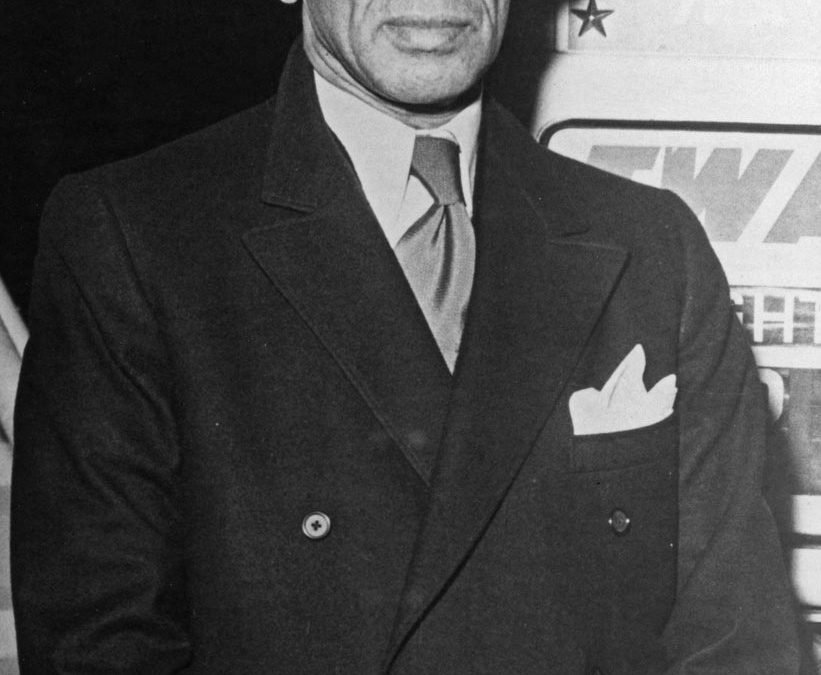
Vengalil Krishnan Krishna Menon (3 May 1896 – 6 October 1974) was an Indian nationalist, diplomat and politician, for fifteen years the closest associate of Jawaharlal Nehru in foreign affairs. He ran the campaign for Indian independence in Britain for two decades, was India’s first High Commissioner in London, became the voice of non-alignment at the United Nations and was Defence Minister from 1957 until India’s defeat in the war with China in 1962 forced him out. Brilliant, abrasive and controversial, he was one of the most admired and most disliked public figures of his time.
Quick Facts
| Full name | Vengalil Krishnan Krishna Menon |
| Born | 3 May 1896, Kozhikode (Calicut), Kerala |
| Died | 6 October 1974 (aged 78), New Delhi |
| Occupation | Lawyer, diplomat, politician |
| Offices | High Commissioner to the United Kingdom (1947–1952); Leader of the Indian delegation to the UN (1952–1962); Defence Minister (1957–1962) |
| Known for | India League; non-alignment; UN speech on Kashmir (1957) |
| Education | Presidency College, Madras; London School of Economics; University College London; Middle Temple |
| Honours | Padma Vibhushan (1954) |
Early Life
Menon was born in Kozhikode into a well-to-do Nair family. His father was a lawyer, and his mother the granddaughter of a former chief minister of Travancore. He studied at Presidency College in Madras, where he came under the influence of Annie Besant, joined her Home Rule movement and worked in the scout organisation she sponsored. She helped send him to England in 1924.
London
He stayed for nearly thirty years. He studied at the London School of Economics under Harold Laski, took degrees in political science and psychology and was called to the bar. In 1929 he became secretary of the India League and turned it into the main organisation pressing for Indian self-rule in Britain, lobbying members of Parliament, bringing delegations to India and writing ceaselessly, all on very little money. He was elected a Labour councillor for the London borough of St Pancras, where he built up the public libraries. He was also the first editor of Pelican Books, the non-fiction imprint of Penguin. He met Nehru in the 1930s, became his literary agent and friend, and travelled with him to Spain during the civil war.
Diplomat
On independence he was appointed India’s first High Commissioner to the United Kingdom. He helped devise the formula of 1949 under which India could become a republic and remain in the Commonwealth. A scandal over the purchase of army jeeps through an intermediary damaged his reputation at home.
From 1952 he led India’s delegation at the United Nations. He played a part in the negotiations that ended the Korean War and in the Geneva conference on Indochina, and spoke for the newly independent countries that refused to join either power bloc. On 23 January 1957 he began a speech to the Security Council defending India’s position on Kashmir that lasted nearly eight hours across two days, the longest ever delivered there; he collapsed from exhaustion at the end. In India it made him a hero; in the West his sharp tongue and his sympathy for the Soviet position made him many enemies.
Defence Minister
He entered the Cabinet in 1956 and became Defence Minister in April 1957, having been elected from North Bombay. He pushed for India to make its own weapons, setting up or expanding ordnance and aircraft factories and the defence research organisation, and he directed the military operation that ended Portuguese rule in Goa in December 1961. He quarrelled publicly with senior officers, one of whom, the army chief, offered his resignation in 1959, and he was accused of promoting favourites.
When Chinese forces overran Indian positions in the Himalayas in October 1962, the army was found to be short of equipment and badly led. Parliament and his own party demanded his removal, and he resigned on 7 November 1962.
Later Years
Denied a Congress nomination in 1967, he left the party. He was elected to the Lok Sabha as an independent with left support from Midnapore in 1969 and from Thiruvananthapuram in 1971, and practised in the Supreme Court. He died in New Delhi on 6 October 1974.
Legacy
He never married and lived austerely on tea and biscuits. Indira Gandhi said at his death that a volcano had been extinguished. Historians still argue over his share of responsibility for 1962, but his part in winning British opinion for Indian freedom and in shaping India’s independent foreign policy is not in doubt.
Frequently Asked Questions
When and where was V. K. Krishna Menon born?
V. K. Krishna Menon was born on 3 May 1896 in Kozhikode (Calicut), Kerala.
When did V. K. Krishna Menon die?
Died: 6 October 1974 (aged 78), New Delhi.
What is V. K. Krishna Menon known for?
Known for: India League; non-alignment; UN speech on Kashmir (1957).
What honours has V. K. Krishna Menon received?
Padma Vibhushan (1954).
Featured image: V. K. Krishna Menon in the early 1950s. Photo by an unknown photographer, in the public domain, via Wikimedia Commons.



