
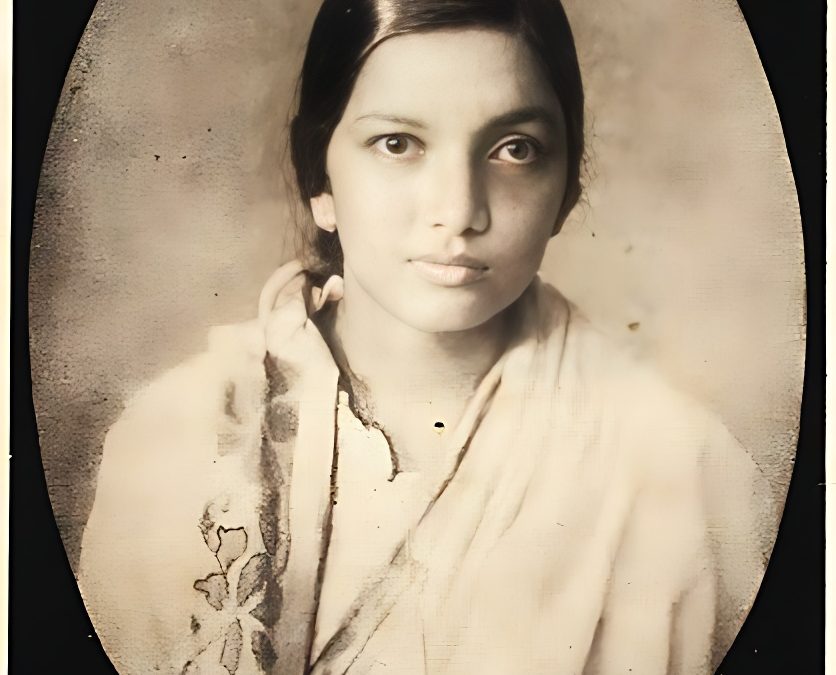
Kalpana Datta (27 July 1913 – 8 February 1995), later Kalpana Joshi, was an Indian revolutionary who as a college student joined the group led by Surya Sen that had raided the armouries at Chittagong in 1930. She made explosives, carried messages and arms, survived two encounters with the police and was sentenced to transportation for life at twenty. After her release she became a Communist Party worker and wrote one of the main first-hand accounts of the Chittagong uprising.
Quick Facts
| Full name | Kalpana Datta (after marriage, Kalpana Joshi) |
| Born | 27 July 1913, Sripur, Chittagong district, Bengal (now Bangladesh) |
| Died | 8 February 1995 (aged 81), Kolkata, India |
| Organisation | Indian Republican Army, Chittagong branch; later Communist Party of India |
| Known for | Chittagong uprising |
| Education | Bethune College, Calcutta; University of Calcutta |
| Spouse | P. C. Joshi (m. 1943) |
Early Life
Datta was born into a middle-class family in the Chittagong district. She read the lives of revolutionaries as a schoolgirl and passed her matriculation in 1929. She went to Calcutta to study science at Bethune College, where she joined a students’ association of young women in which several future revolutionaries, among them Pritilata Waddedar, were active.
Chittagong
On 18 April 1930 Surya Sen, a schoolteacher known as Masterda, led some sixty-five young men in an attack on the police and auxiliary force armouries at Chittagong, cut the telegraph and rail lines and proclaimed a provisional government. After a battle on Jalalabad hill the survivors scattered into the villages. Datta transferred to Chittagong College and in 1931 was accepted into the underground organisation. Her knowledge of chemistry was put to use: she prepared gun-cotton and helped in a plan, discovered before it could be carried out, to free arrested comrades by dynamiting the jail and court.
In September 1932 Sen chose her and Pritilata Waddedar to lead an attack on the European Club at Pahartali. A week before, Datta was arrested while moving about the area dressed as a boy. Waddedar led the raid alone and took her own life to avoid capture. Released on bail, Datta went underground.
In February 1933 the police surrounded a hideout at Gairala. Surya Sen was taken; Datta and another member shot their way out. She was caught three months later after another exchange of fire. In the second supplementary Chittagong armoury trial Sen and Tarakeswar Dastidar were sentenced to death, and Datta, because of her age and sex, to transportation for life.
Release and Later Life
A public campaign for the release of political prisoners, supported by Rabindranath Tagore and Mahatma Gandhi, won her freedom in 1939. She completed her degree at the University of Calcutta in 1940 and, like many former revolutionaries who had studied Marxism in prison, joined the Communist Party of India. She organised relief during the Bengal famine of 1943 and that year married P. C. Joshi, the party’s general secretary. She contested the Bengal assembly election of 1946 from Chittagong without success. After Joshi was removed from the leadership she withdrew from active politics and worked for many years at the Indian Statistical Institute.
Memoir and Legacy
Her book Chittagong Armoury Raiders: Reminiscences, published in 1945, records the daily life, discipline and doubts of the group. Her daughter-in-law, the journalist Manini Chatterjee, drew on it and on her conversations for Do and Die, a history of the uprising. In the Hindi film Khelein Hum Jee Jaan Sey (2010) she was played by Deepika Padukone.
Frequently Asked Questions
When and where was Kalpana Datta born?
Kalpana Datta was born on 27 July 1913 in Sripur, Chittagong district, Bengal (now Bangladesh).
When did Kalpana Datta die?
Died: 8 February 1995 (aged 81), Kolkata, India.
What is Kalpana Datta known for?
Known for: Chittagong uprising.
Featured image: Kalpana Datta, undated photograph. Photo by an unknown photographer, in the public domain, via Wikimedia Commons.



