Yash Pal (26 November 1926 – 24 July 2017) was an Indian physicist, educationist and science communicator. He began as a cosmic ray physicist, led the experiment that brought satellite television to Indian villages, headed the University Grants Commission, and wrote reports that reshaped school education. Millions knew him as the white-haired scientist who answered viewers’ questions on the television programme Turning Point.
Quick Facts
| Full name | Yash Pal |
| Born | 26 November 1926, Jhang, Punjab, British India (now in Pakistan) |
| Died | 24 July 2017, Noida, Uttar Pradesh (aged 90) |
| Field | Physics, education, science communication |
| Education | Panjab University (M.Sc., 1949); Massachusetts Institute of Technology (Ph.D., 1958) |
| Known for | Cosmic ray research; SITE; Learning Without Burden; Turning Point |
| Positions | Director, Space Applications Centre (1973–1981); Secretary, Department of Science and Technology; Chairman, University Grants Commission (1986–1991) |
| Honours | Padma Bhushan (1976), Padma Vibhushan (2013), Marconi Prize (1980), UNESCO Kalinga Prize (2009) |
| Spouse | Nirmal Pal |
| Children | 2 |
Early Life
He was born at Jhang in western Punjab and spent part of his childhood at Quetta, where he lived through the earthquake of 1935. His schooling was interrupted more than once. At Partition the family moved to India, and he completed his M.Sc. in physics from Panjab University in 1949.
Career
Cosmic rays
He joined the Tata Institute of Fundamental Research in Bombay in its early days and became part of its cosmic ray group, sending photographic plates high into the atmosphere on balloons to study particles from space. He took his doctorate at the Massachusetts Institute of Technology in 1958 and returned to the institute, where he worked until 1973 on cosmic rays, particle physics and astrophysics.
SITE
In 1973 he became the first director of the Space Applications Centre in Ahmedabad. There he led the Satellite Instructional Television Experiment of 1975–76, which used an American satellite to beam programmes on farming, health and schooling to community sets in about 2,400 villages in six states. It was one of the largest experiments in communication ever tried, and laid the ground for India’s own INSAT satellites. He received the Marconi Prize for it in 1980.
Administrator
- **1981–1982:** Secretary-General of the United Nations conference on the peaceful uses of outer space
- **1983–1984:** Chief Consultant to the Planning Commission
- **1984–1986:** Secretary of the Department of Science and Technology
- **1986–1991:** Chairman of the University Grants Commission, where he set up inter-university centres for shared research facilities, including the one for astronomy at Pune led by Jayant Narlikar
School and university reform
In 1993 a committee he chaired produced the report Learning Without Burden, which argued that children were being crushed by heavy school bags and rote learning without understanding. He later chaired the steering committee of the National Curriculum Framework of 2005, and a committee on higher education whose 2009 report called for an end to the fragmentation of universities.
Science for everyone
On Doordarshan’s Turning Point in the 1990s he answered questions sent in by viewers, many of them children: why the sky is blue, why we yawn. He never talked down to anyone, and he continued the habit in newspaper columns. He was Chancellor of Jawaharlal Nehru University from 2007 to 2012.
Personal Life
He was married to Nirmal, and they had two sons. He survived cancer in his eighties and remained active until his death at Noida on 24 July 2017, the same day as the space scientist U. R. Rao.
Legacy
He held that the purpose of education is understanding and not the passing of examinations, and that a child’s question deserves a scientist’s best answer.
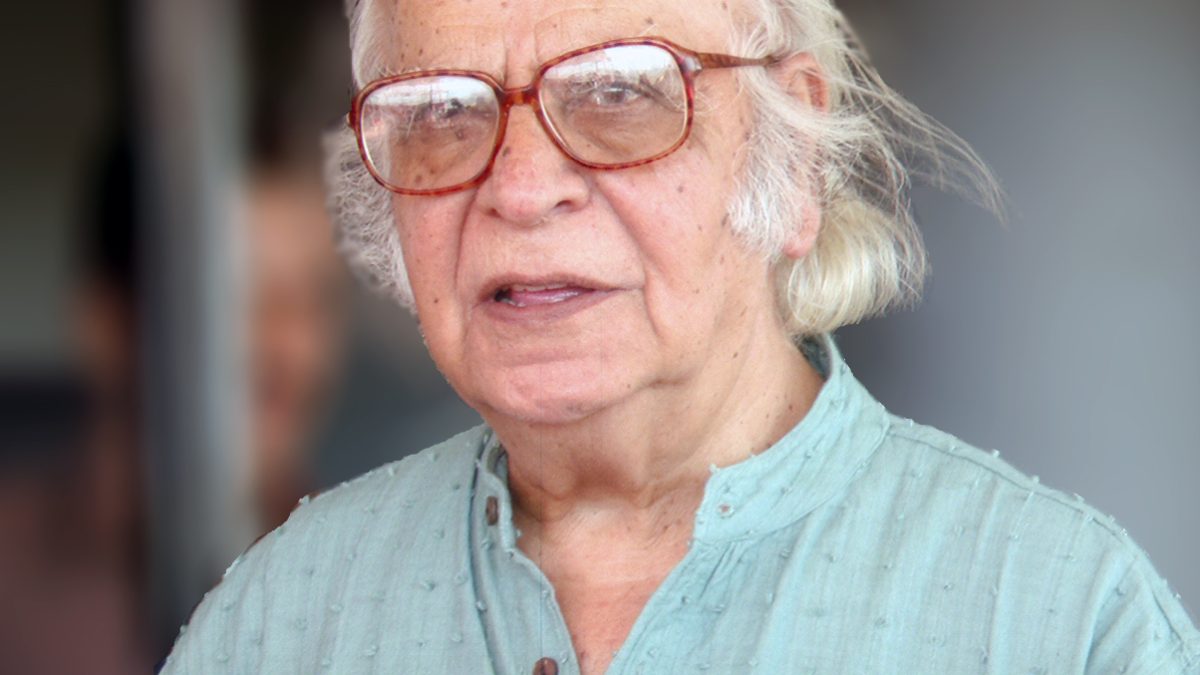
Featured image: Yash Pal at the inauguration of the IUCAA Girawali Observatory in 2006. Photo by Scipop, licensed under CC BY-SA 4.0, via Wikimedia Commons.