Satish Dhawan (25 September 1920 – 3 January 2002) was an Indian aerospace engineer who led the Indian Space Research Organisation from 1972 to 1984 and the Indian Institute of Science for nearly two decades. He founded experimental fluid dynamics research in India and turned the space programme begun by Vikram Sarabhai into a working system of satellites and launch vehicles. The country’s spaceport at Sriharikota is named after him.
Quick Facts
| Full name | Satish Dhawan |
| Born | 25 September 1920, Srinagar, Jammu and Kashmir |
| Died | 3 January 2002, Bangalore (aged 81) |
| Field | Aerospace engineering, fluid dynamics |
| Education | Punjab University, Lahore; University of Minnesota (M.S.); California Institute of Technology (Ph.D., 1951) |
| Positions | Director, Indian Institute of Science (1962–1981); Chairman, ISRO and Space Commission (1972–1984) |
| Honours | Padma Bhushan (1971), Padma Vibhushan (1981), Indira Gandhi Award for National Integration (1999) |
| Spouse | Nalini Dhawan |
| Children | 3 |
Early Life and Education
He was born in Srinagar, the son of a judge of the Lahore High Court. At Punjab University in Lahore he collected an unusual set of degrees: a bachelor’s in mathematics and physics, a master’s in English literature and a bachelor’s in mechanical engineering.
After a short spell at Hindustan Aircraft in Bangalore he went to the United States in 1946, taking a master’s in aeronautical engineering at the University of Minnesota and then moving to the California Institute of Technology. There he worked under Hans Liepmann and took his doctorate in 1951.
Career
Indian Institute of Science
He joined the Indian Institute of Science in Bangalore in 1951 and built its aeronautics department into a centre of research, with the country’s first supersonic wind tunnel. His own work was on boundary layers, turbulence and shock waves. In 1962, at forty-two, he became the institute’s director, and held the post until 1981, longer than anyone else. He started new departments in computer science, molecular biophysics, ecology and atmospheric science.
ISRO
When Sarabhai died suddenly in December 1971, Indira Gandhi asked Dhawan, then on sabbatical at Caltech, to take over the space programme. He agreed on condition that its headquarters move to Bangalore and that he remain director of the institute.
Under him the programme produced:
- **Aryabhata,** India’s first satellite, launched in 1975
- **SLV-3,** the first Indian launch vehicle, which put the Rohini satellite into orbit in 1980
- **INSAT and IRS,** the communication and remote-sensing satellite systems
- **The plans for the PSLV,** the launcher that became ISRO’s workhorse
The SLV-3 story
The first flight of the SLV-3, in August 1979, failed. Its project director was A. P. J. Abdul Kalam. Dhawan faced the press himself and took responsibility. When the second flight succeeded in July 1980, he sent Kalam to address the press conference. Kalam told the story for the rest of his life as a lesson in leadership.
Personal Life
He married Nalini, a geneticist. They had a son and two daughters. He was a keen birdwatcher and wrote a paper on the flight of birds. He lived simply in Bangalore after retirement and died there in 2002.
Legacy
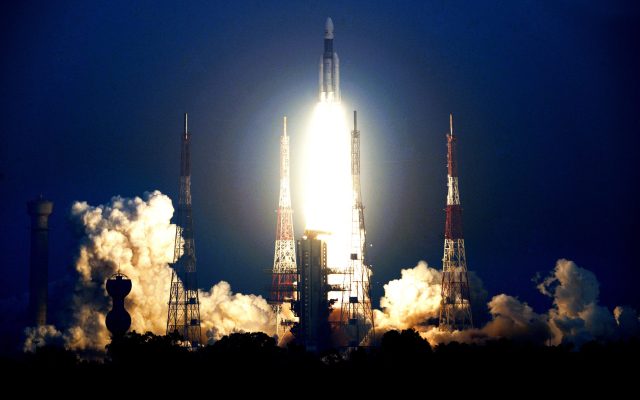
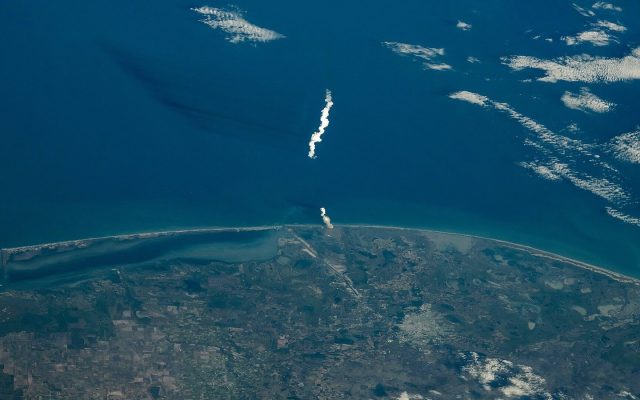
The launch centre at Sriharikota in Andhra Pradesh was renamed the Satish Dhawan Space Centre in 2002. His successors at ISRO, including K. Kasturirangan, credited him with the organisation’s habits of open review and collective responsibility.
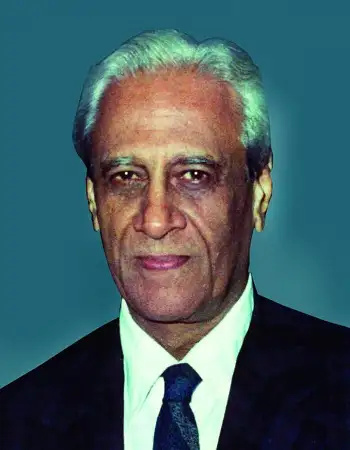
Featured image: Satish Dhawan in an official ISRO portrait. Photo by Indian Space Research Organisation (ISRO), licensed under Government Open Data License – India, via Wikimedia Commons.