Sálim Moizuddin Abdul Ali (12 November 1896 – 20 June 1987), known as Salim Ali, was an Indian ornithologist and naturalist, popularly called the Birdman of India. He carried out systematic bird surveys across the country over six decades, wrote the books from which generations of Indians learnt their birds, and used his standing to protect forests and wetlands.
Quick Facts
| Full name | Sálim Moizuddin Abdul Ali |
| Born | 12 November 1896, Bombay |
| Died | 20 June 1987, Bombay (aged 90) |
| Field | Ornithology, natural history |
| Known for | Bird surveys of India; The Book of Indian Birds; Handbook of the Birds of India and Pakistan |
| Institution | Bombay Natural History Society |
| Honours | Padma Bhushan (1958), Padma Vibhushan (1976), J. Paul Getty Wildlife Conservation Prize (1976) |
| Other | Nominated member of the Rajya Sabha (1985) |
| Spouse | Tehmina Ali (m. 1918; died 1939) |
Early Life
He was born in Bombay into a Sulaimani Bohra family, the youngest of nine children. Both his parents died before he was three, and he was brought up by his maternal uncle, Amiruddin Tyabji, and his aunt in a large household at Khetwadi.
The uncle was a keen sportsman, and at about ten the boy shot a sparrow with an unusual yellow patch on its throat. He was sent with it to W. S. Millard, the honorary secretary of the Bombay Natural History Society, who identified it as a yellow-throated sparrow, showed him the society’s collection of stuffed birds and lent him books. The visit decided his life.
Career
A late start
He was a poor student of mathematics and did not complete a degree. He spent several years in Tavoy, Burma, in the family’s mining and timber business, watching birds in the forests. Back in Bombay he studied zoology and in 1926 became a guide lecturer at the natural history section of the Prince of Wales Museum. In 1929 he went to Berlin to train under the ornithologist Erwin Stresemann.
On his return he could find no job. Living cheaply at Kihim on the coast, he made a study of the baya weaver bird, published in 1930, which established his name.
The surveys
He offered to survey the birds of the princely states if they would pay his expenses. Beginning with Hyderabad, he went on to Travancore and Cochin, Central India, Mysore, Kutch and elsewhere, often travelling by bullock cart and camping for months. His wife, Tehmina, worked beside him until her death in 1939.
The books
The Book of Indian Birds, published in 1941 with colour plates and plain descriptions, made birdwatching popular in India and has never been out of print. With the American ornithologist S. Dillon Ripley he wrote the Handbook of the Birds of India and Pakistan, in ten volumes, between 1964 and 1974. His autobiography, The Fall of a Sparrow, appeared in 1985.
Conservation
After independence he helped keep the Bombay Natural History Society alive by appealing to Jawaharlal Nehru for funds. He was influential in the creation of the Bharatpur bird sanctuary, now Keoladeo National Park, and in the decision to abandon a dam that would have drowned the Silent Valley forest in Kerala.
Personal Life
He married Tehmina, a distant relative, in 1918. They had no children. After her death he lived with his sister’s family in Bombay. He died of cancer in 1987.
Legacy
The Sálim Ali Centre for Ornithology and Natural History at Coimbatore was founded in 1990. Several birds, a bat and a number of sanctuaries are named after him.
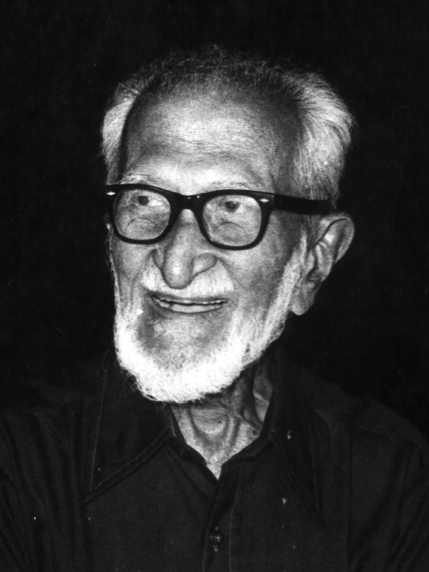
Featured image: Salim Ali in his later years. Photo by V. Santharam, licensed under CC BY 2.5, via Wikimedia Commons.