
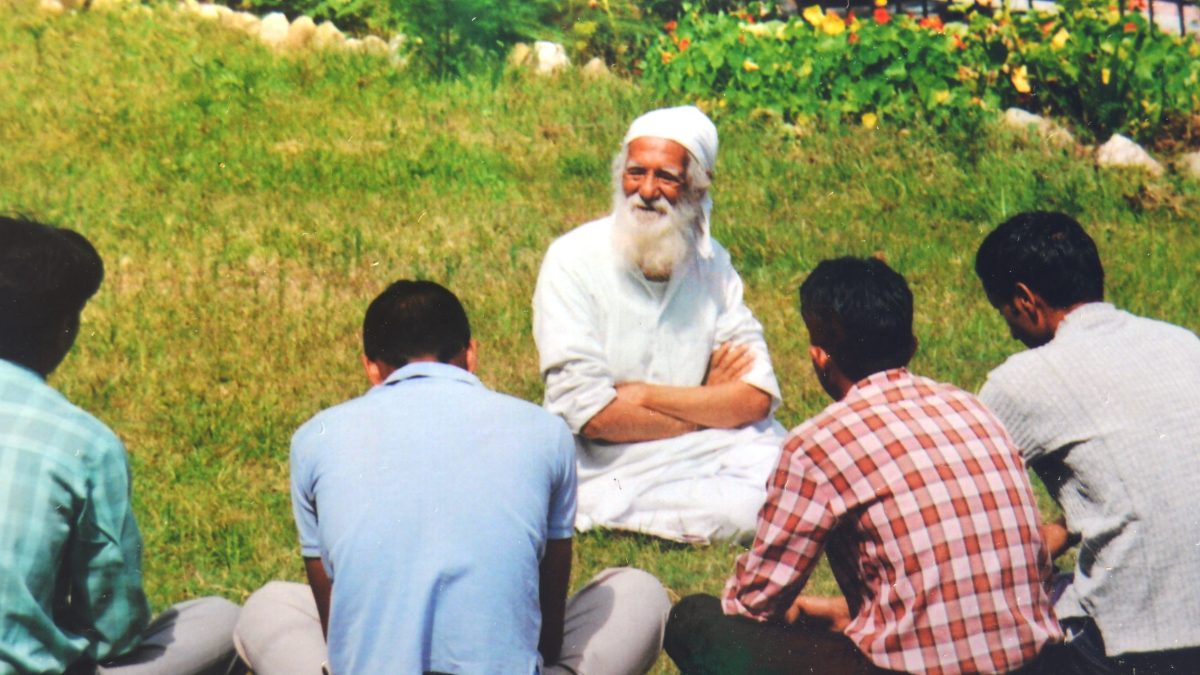
Sunderlal Bahuguna (9 January 1927 – 21 May 2021) was an Indian environmentalist and Gandhian activist from the Garhwal Himalaya. He was the best-known messenger of the Chipko movement, in which villagers embraced trees to stop them being felled, and later led a campaign of nearly two decades against the Tehri Dam. His slogan, “Ecology is permanent economy”, became a creed of the Indian environmental movement.
Quick Facts
| Full name | Sunderlal Bahuguna |
| Born | 9 January 1927, Maroda, Tehri Garhwal (now in Uttarakhand) |
| Died | 21 May 2021, Rishikesh (aged 94) |
| Occupation | Environmental activist, Gandhian social worker, journalist |
| Known for | The Chipko movement; the campaign against the Tehri Dam |
| Awards | Right Livelihood Award (1987, to the Chipko movement), Jamnalal Bajaj Award (1986), Padma Vibhushan (2009) |
| Spouse | Vimla Bahuguna |
| Children | 3 |
Early Life
He was born in a village near Tehri, the capital of a princely state in the Himalaya, the son of a forest officer of the state. At thirteen he met Sri Dev Suman, a young follower of Gandhi who was organising the people of Tehri against the Maharaja’s rule and who later died in prison after a hunger strike. Bahuguna became his disciple, was arrested at seventeen, and went to Lahore to study.
After independence he worked for the Congress in Tehri, campaigned for the entry of Dalits into temples and ran a hostel for boys of all castes.
Vimla
In 1956 he married Vimla Nautiyal, who had been trained by Sarala Behn, the English disciple of Gandhi. She agreed to marry him on one condition: that he give up party politics and live in a village. They settled at Silyara, founded an ashram, and worked on education and, with the women of the hills, on campaigns against liquor.
Chipko
In the early 1970s the forests of the upper Ganga valleys were being auctioned to contractors from the plains, while villagers were refused wood for their own tools. Floods and landslides were growing worse. In 1973, near Gopeshwar, villagers organised by Chandi Prasad Bhatt stopped a felling by threatening to hug the trees; and in March 1974, at Reni, women led by Gaura Devi faced down the loggers.
Bahuguna took the movement into his own region and to the world. He argued that the true products of the forest were not timber and resin but soil, water and pure air. Between 1981 and 1983 he walked some 4,800 kilometres along the Himalaya, from Kashmir to Kohima, speaking in villages.
He met Indira Gandhi, and in 1980 her government imposed a fifteen-year ban on the commercial felling of green trees above a thousand metres in the hills of Uttar Pradesh. He refused the Padma Shri that year because felling was still going on.
Tehri
From the late 1980s he opposed the dam being built on the Bhagirathi at Tehri, among the highest in the world. It would drown the old town and more than a hundred villages, and it stood in a zone of earthquakes. He lived for years in a hut on the river bank beside the site.
- **1995:** a fast of forty-five days, ended on the Prime Minister’s promise of a review
- **1996:** a fast of seventy-four days, ended on a similar assurance
The reviews did not stop the project. He was arrested and removed more than once. The dam was completed, and the old town went under water in the first years of this century. He moved to a new settlement and later to Dehradun.
Recognition
- Jamnalal Bajaj Award (1986)
- The Right Livelihood Award to the Chipko movement (1987)
- Padma Vibhushan (2009)
Death
He contracted Covid-19 in May 2021 and died in hospital at Rishikesh on 21 May, aged ninety-four.
Legacy
He wore a white headcloth, travelled on foot, ate little and wrote constantly for newspapers. The Chipko idea was taken up in Karnataka as the Appiko movement and inspired forest campaigns far beyond India. The questions he asked about dams in the Himalaya have been raised again after every disaster in the mountains since.
Featured image: Sunderlal Bahuguna at New Tehri, August 2008. Photo by Raghubir Singh Pirta, licensed under CC BY-SA 4.0, via Wikimedia Commons.



