
Chandi Prasad Bhatt (born 23 June 1934) is an Indian Gandhian environmentalist and social worker and one of the founders of the Chipko movement, in which villagers of the Garhwal Himalaya embraced trees to stop them being felled by contractors. The cooperative he started at Gopeshwar in 1964, the Dasholi Gram Swarajya Sangh, was the organisation from which the movement grew. He received the Ramon Magsaysay Award in 1982 and the Gandhi Peace Prize for 2013.
Quick Facts
| Full name | Chandi Prasad Bhatt |
| Born | 23 June 1934, Gopeshwar, Chamoli district, Uttarakhand, India |
| Age | 92 |
| Occupation | Environmentalist, social worker |
| Known for | Chipko movement; Dasholi Gram Swarajya Sangh |
| Awards | Ramon Magsaysay Award (1982); Padma Shri (1986); Padma Bhushan (2005); Gandhi Peace Prize (2013) |
Early Life
Bhatt was born at Gopeshwar, then a small village, into a family of priests of the Rudranath temple. His father died when he was an infant and the family was poor. He left his studies to support his mother and took a job as a booking clerk with a bus company that carried pilgrims to Badrinath.
In 1956 he heard the socialist leader Jayaprakash Narayan speak, and he was drawn into the Sarvodaya movement of Vinoba Bhave. In 1960 he gave up his job to work full time on village self-reliance and against the sale of liquor.
Work
In 1964 he and his colleagues founded the Dasholi Gram Swarajya Sangh, a cooperative meant to give hill people work near their homes by making farm tools from local timber and collecting resin and herbs. It quickly ran up against a forest policy that auctioned trees to outside contractors while denying villagers the wood they needed.
In 1973 the forest department refused the cooperative ash trees for tool handles and then allotted trees in the same forest to a sports goods company from the plains. At a meeting Bhatt proposed that the villagers hug the trees to protect them. In April the contractor’s men were turned back from the forest at Mandal, and again at Phata. The following year, at Reni, women led by Gaura Devi stood guard over their forest while the men were away. The government then appointed a committee, and commercial felling in the upper catchment of the Alaknanda was stopped.
Bhatt argued that protecting trees was not enough and that villagers should manage and replant their own forests. From the mid-1970s the Sangh organised camps in which villagers, mostly women, planted and tended slopes above their villages, with survival rates far higher than in government plantations. He also studied the link between deforestation, landslides and the floods of the Alaknanda, and has warned for decades about the risks of large dams and roads in the fragile upper Himalaya.
Recognition
He received the Ramon Magsaysay Award for community leadership in 1982, the Padma Shri in 1986 and the Padma Bhushan in 2005. The Gandhi Peace Prize for 2013 was presented to him by the President at Rashtrapati Bhavan in July 2014. He has served on national committees concerned with forests and the Himalaya.
Personal Life
Bhatt has lived in Gopeshwar all his life. He has written books and many articles in Hindi on the Himalaya, its rivers and its people, and into his nineties he has continued to comment on disasters and development in Uttarakhand.
Frequently Asked Questions
When and where was Chandi Prasad Bhatt born?
Chandi Prasad Bhatt was born on 23 June 1934 in Gopeshwar, Chamoli district, Uttarakhand, India and is 92 years old.
What is Chandi Prasad Bhatt known for?
Known for: Chipko movement; Dasholi Gram Swarajya Sangh.
What honours has Chandi Prasad Bhatt received?
Ramon Magsaysay Award (1982); Padma Shri (1986); Padma Bhushan (2005); Gandhi Peace Prize (2013).
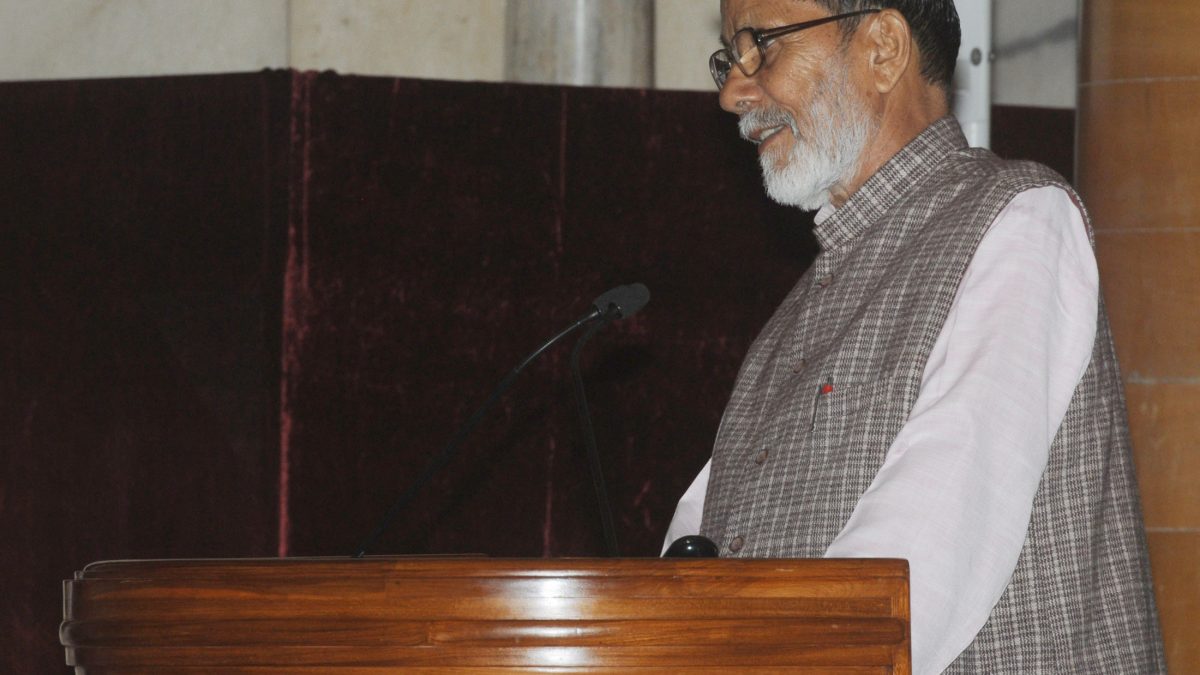
Featured image: Chandi Prasad Bhatt speaks after receiving the Gandhi Peace Prize for 2013 at Rashtrapati Bhavan, New Delhi, 15 July 2014. Photo by President’s Secretariat, licensed under Government Open Data License – India, via Wikimedia Commons.



