
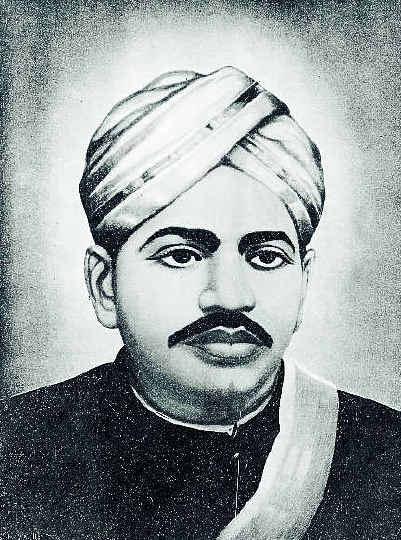
Vallinayagam Olaganathan Chidambaram Pillai (5 September 1872 – 18 November 1936), known as V.O.C., was an Indian freedom fighter, lawyer and Tamil scholar. In 1906 he founded the Swadeshi Steam Navigation Company to break the British monopoly of shipping between south India and Ceylon. The government destroyed the venture and sentenced him to two terms of transportation for life, later reduced; in prison he was yoked to an oil press. Tamils remember him as Kappalottiya Tamilan, the Tamil who launched ships.
Quick Facts
| Full name | Vallinayagam Olaganathan Chidambaram Pillai |
| Born | 5 September 1872, Ottapidaram, Tirunelveli district (now Thoothukudi district), Tamil Nadu |
| Died | 18 November 1936, Tuticorin (aged 64) |
| Occupation | Lawyer, freedom fighter, trade union leader, Tamil scholar |
| Founded | Swadeshi Steam Navigation Company (1906) |
| Titles | Kappalottiya Tamilan; Chekkizhuttha Chemmal |
| Spouse | Meenakshi Ammal |
| Children | Several, including Vallacewaran |
Early Life
He was born at Ottapidaram, a small town near Tuticorin, the eldest son of a prominent lawyer. He was educated at Tuticorin and Tirunelveli, qualified as a pleader in 1894, and practised at Ottapidaram and then Tuticorin. He was known for taking the cases of the poor, sometimes against clients of his own father.
He was a student of Tamil literature and of Saiva philosophy, and was drawn into politics by the writings of Bal Gangadhar Tilak and the swadeshi movement that followed the partition of Bengal.
The Shipping Company
Trade and passenger traffic between Tuticorin and Colombo were in the hands of the British India Steam Navigation Company. Indian merchants complained of its treatment of them.
In October 1906 Chidambaram Pillai registered the Swadeshi Steam Navigation Company, with capital raised in small shares from merchants and ordinary people across the south. He travelled to Bombay and, with the help of Tilak and others, bought two steamers, which arrived in 1907.
The British company answered with a rate war. It cut its fare to a rupee, then carried passengers free, and at last offered a free umbrella to each. Officials pressed merchants not to use the Indian line. For a time the Swadeshi ships sailed full all the same.
The Coral Mill Strike
In February 1908 the workers of the British-owned Coral cotton mill at Tuticorin struck for better pay and hours. He and the fiery orator Subramania Siva addressed them every evening, collected food for their families, and negotiated. The management conceded higher wages, shorter hours and a weekly holiday. It was one of the first organised strikes in the south.
Arrest
In March 1908 he and Siva planned a public celebration of the release from prison of Bipin Chandra Pal. The district authorities forbade it and, when he would not give an undertaking, arrested them on 12 March. Tirunelveli and Tuticorin rose in riot; public buildings were burnt, and the police fired, killing four people.
He was tried for sedition. The sessions judge, in July 1908, sentenced him to two terms of transportation for life, forty years, one of the heaviest sentences given to any nationalist. The High Court and then the Privy Council reduced it to six years.
Prison
He was held at Coimbatore and Cannanore as an ordinary convict. The jailer set him to turn the heavy stone oil press, to which bullocks were normally harnessed, in the heat of the day, and to break stones. His health never recovered. His friend the poet Subramania Bharati wrote poems of grief and rage about it.
While he was in jail the shipping company, harassed and without its founder, was wound up in 1911. One of its ships was sold to its British rival.
After Release
He was freed in December 1912. A crowd he had expected was not there. He had lost his licence to practise law and was forbidden to return to his district. He lived in Madras in poverty, kept a provision shop and sold kerosene.
A judge named Wallace later restored his licence, and he named a son Vallacewaran in gratitude. He resumed practice at Kovilpatti and then Tuticorin. He took part in the labour movement in Madras and attended the Congress session of 1920, but disagreed with the direction it took under Gandhi and withdrew.
Scholar
He wrote a commentary on the Tirukkural, edited the ancient grammar Tolkappiyam with a medieval commentary, translated works of the English writer James Allen into Tamil, and wrote his autobiography in verse.
Death
He died at Tuticorin on 18 November 1936, in the office of the local Congress committee, where he had asked to be taken.
Legacy
The port of Tuticorin is named after him. The oil press he turned is kept as a relic, and Sivaji Ganesan played him in a celebrated film of 1961. The shipping line he dreamed of came a decade later, when Walchand Hirachand and others founded the Scindia company.
Featured image: V. O. Chidambaram Pillai in 1919. Photo by an unknown photographer, in the public domain, via Wikimedia Commons.



