
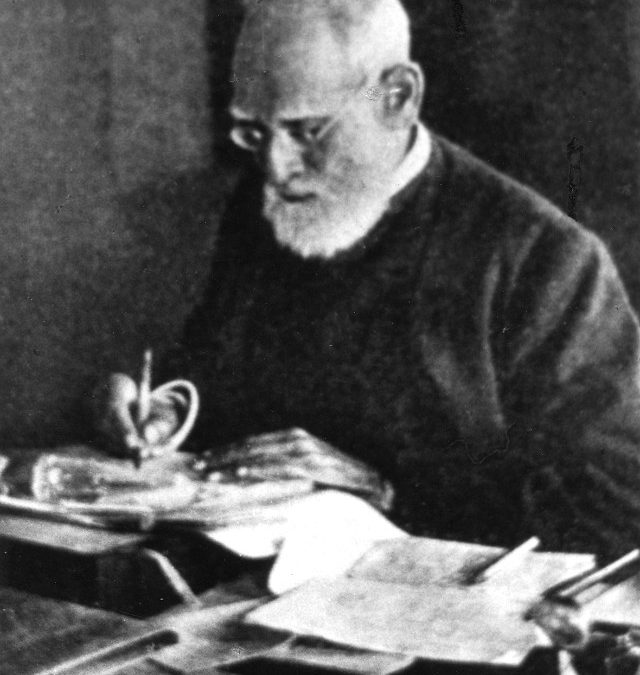
Sir Surendranath Banerjee (10 November 1848 – 6 August 1925) was an Indian nationalist leader, teacher and journalist, one of the founders of modern Indian politics. Dismissed from the Indian Civil Service on a trivial ground, he turned to public life, founded the Indian Association in 1876, nine years before the Congress, and was the first to tour the country to create a national opinion. He was twice president of the Congress and led the agitation against the partition of Bengal. He was called Rashtraguru, teacher of the nation.
Quick Facts
| Full name | Surendranath Banerjee |
| Born | 10 November 1848, Calcutta |
| Died | 6 August 1925, Barrackpore, Bengal (aged 76) |
| Education | Doveton College, Calcutta; University College London |
| Occupation | Teacher, journalist, politician |
| Founded | Indian Association (1876); Ripon College, Calcutta (1882) |
| Offices | President of the Indian National Congress (1895, 1902); Minister in Bengal (1921–1923) |
| Newspaper | The Bengalee |
| Notable work | A Nation in Making (1925) |
Early Life
He was born in Calcutta, the second son of a well-known doctor of liberal views. He graduated from the University of Calcutta and in 1868 sailed for England to compete for the Indian Civil Service, then almost closed to Indians.
The Civil Service
He passed the examination in 1869. The authorities struck his name off the list, alleging that he had misstated his age; the discrepancy arose from the Indian way of reckoning age from conception. He took the matter to court and won.
He was posted to Sylhet as an assistant magistrate in 1871. In 1874 he was dismissed, for signing an inaccurate return in a minor case, an error for which a British officer would have been reprimanded at most. He went to England to appeal and was refused. He was also refused admission to the Bar. He wrote later that he had been ruined because he was an Indian, and that he resolved to spend his life redressing the wrongs of his people.
Teacher
He returned in 1875 and became a professor of English, at the Metropolitan Institution and other colleges, and in 1882 took over a school that he built into Ripon College, now named after him. He taught for nearly forty years. His lectures on the Italian patriot Mazzini and on the history of the Sikhs and of the Bengali reformer Chaitanya fired his students with political ideas.
The Indian Association
On 26 July 1876, with Ananda Mohan Bose, he founded the Indian Association, to represent the educated middle class and to unite Indians on a common political programme.
In 1877, when the government lowered the maximum age for the civil service examination to nineteen, which all but shut Indians out, he toured northern and western India and then the south, addressing meetings in every large town. It was the first all-India political campaign.
In 1883 the Association called a National Conference at Calcutta, with delegates from across the country. It met again in 1885, in the same days as the first session of the Indian National Congress in Bombay, and the two bodies merged the following year.
The Bengalee
He bought the newspaper The Bengalee in 1879 and edited it for forty years. In 1883 he was sentenced to two months’ imprisonment for contempt of court, for an article criticising a judge of the Calcutta High Court. He was the first Indian journalist jailed in the course of his work, and the sentence set off protests across India.
Congress
He presided over the Congress at Poona in 1895 and at Ahmedabad in 1902, and was for two decades its most celebrated orator, speaking for hours without notes in ornate, rolling English.
The Partition of Bengal
When the province was divided in 1905 he led the opposition: meetings, a boycott of British goods, and the swadeshi vow. In 1906 he was arrested at a conference at Barisal that the police broke up by force. His name was turned into a slogan, “Surrender Not”. The partition was annulled in 1911.
He remained a moderate, believing in constitutional methods, and stood against the extremists led by Bal Gangadhar Tilak and Bipin Chandra Pal when the Congress split in 1907.
Parting from the Congress
He welcomed the constitutional reforms of 1919, which the Congress rejected, and left it to form a liberal party. He opposed Mahatma Gandhi‘s non-cooperation movement. He accepted a knighthood in 1921 and became a minister in the Bengal government, where he carried the Act that gave Calcutta an elected corporation with a mayor.
To the new generation he was a man who had gone over to the other side. In the election of 1923 he was defeated by a young doctor, Bidhan Chandra Roy, standing for the party of Chittaranjan Das.
Death
He retired to write his memoirs, A Nation in Making, published in 1925, and died at Barrackpore on 6 August that year.
Legacy
Gopal Krishna Gokhale and many others acknowledged him as the man who first made Indians think of themselves as one political nation.
Featured image: Surendranath Banerjee. Photo by the West Bengal State Archives, licensed under CC BY-SA 2.5, via Wikimedia Commons.



