
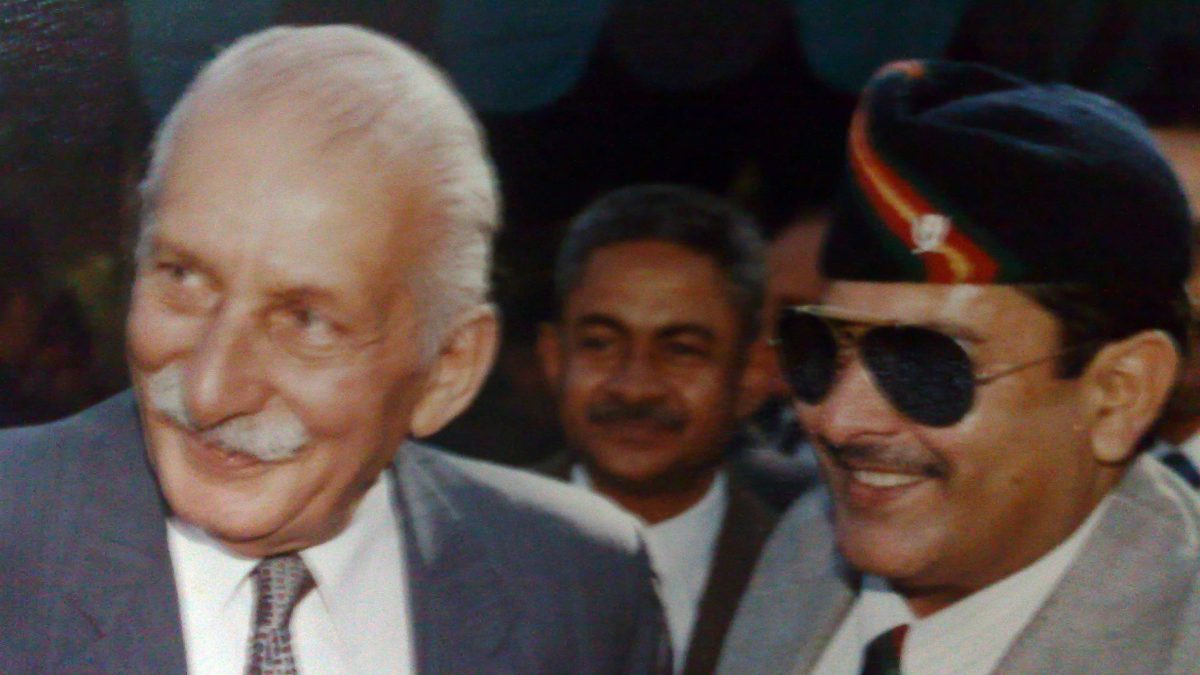
Field Marshal Sam Manekshaw (3 April 1914 – 27 June 2008), popularly known as Sam Bahadur (“Sam the Brave”), was the Chief of the Army Staff of the Indian Army during the India–Pakistan war of 1971, which ended in a decisive Indian victory and the creation of Bangladesh. In January 1973 he became the first Indian officer to be promoted to the rank of Field Marshal. His career spanned four decades and five wars, and he is remembered for his courage, his care for soldiers and his sharp wit.
Quick Facts
| Full name | Sam Hormusji Framji Jamshedji Manekshaw |
| Born | 3 April 1914, Amritsar, Punjab, British India |
| Died | 27 June 2008, Wellington, Tamil Nadu (aged 94) |
| Service | British Indian Army, Indian Army (1934–1973) |
| Rank | Field Marshal |
| Office | 8th Chief of the Army Staff (1969–1973) |
| Education | Sherwood College, Nainital; Hindu Sabha College, Amritsar; Indian Military Academy |
| Spouse | Silloo Bode (m. 1939) |
| Children | 2 daughters |
| Honours | Military Cross (1942), Padma Bhushan (1968), Padma Vibhushan (1972) |
Early Life
Manekshaw was born in Amritsar to Parsi parents; his father, Hormusji, was a doctor. He wanted to study medicine in London, but his father thought him too young to go abroad, so in 1932 he joined the first batch of cadets at the new Indian Military Academy in Dehradun. He was commissioned in 1934 and joined the 12th Frontier Force Regiment.
Military Career
In February 1942, as a captain fighting the Japanese on the Sittang river in Burma, he led a counter-attack on a key hill and was hit by a burst of machine-gun fire in the stomach. His divisional commander, fearing he would die, pinned his own Military Cross ribbon on him on the spot. He survived after surgery.
At Partition his regiment went to Pakistan, and he was transferred to the Gorkha Rifles, with whom he had a lifelong bond. He helped plan operations in Kashmir in 1947–48. In the early 1960s an inquiry was ordered against him for outspoken remarks; he was cleared. After the defeat by China in 1962 he was sent to command the corps in the North-East, where his first order was reportedly that there would be no more withdrawals without written orders.
Manekshaw became Chief of the Army Staff in June 1969. When the crisis in East Pakistan sent millions of refugees into India in 1971, Prime Minister Indira Gandhi asked him in April to go in. He told her the army was not ready and that the monsoon would bog it down, and asked for time; she agreed. When war came in December, Indian forces reached Dhaka in thirteen days. On 16 December 1971 about 93,000 Pakistani troops surrendered, the largest surrender since the Second World War.
He was promoted to Field Marshal on 1 January 1973, shortly before he retired. He settled in Coonoor in the Nilgiri hills.
Death
Manekshaw died of pneumonia at the Military Hospital in Wellington on 27 June 2008, aged 94. The absence of senior government leaders from his funeral was widely criticised.
Legacy
Frequently Asked Questions
When and where was Sam Manekshaw born?
Sam Manekshaw was born on 3 April 1914 in Amritsar, Punjab, British India.
When did Sam Manekshaw die?
Died: 27 June 2008, Wellington, Tamil Nadu (aged 94).
What honours has Sam Manekshaw received?
Military Cross (1942), Padma Bhushan (1968), Padma Vibhushan (1972).
Featured image: Field Marshal Sam Manekshaw at a gathering with army officers in his later years. Photo by Ishan Kaul, in the public domain, via Wikimedia Commons.



