
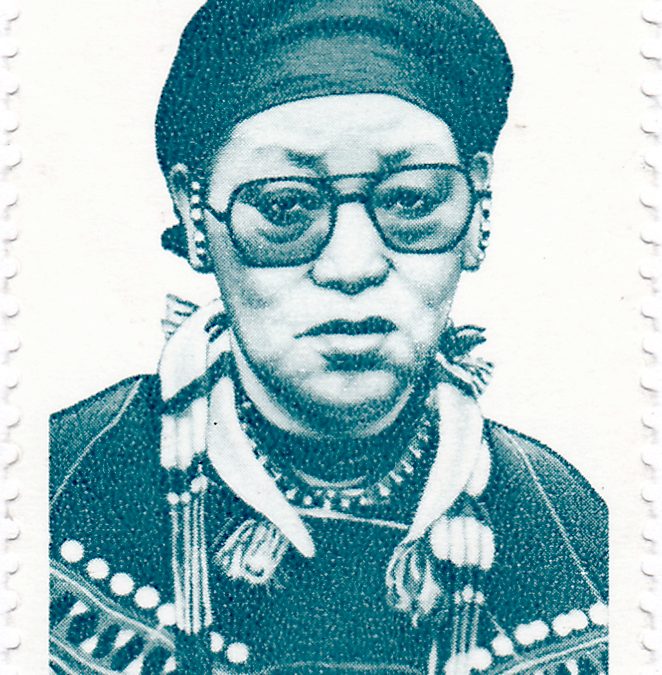
Rani Gaidinliu (26 January 1915 – 17 February 1993) was a Naga spiritual and political leader from Manipur who led an armed revolt against British rule when she was sixteen. Captured in 1932, she spent fourteen years in prison. Jawaharlal Nehru, who met her in jail, gave her the title Rani, queen. After independence she worked for the unity of her people, the Zeliangrong Nagas, within India, and for the preservation of their traditional religion.
Quick Facts
| Full name | Gaidinliu Pamei |
| Born | 26 January 1915, Nungkao (Longkao), Tamenglong district, Manipur |
| Died | 17 February 1993, Longkao (aged 78) |
| State | Manipur |
| Community | Rongmei (Zeliangrong) Naga |
| Known for | The Naga revolt of 1930–32; the Heraka movement |
| Awards | Tamrapatra freedom fighter award (1972), Padma Bhushan (1982) |
Early Life
She was born in the village of Nungkao in the hills of western Manipur, the fifth of eight children of a family of the Rongmei tribe. The Rongmei, with the Zeme and Liangmai, together called the Zeliangrong, live in the hills where Manipur, Nagaland and Assam meet. There was no school in the area, and she never had formal education.
Jadonang
At about thirteen she became a follower of her cousin Haipou Jadonang, a healer and visionary who had started a movement to reform and revive the ancestral religion of his people, in answer to the spread of Christianity, and to free them from British rule. He told the villages to stop paying the house tax and supplying forced labour, and prophesied that the rule of the Nagas was coming.
The British arrested Jadonang in 1931, tried him for the murder of some traders and hanged him at Imphal on 29 August.
The Revolt
The leadership passed to Gaidinliu, then sixteen. She moved from village to village across the hills of Manipur, the Naga Hills and North Cachar, urging people to refuse taxes and labour. Her followers believed she had divine powers. The British sent columns of the Assam Rifles after her, burnt villages that sheltered her and offered a reward. There were armed clashes in early 1932.
In October 1932 her followers were building a wooden fortress at the village of Pulomi when a force under a British captain made a surprise attack. She was captured on 17 October. Tried at Imphal, she was sentenced to imprisonment for life.
Prison
She was held in jails at Guwahati, Shillong, Aizawl and Tura. In 1937 Jawaharlal Nehru, touring Assam, visited her in Shillong jail. He wrote an article describing “this child of the hills”, calling her the Rani of her people and promising to work for her release. The British refused. She was freed only in 1947, after independence.
After Independence
She was not allowed to return to her village until 1952. She opposed the Naga National Council’s demand for separation from India, and asked instead for a single Zeliangrong administrative unit within the Union. She also resisted conversion to Christianity and worked to keep alive the Heraka faith.
These positions brought her into conflict with the Naga insurgents. In 1960 she went underground with a band of followers to defend her movement, and came out in 1966 after an understanding with the Government of India. She met successive Prime Ministers to press her people’s case.
Honours
- Tamrapatra, the copper plaque given to freedom fighters, 1972
- Padma Bhushan, 1982
- Vivekananda Seva Award, 1983
- A postage stamp in 1996, and a commemorative coin for her birth centenary in 2015
Death and Legacy
She returned to her birthplace in 1991 and died there on 17 February 1993. The Government of India gives an award for women’s achievement in her name, and a Coast Guard vessel has been named after her. Among the Zeliangrong she is honoured as a mother of the people, and her birthday, which falls on Republic Day, is observed in Manipur, Nagaland and Assam.
Featured image: Rani Gaidinliu, from a 1996 postage stamp of India. Photo by India Post, Government of India, licensed under Government Open Data License – India, via Wikimedia Commons.



