
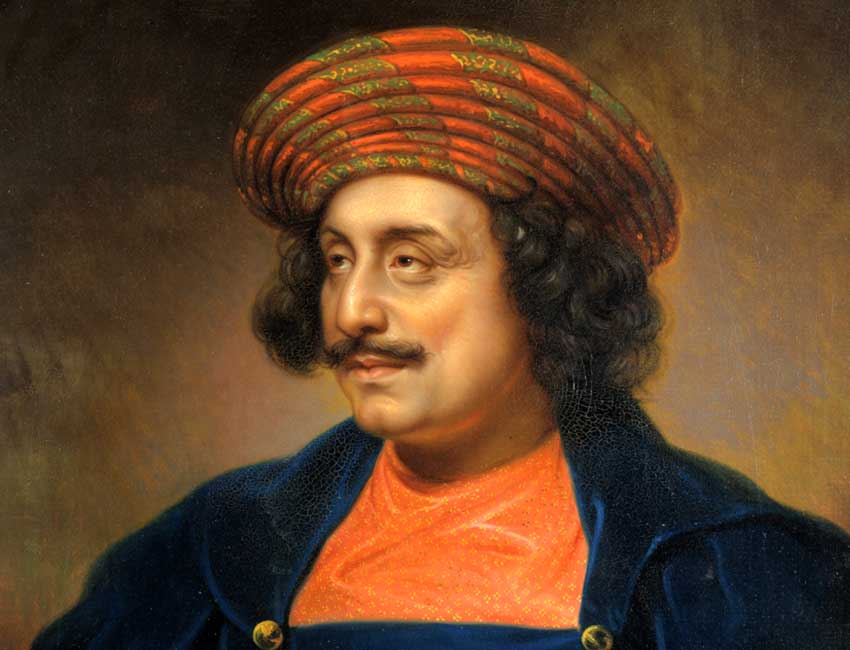
Raja Ram Mohan Roy (22 May 1772 – 27 September 1833) was an Indian religious, social and educational reformer. He challenged practices such as sati (the burning of widows on their husbands’ funeral pyres), child marriage and caste rigidity, and he argued for women’s rights, modern education and a free press. In 1828 he founded the Brahmo Sabha, later known as the Brahmo Samaj. He is often called the “father of modern India” and the “father of the Indian Renaissance”.
Quick Facts
| Full name | Ram Mohan Roy |
| Born | 22 May 1772, Radhanagar, Hooghly, Bengal Presidency, India |
| Died | 27 September 1833, Stapleton, Bristol, England (aged 61) |
| Known for | Brahmo Samaj; campaign against sati; educational and press reform |
| Title | “Raja”, given by the Mughal emperor Akbar II |
| Languages | Bengali, Sanskrit, Persian, Arabic, English, Hebrew, Greek |
| Newspapers | Sambad Kaumudi, Mirat-ul-Akhbar |
| Resting place | Arnos Vale Cemetery, Bristol |
Early Life
Roy was born into a prosperous Bengali Brahmin family in Radhanagar. He learned Persian and Arabic as a boy, as was usual for those hoping to work in government, and later studied Sanskrit and Hindu scriptures. From an early age he questioned idol worship and religious ritual, which led to quarrels with his family. His first book, written in Persian in the early 1800s, argued for belief in one God.
Career
Roy worked for several years in the revenue department of the East India Company, much of the time under the official John Digby, and mastered English during this period. He also managed property and lent money, which made him financially independent.
In 1815 Roy settled in Calcutta and founded the Atmiya Sabha, a circle for discussing religion and reform. He translated the Upanishads into Bengali and English to show that ancient Hindu texts taught the worship of one supreme being. He also wrote on the ethical teachings of Jesus and debated with Christian missionaries. In 1828 he founded the Brahmo Sabha, which rejected idol worship and caste distinctions. The grandfather of Rabindranath Tagore, Dwarkanath Tagore, was among his closest supporters.
Reforms
Visit to England and Death
In 1830 Roy sailed to England as the envoy of the Mughal emperor Akbar II, who gave him the title “Raja”. There he also worked to make sure that the ban on sati was not overturned on appeal. He was warmly received by British reformers and gave evidence to Parliament on Indian affairs. He died of meningitis at Stapleton, near Bristol, on 27 September 1833 and is buried at Arnos Vale Cemetery, where his tomb is still visited.
Legacy
Frequently Asked Questions
When and where was Raja Ram Mohan Roy born?
Raja Ram Mohan Roy was born on 22 May 1772 in Radhanagar, Hooghly, Bengal Presidency, India.
When did Raja Ram Mohan Roy die?
Died: 27 September 1833, Stapleton, Bristol, England (aged 61).
What is Raja Ram Mohan Roy known for?
Known for: Brahmo Samaj; campaign against sati; educational and press reform.
Featured image: Raja Ram Mohan Roy, detail of an oil portrait painted in London by the American artist Rembrandt Peale, 1833. Painting by Rembrandt Peale (1833), in the public domain.



