
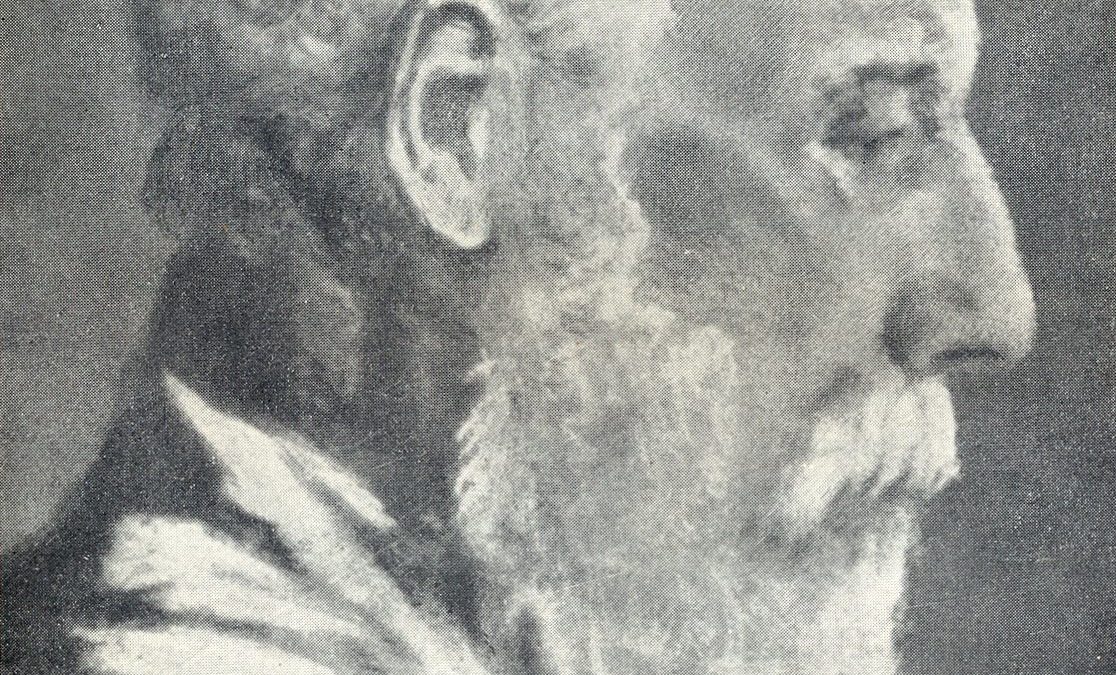
Debendranath Tagore (15 May 1817 – 19 January 1905), known as Maharshi, “great sage”, was an Indian religious reformer and philosopher. He revived the Brahmo Samaj, the monotheistic movement begun by Ram Mohan Roy, and led it for decades, giving it a creed, a liturgy and an organisation. He founded the retreat at Santiniketan where his youngest son, Rabindranath Tagore, later built his school and university. The remarkable family he raised at Jorasanko was at the centre of Bengal’s cultural life for a century.
Quick Facts
| Full name | Debendranath Tagore |
| Born | 15 May 1817, Jorasanko, Calcutta, Bengal |
| Died | 19 January 1905 (aged 87), Calcutta |
| Known as | Maharshi |
| Occupation | Religious reformer, philosopher |
| Known for | Brahmo Samaj; Tattwabodhini Sabha; Santiniketan |
| Father | Dwarkanath Tagore |
| Spouse | Sarada Devi |
| Children | 15, including Rabindranath Tagore |
Early Life
He was the eldest son of Dwarkanath Tagore, a merchant prince whose wealth and style earned him the title “Prince” and who was a friend and supporter of Ram Mohan Roy. Debendranath studied at the school Roy had founded and at Hindu College, and as a young man lived in luxury.
At eighteen he kept vigil on the bank of the Ganga beside his dying grandmother, and in that night, he wrote, the pleasures of the world lost their taste for him. Some time later a torn page blew past him; it was a verse of the Isha Upanishad saying that all this is pervaded by God and that one should enjoy by renouncing. It set the course of his life.
Brahmo Samaj
In 1839 he founded the Tattwabodhini Sabha, a society for the study of the Upanishads and the spread of a rational religion, and in 1843 its journal, the Tattwabodhini Patrika, which became the best Bengali periodical of its time and a school of modern prose. On 21 December 1843 he and twenty companions formally took the vows of the Brahmo faith, giving new life to an organisation that had dwindled after Roy’s death.
He sent scholars to Banaras to examine the Vedas, and after their report the Samaj in 1850 gave up the doctrine that scripture is infallible; reason and intuition were to be the test of truth. He compiled the Brahmo Dharma, a book of texts and precepts, and framed a form of congregational worship without images. He was nevertheless conservative in social matters, and when the brilliant younger leader Keshub Chandra Sen pressed for inter-caste marriage and other reforms, the movement split in 1866. Debendranath’s section became the Adi, or original, Brahmo Samaj.
Debts and Public Life
Dwarkanath died in London in 1846 leaving enormous debts. Although much of the family property was protected by a trust, Debendranath declared that every creditor would be paid, gave up the family’s style of living and over many years honoured the whole sum. He was a founder and secretary of the British Indian Association in 1851, which petitioned for Indian participation in government.
Santiniketan
He travelled widely, especially in the Himalayas, in search of solitude. In 1863 he bought a tract of bare land near Bolpur in Birbhum, built a guest house and prayer hall and named it Santiniketan, the abode of peace, a place open to anyone for meditation on the formless God. In 1901 Rabindranath opened his school there.
Family
With his wife, Sarada Devi, he had fifteen children. Among them were Dwijendranath, philosopher and poet; Satyendranath, the first Indian member of the Indian Civil Service; Jyotirindranath, dramatist and composer; Swarnakumari, novelist; and Rabindranath. He took the young Rabindranath on a journey to the Himalayas that the poet remembered all his life.
Death and Legacy
He died at Jorasanko on 19 January 1905. His autobiography is a classic of Bengali spiritual literature. Through the Brahmo Samaj he helped give educated Bengal a reformed faith and a conscience, and through his children, a literature and music.
Frequently Asked Questions
When and where was Debendranath Tagore born?
Debendranath Tagore was born on 15 May 1817 in Jorasanko, Calcutta, Bengal.
When did Debendranath Tagore die?
Died: 19 January 1905 (aged 87), Calcutta.
What is Debendranath Tagore known for?
Known for: Brahmo Samaj; Tattwabodhini Sabha; Santiniketan.
Featured image: Debendranath Tagore in old age, portrait by Abanindranath Tagore. Photo by Abanindranath Tagore, in the public domain, via Wikimedia Commons.



