
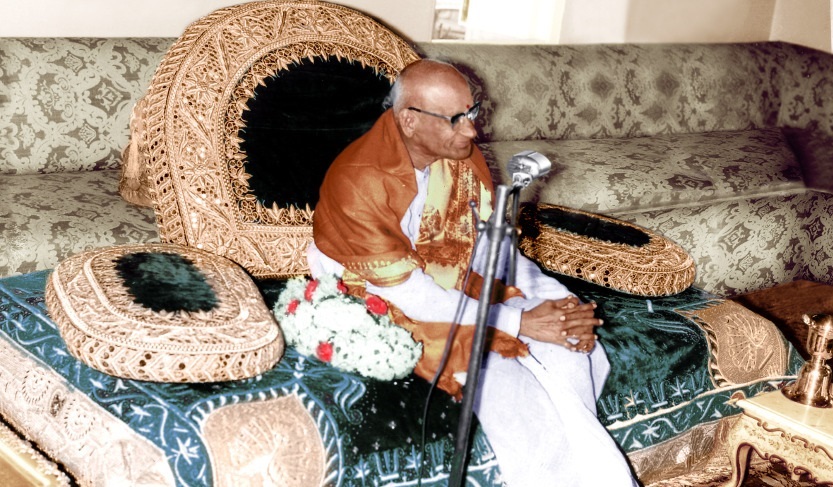
Viswanatha Satyanarayana (10 September 1895 – 18 October 1976) was an Indian poet, novelist, playwright and critic who wrote in Telugu. In more than a hundred books he defended the classical tradition against the tide of modernism, and wrote two works that are landmarks of the language: the novel Veyi Padagalu and the epic Ramayana Kalpavruksham. He was the first Telugu writer to receive the Jnanpith Award and is known as Kavi Samrat, emperor of poets.
Quick Facts
| Full name | Viswanatha Satyanarayana |
| Born | 10 September 1895, Nandamuru, Krishna district, Madras Presidency |
| Died | 18 October 1976, Guntur, Andhra Pradesh (aged 81) |
| Language | Telugu |
| Occupation | Poet, novelist, playwright, critic, teacher |
| Notable works | Veyi Padagalu, Srimad Ramayana Kalpavruksham, Kinnerasani Patalu, Ekaveera, Andhra Prasasti |
| Awards | Sahitya Akademi Award (1962), Padma Bhushan (1970), Jnanpith Award (1970) |
| Titles | Kavi Samrat, Kalaprapurna |
Early Life
He was born at Nandamuru in the Krishna delta into a Brahmin family. His father, Sobhanadri, was a generous landholder who gave away much of what he had and built a temple in the village; the family grew poor, and the son remembered both the piety and the poverty.
At school in Machilipatnam he was taught by Chellapilla Venkata Sastry, one of the celebrated pair of poets known as Tirupati Venkata Kavulu, and counted himself his disciple for life.
Education and Teaching
He left his studies in 1921 to join the non-cooperation movement and returned to complete his degrees, taking a master’s from Madras University. He taught Telugu for some forty years at colleges in Machilipatnam, Guntur and Vijayawada, and was the first principal of the government college at Karimnagar from 1959 to 1961.
Works
Veyi Padagalu
Veyi Padagalu (“The Thousand Hoods”), written in 1934 in a few weeks for a competition, is a vast novel of a village and its temple across three generations, mourning the dissolution of the old order under colonial rule. The serpent of the title is the traditional way of life. It was later translated into Hindi as Sahasra Phan by P. V. Narasimha Rao, the future Prime Minister.
Ramayana Kalpavruksham
He worked for about three decades on Srimad Ramayana Kalpavruksham (“The Ramayana, the Wish-Fulfilling Tree”), a retelling in classical Telugu verse in six books, which he said he wrote to fulfil his father’s wish. It brought him the Jnanpith Award for 1970.
Other writing
- Kinnerasani Patalu: songs about a river in the Telangana forests, among his most loved poems
- Andhra Prasasti and Andhra Pourushamu: poems on the heroes of Andhra history
- Ekaveera: a historical romance set in Madurai, filmed in 1969
- Cheliyali Katta, Ma Babu, Tera Chiraju and Hahahuhu among some sixty novels, including a series of historical novels meant to correct colonial accounts of Indian history
- Viswanatha Madhyakkaralu, verses that won the Sahitya Akademi Award in 1962
- Plays such as Nartanasala and Anarkali, and much criticism
Views
He believed that Indian society should be understood by its own values and not judged by Western ones, and he said so combatively. This set him against the progressive writers of his day, including Sri Sri, though each respected the other’s gift.
Honours
- Kalaprapurna, from Andhra University
- Padma Bhushan, 1970
- Jnanpith Award, 1970
- Poet Laureate (Asthana Kavi) of Andhra Pradesh, 1971
Personal Life
His first wife, Varalakshmi, died in 1932, a loss recorded in his elegy Varalakshmi Trisati. He married again and had children; a son, Viswanatha Pavani Sastry, later edited and published his works. He spent his last years in Vijayawada and died in Guntur in 1976. His house in Vijayawada is a memorial.
Featured image: Viswanatha Satyanarayana speaking at a function. Photo by Viswanadhamsp, licensed under CC BY-SA 3.0, via Wikimedia Commons.



