
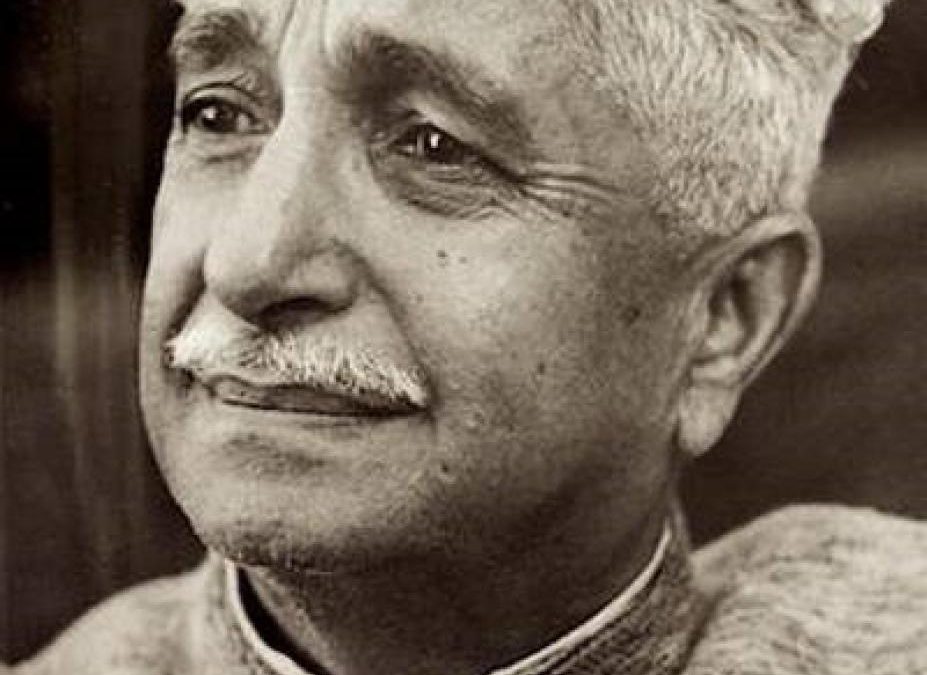
Kuppali Venkatappa Puttappa (29 December 1904 – 11 November 1994), known by his pen name Kuvempu, was an Indian poet, novelist, playwright and thinker who is widely regarded as the greatest Kannada writer of the twentieth century. He retold the Ramayana as a modern epic, wrote two of the finest novels in the language, and was the first Kannada author to receive the Jnanpith Award. Karnataka’s state anthem is his poem.
Quick Facts
| Full name | Kuppali Venkatappa Puttappa |
| Pen name | Kuvempu |
| Born | 29 December 1904, Hirekodige, Chikmagalur district, Kingdom of Mysore |
| Died | 11 November 1994, Mysore (aged 89) |
| Language | Kannada |
| Occupation | Poet, novelist, playwright, academic |
| Notable works | Sri Ramayana Darshanam, Kanooru Heggadithi, Malegalalli Madumagalu, Shudra Tapaswi |
| Awards | Sahitya Akademi Award (1955), Jnanpith Award (1967), Padma Vibhushan (1988), Karnataka Ratna (1992) |
| Spouse | Hemavathi (m. 1937) |
| Children | 4, including the writer K. P. Poornachandra Tejaswi |
Early Life
He was born at his mother’s home at Hirekodige and grew up at Kuppali, a house deep in the forested Malnad hills of Shimoga district, in a Vokkaliga landholding family. The rain, forest and solitude of the region fill his writing. He was taught at home at first, then at Thirthahalli, and went to Mysore for high school and college.
Education and Turn to Kannada
At Maharaja’s College, Mysore, he took his M.A. in Kannada in 1929. As a schoolboy he wrote in English, and published a small collection, Beginner’s Muse. The Irish poet James Cousins, visiting Mysore, read the poems and advised him to write in his own language. He did so from then on. He also came under the influence of the Ramakrishna Mission and lived for some years at its ashram in Mysore.
Career
Teacher and Vice-Chancellor
He joined Maharaja’s College as a lecturer in Kannada in 1929 and spent his working life at Mysore University, becoming its Vice-Chancellor from 1956 to 1960, the first to rise to the post from among its own graduates. He created its postgraduate campus, which he named Manasagangotri, and pressed for Kannada as the medium of education.
Poetry
His early collections, among them Kolalu and Pakshikashi, are nature poetry of great intensity. His life’s work was Sri Ramayana Darshanam, completed in 1949, an epic of more than 22,000 lines that reinterprets the Ramayana: in it Rama too enters the fire with Sita, and even Ravana and Manthara are redeemed. It won the Sahitya Akademi Award in 1955 and the Jnanpith Award in 1967.
Novels and plays
- Kanooru Heggadithi (1936) and Malegalalli Madumagalu (1967), two large novels of Malnad life, are counted among the best in Kannada.
- Shudra Tapaswi, Beralge Koral and Smashana Kurukshetram are plays that question caste and war through episodes from the epics.
Ideas
He opposed caste, ritual and superstition, and urged people to become Vishwa Manava, the universal human being, free of the labels of religion and caste. He devised Mantra Mangalya, a simple form of wedding without priests or expense, which is still used in Karnataka.
Honours
- Rashtrakavi (national poet), conferred by the state in 1964
- Padma Bhushan (1958) and Padma Vibhushan (1988)
- Pampa Award (1987), the first given
- Karnataka Ratna (1992), the first given
- His poem “Jaya Bharata Jananiya Tanujate” was declared the state anthem of Karnataka in 2004
Personal Life
He married Hemavathi in 1937. They had two sons and two daughters; the elder son, Poornachandra Tejaswi, became a major Kannada writer himself. Kuvempu lived in Mysore in a house named Udayaravi and died there in 1994. He was cremated at Kuppali, on the rock where he used to sit, now a memorial called Kavishaila. His childhood home is a museum.
Featured image: Kuvempu in the 1940s. Photo by an unknown photographer, in the public domain, via Wikimedia Commons.



