Yellapragada Subbarow (12 January 1895 – 8 August 1948) was an Indian biochemist who worked in the United States and whose discoveries have saved millions of lives. He helped show the role of ATP as the energy source of the living cell, and the laboratory he directed produced synthetic folic acid, the cancer drug methotrexate, a cure for filariasis and the first tetracycline antibiotic. He remains little known outside science.
Quick Facts
| Full name | Yellapragada Subbarow (also spelt Subba Rao) |
| Born | 12 January 1895, Bhimavaram, Madras Presidency (now in Andhra Pradesh) |
| Died | 8 August 1948, New York, United States (aged 53) |
| Field | Biochemistry |
| Education | Madras Medical College (LMS); Harvard School of Tropical Medicine; Harvard Medical School (Ph.D.) |
| Known for | Fiske-Subbarow method; role of phosphocreatine and ATP; folic acid; methotrexate; Hetrazan; Aureomycin |
| Position | Director of Research, Lederle Laboratories (1940–1948) |
| Spouse | Seshagiri |
Early Life
He was born at Bhimavaram in the Godavari delta into a poor Telugu Brahmin family, the fourth of seven children. His father, a revenue official, retired early through ill health and died while Subbarow was at school. He failed his matriculation examination twice. His mother sold her jewellery to send him to Madras to continue.
For a time he wished to become a monk of the Ramakrishna Mission. The mission advised him to study medicine and serve people that way.
Education
At Madras Medical College he answered Mahatma Gandhi‘s call to boycott British goods by wearing a surgical gown of khadi. This displeased his surgery professor, and he was given the lesser LMS certificate in place of a full medical degree, which barred him from the government medical service. He taught at an Ayurvedic college in Madras, where he became interested in the healing properties of traditional remedies.
The deaths of two of his brothers from tropical sprue within days of each other gave him a purpose. With help from his father-in-law and a charity he sailed for the United States, reaching Boston in October 1922.
Career
Harvard
He took a diploma at the Harvard School of Tropical Medicine, supporting himself as a night porter at a hospital, and joined the biochemistry laboratory of Cyrus Fiske at Harvard Medical School.
- **The Fiske-Subbarow method (1925):** a way of measuring phosphorus in body fluids and tissues, which became one of the most cited procedures in biochemistry.
- **Phosphocreatine and ATP:** With Fiske he found phosphocreatine in muscle and, in 1929, adenosine triphosphate, or ATP, showing that these compounds supply the energy for muscle contraction.
He received his Ph.D. in 1930 but was never given a regular faculty post at Harvard.
Lederle
In 1940 he joined Lederle Laboratories at Pearl River, New York, as director of research. In eight years his teams produced:
- **Folic acid (1945):** the first synthesis of this B vitamin, used against anaemia and the sprue that had killed his brothers
- **Aminopterin and methotrexate:** compounds that block folic acid. The physician Sidney Farber used aminopterin in 1947 to produce the first remissions in childhood leukaemia. Methotrexate is still used against cancers and rheumatoid arthritis.
- **Hetrazan (diethylcarbamazine):** the standard drug against filariasis
- **Aureomycin (1948):** the first of the tetracycline antibiotics, found by the botanist Benjamin Duggar working under him
Personal Life
He had married Seshagiri before leaving India. Their only child died in infancy while he was abroad. He never returned home and never saw his wife again. He died of a heart attack in New York in 1948.
Legacy
An American writer said of him: “You’ve probably never heard of Dr Yellapragada Subbarow. Yet because he lived you may be alive and well today.” A fungus was named Subbaromyces in his honour, and India issued a stamp for his centenary in 1995.
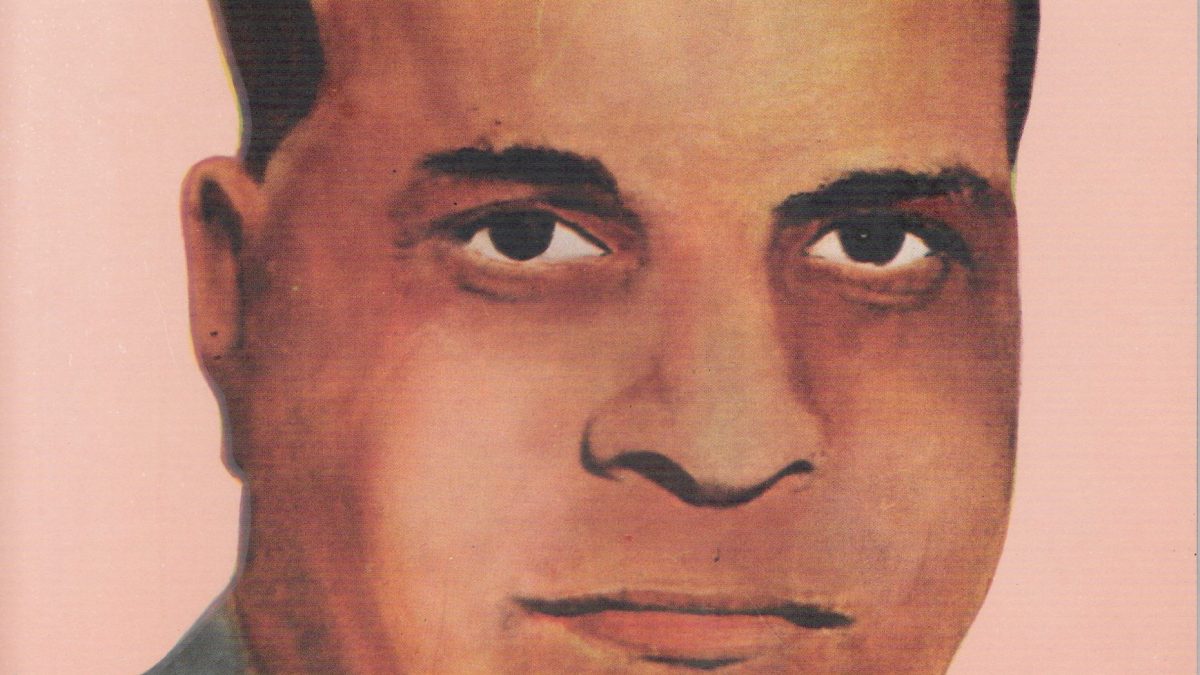
Featured image: A portrait of Yellapragada Subbarow. Photo by రహ్మానుద్దీన్, licensed under CC BY-SA 3.0, via Wikimedia Commons.