Mambillikalathil Govind Kumar Menon (28 August 1928 – 22 November 2016), known as M. G. K. Menon or Goku Menon, was an Indian physicist and science administrator. He made his name in cosmic ray physics, became director of the Tata Institute of Fundamental Research at thirty-eight, chaired the Indian Space Research Organisation for some months in 1972, and for four decades held nearly every senior post in Indian science, ending as a Union minister.
Quick Facts
| Full name | Mambillikalathil Govind Kumar Menon |
| Born | 28 August 1928, Mangalore, Madras Presidency (now in Karnataka) |
| Died | 22 November 2016, New Delhi (aged 88) |
| Field | Particle physics, cosmic rays |
| Education | Jaswant College, Jodhpur; Royal Institute of Science, Bombay (M.Sc.); University of Bristol (Ph.D., 1953) |
| Known for | Cosmic ray and neutrino experiments at the Kolar Gold Fields; leadership of Indian science |
| Positions | Director, TIFR (1966–1975); Chairman, ISRO (1972); Scientific Adviser to the Prime Minister (1986–1989); Minister of State for Science and Technology (1989–1990) |
| Honours | Padma Shri (1961), Padma Bhushan (1968), Padma Vibhushan (1985), Fellow of the Royal Society (1970) |
| Spouse | Indumati Patel |
| Children | 2 |
Early Life
He was born in Mangalore, the son of Kizhekepat Sankara Menon, a district and sessions judge whose postings took the family across the country. He studied at Jaswant College in Jodhpur and took his M.Sc. in physics at the Royal Institute of Science in Bombay. A lecture by C. V. Raman is said to have turned him towards research.
Bristol
In 1949 he went to the University of Bristol to work under Cecil Powell, who won the Nobel Prize the following year for his method of photographing the tracks of particles in special emulsions. Menon’s doctoral work, completed in 1953, was on the strange new particles being found in cosmic rays, and he made a notable contribution to the study of K mesons.
Career
TIFR
Homi Bhabha invited him to the Tata Institute of Fundamental Research in Bombay in 1955. He flew particle detectors on balloons to great heights and then took the search underground. In the Kolar Gold Fields of Karnataka, among the deepest mines in the world, his group and its collaborators from Japan and Britain detected in 1965 some of the first neutrinos produced by cosmic rays in the atmosphere. In the 1980s the Kolar team ran one of the earliest experiments to look for the decay of the proton.
When Bhabha died in an air crash in January 1966, Menon, at thirty-eight, became director of the institute. He led it until 1975.
ISRO
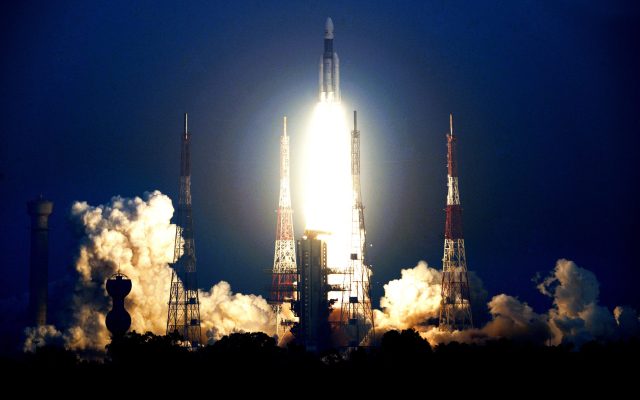
After the sudden death of Vikram Sarabhai in December 1971, he was asked to head the space programme. He served as Chairman of ISRO from January to September 1972, until Satish Dhawan could take over.
Government
From the 1970s he moved into administration and policy.
- **Electronics:** Secretary of the Department of Electronics and Chairman of the Electronics Commission from 1971
- **Defence:** Scientific Adviser to the Defence Minister and head of the Defence Research and Development Organisation, 1974–1978
- **CSIR:** Director-General, 1978–1981
- **Environment:** the first Secretary of the Department of Environment; he chaired the committee whose report led to the saving of the Silent Valley forest in Kerala
- **Planning Commission:** Member, 1982–1989
- **Scientific Adviser to the Prime Minister,** Rajiv Gandhi, 1986–1989
- **Minister of State** for Science and Technology and for Education in the government of V. P. Singh, 1989–1990
- **Rajya Sabha:** member from 1990 to 1996
He was President of the International Council of Scientific Unions from 1988 to 1993.
Awards
He received the Shanti Swarup Bhatnagar Prize in 1960 and all three Padma awards, the Padma Vibhushan in 1985. He was elected a Fellow of the Royal Society in 1970 and was a member of the Pontifical Academy of Sciences. An asteroid, 7564 Gokumenon, is named after him.
Personal Life
He married Indumati Patel, and they had a son and a daughter. Colleagues remembered his courtesy, his memory and his capacity for work. He died in New Delhi in 2016.
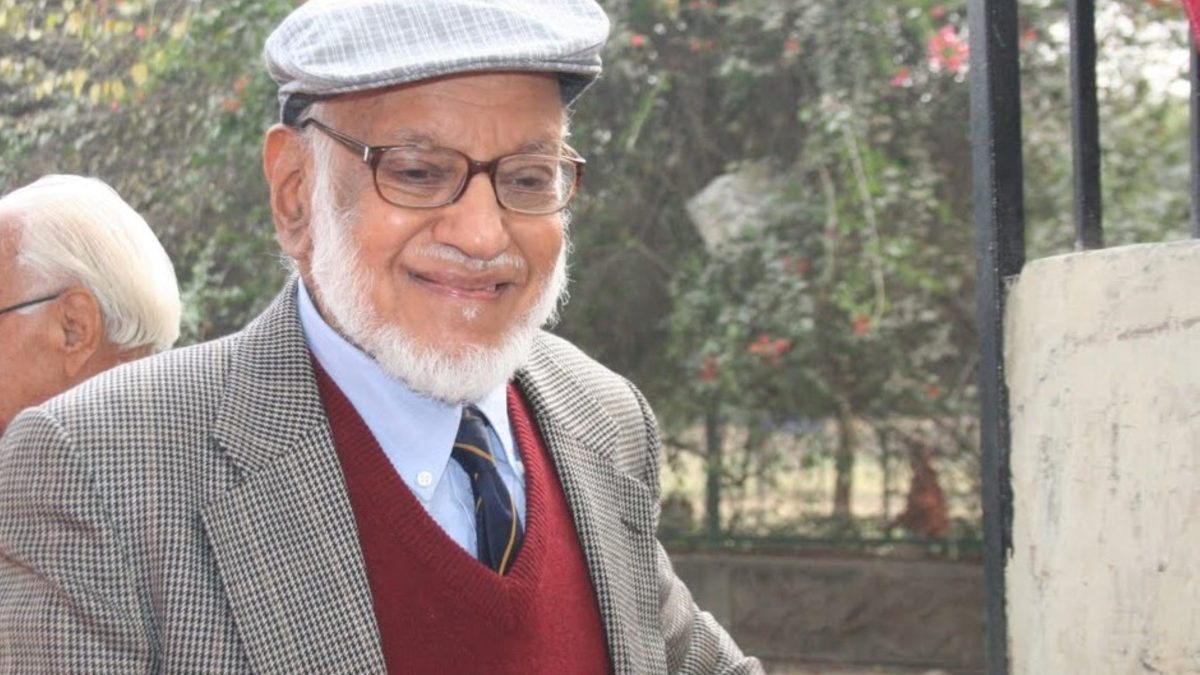
Featured image: M. G. K. Menon in December 2011. Photo by Ramesh lalwani, licensed under CC BY-SA 4.0, via Wikimedia Commons.