
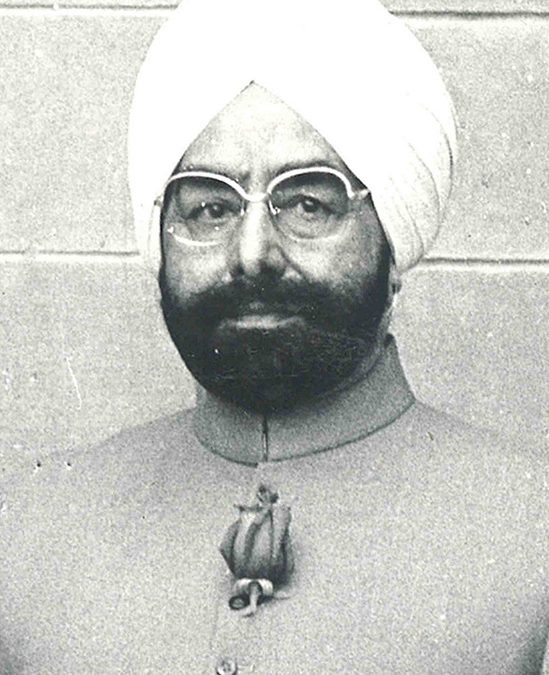
Giani Zail Singh (5 May 1916 – 25 December 1994) was an Indian politician who was the seventh President of India, from 1982 to 1987, and the first Sikh to hold the office. A freedom fighter from a princely state, he was earlier Chief Minister of Punjab and Union Home Minister. His presidency covered the storming of the Golden Temple, the assassination of Indira Gandhi and a bitter quarrel with her son.
Quick Facts
| Full name | Zail Singh (born Jarnail Singh) |
| Born | 5 May 1916, Sandhwan, Faridkot State, Punjab |
| Died | 25 December 1994, Chandigarh (aged 78) |
| Party | Indian National Congress |
| Offices | President of India (1982–1987); Minister of Home Affairs (1980–1982); Chief Minister of Punjab (1972–1977) |
| Title | Giani (one learned in the Sikh scriptures) |
| Spouse | Pardhan Kaur |
| Children | 4 |
Early Life
He was born at Sandhwan in the small princely state of Faridkot, the youngest son of Kishan Singh, a carpenter and farmer of the Ramgarhia community. His mother died when he was an infant. He had little formal schooling, but studied the Sikh scriptures at a missionary college in Amritsar and earned the title Giani.
The Freedom Struggle
In 1938 he founded a branch of the Praja Mandal, the movement for democratic rights in the princely states, in Faridkot. The Raja had him imprisoned for five years, much of it in solitary confinement. It was in prison, by his own account, that he changed his name from Jarnail to Zail, the word for jail. He returned to agitate and at independence helped force the state’s merger with India.
Career
Punjab
He was a minister in the union of the Punjab princely states and rose in the Congress as a leader of the backward classes. As Chief Minister of Punjab from 1972 to 1977 he gave pensions to freedom fighters, had the remains of Udham Singh brought back from England, and built a highway linking the places associated with Guru Gobind Singh. His display of Sikh piety was meant to take ground from the rival Akali Dal.
Home Minister
Indira Gandhi made him Home Minister in 1980. In that post he was accused by critics of having at first encouraged the militant preacher Bhindranwale as a weapon against the Akalis.
President
He was elected President in July 1982. On his nomination he said that if his leader asked him to pick up a broom and sweep, he would do it, a remark held against him ever after.
- **Operation Blue Star:** in June 1984 the Army entered the Golden Temple. Though Supreme Commander of the armed forces, he was not told beforehand. He visited the damaged shrine days later. The Sikh clergy declared him guilty of religious misconduct, and he asked their pardon. See Operation Blue Star.
- **31 October 1984:** on Indira Gandhi’s assassination he flew back from abroad and swore in Rajiv Gandhi as Prime Minister the same evening, without waiting for the party to elect a leader. His car was stoned by a mob as he drove to the hospital.
- **Rift with Rajiv Gandhi:** relations soon soured. He complained that the Prime Minister did not keep him informed, as the Constitution requires. In 1986 he neither signed nor returned a bill allowing the government to intercept mail, the first use of what is called a pocket veto. In 1987 Delhi was full of rumours that he would dismiss the Prime Minister. He did not, and completed his term that July.
Death
On 29 November 1994 his car collided with a truck near Kiratpur Sahib in Punjab. He died of his injuries in Chandigarh on 25 December. His memorial in Delhi is called Ekta Sthal.
Personal Life
He married Pardhan Kaur and had a son and three daughters. He spoke rustic Punjabi and Urdu, had a ready wit and a remarkable memory for people, and never lost the manner of a village politician.
Featured image: Giani Zail Singh as President of India. Photo by the President’s Secretariat, licensed under Government Open Data License – India, via Wikimedia Commons.



