
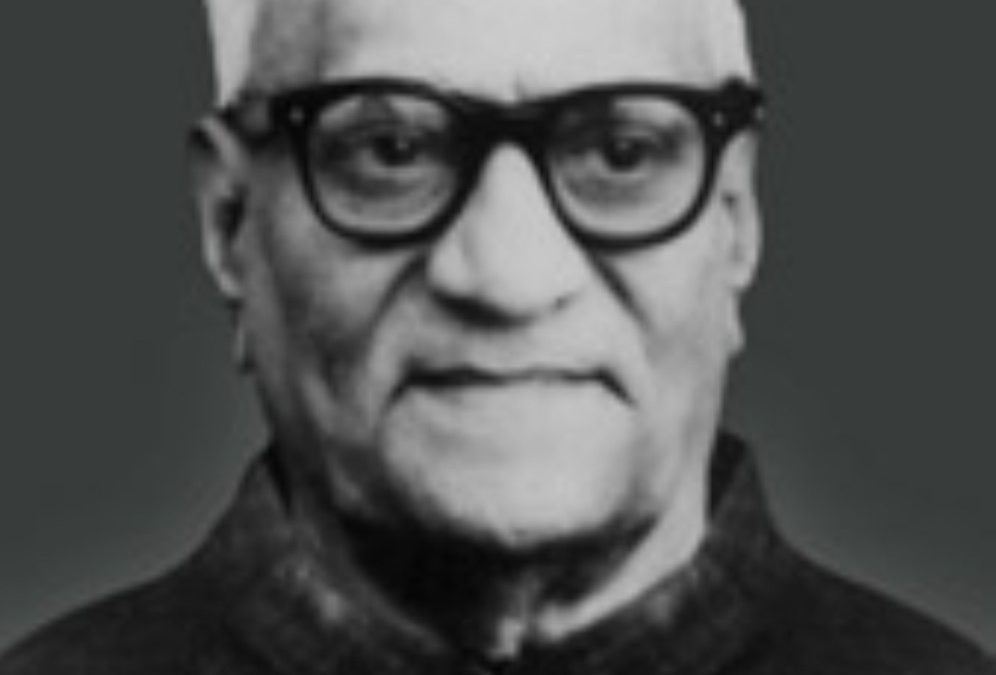
Varahagiri Venkata Giri (10 August 1894 – 24 June 1980) was an Indian trade union leader and statesman who was the fourth President of India, from 1969 to 1974. A pioneer of the labour movement, he rose through provincial and central ministries and three governorships to become Vice-President. In 1969 he stood for President as an independent against the official candidate of the ruling party and won, in the election that split the Congress. He was awarded the Bharat Ratna in 1975.
Quick Facts
| Full name | Varahagiri Venkata Giri |
| Born | 10 August 1894, Berhampur, Ganjam district (now Odisha) |
| Died | 24 June 1980, Madras (aged 85) |
| Education | Khallikote College, Berhampur; University College Dublin (law) |
| Occupation | Trade union leader, lawyer, statesman |
| Offices | President of India (1969–1974); Vice-President (1967–1969); Union Minister of Labour (1952–1954); Governor of Uttar Pradesh, Kerala and Mysore |
| Awards | Bharat Ratna (1975) |
| Spouse | Saraswati Bai |
Early Life
He was born at Berhampur, then in the Madras Presidency, into a Telugu-speaking Brahmin family. His father, V. V. Jogayya Pantulu, was a successful lawyer and nationalist, and his mother was jailed in the civil disobedience movement.
In 1913 he went to Ireland to study law. In Dublin he was drawn to the Irish nationalist movement, came to know its leaders, and was suspected of sympathy with the Easter Rising of 1916. He was ordered to leave the country that year.
Labour Leader
He began practice at Berhampur and joined the Congress, but gave himself chiefly to the organisation of workers. He founded the union of the Bengal Nagpur Railway’s employees and led it in a major strike in the 1920s, was a founder and general secretary of the All India Railwaymen’s Federation, and was twice president of the All India Trade Union Congress, in 1926 and 1942. He represented Indian workers at the International Labour Conference and the second Round Table Conference.
He believed in collective bargaining and disliked compulsory arbitration by the state, a position sometimes called the Giri approach.
Minister
He was elected to the Central Legislative Assembly in 1934, and in 1937 defeated the Raja of Bobbili in the Madras elections. He was labour minister of Madras in 1937–39 and again in 1946–47. He was jailed during the Quit India movement.
After independence he was High Commissioner to Ceylon and, from 1952, Union Minister of Labour. He resigned in 1954 when the government modified an award that had raised the pay of bank employees.
Governor and Vice-President
He was Governor of Uttar Pradesh from 1957, of Kerala from 1960 and of Mysore from 1965. In 1967 he was elected Vice-President.
The Election of 1969
President Zakir Husain died in May 1969, and Giri became acting President. The leaders who controlled the Congress organisation, known as the Syndicate, chose Neelam Sanjiva Reddy as the party’s candidate, against the wishes of the Prime Minister, Indira Gandhi.
Giri resigned both his offices and stood as an independent. Indira Gandhi, who had signed Reddy’s nomination, called on Congress legislators to vote according to their conscience. On 20 August 1969 Giri was declared elected on the count of second-preference votes, by a narrow margin. The Congress split within three months.
The result was challenged in the Supreme Court, and he appeared before it in person to give evidence, the only President to have done so. The petition was dismissed.
President
He held office from 24 August 1969 to 24 August 1974, through the Bangladesh war and the constitutional conflicts of the early 1970s. Critics called him a rubber stamp for the Prime Minister; among other things he signed the proclamation dismissing state governments on her government’s advice. He was known for his warmth and his love of travel within the country.
Personal Life
He and his wife, Saraswati Bai, had fourteen children. He wrote books on industrial relations and labour problems, and an autobiography.
Death
He died in Madras on 24 June 1980. The national labour institute at Noida is named after him. He was succeeded as President by Fakhruddin Ali Ahmed.
Featured image: V. V. Giri as Vice-President of India, 1968. Photo by the Vice President’s Secretariat, licensed under Government Open Data License – India, via Wikimedia Commons.



