
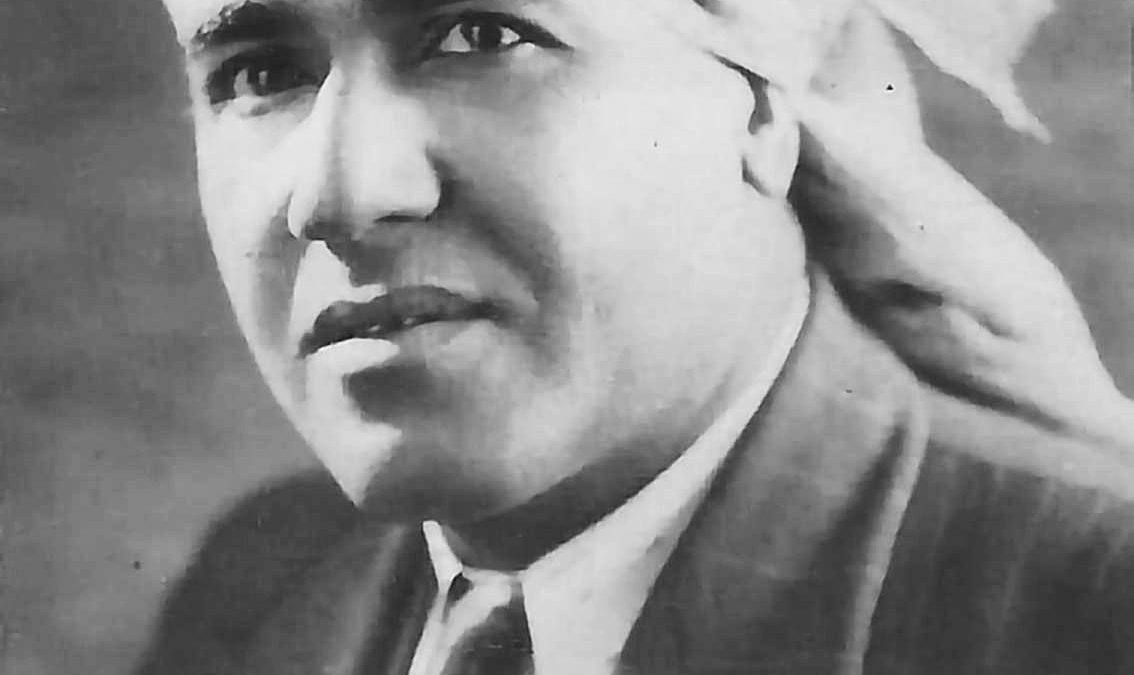
Udham Singh (26 December 1899 – 31 July 1940) was an Indian revolutionary who, on 13 March 1940, shot dead Sir Michael O’Dwyer in London. O’Dwyer had been Lieutenant-Governor of Punjab in April 1919, when troops fired on an unarmed crowd at Jallianwala Bagh in Amritsar, and had defended the action. Udham Singh was tried for murder and hanged. In India he is honoured as Shaheed-i-Azam Sardar Udham Singh.
Quick Facts
| Birth name | Sher Singh |
| Born | 26 December 1899, Sunam, Punjab, India |
| Died | 31 July 1940 (aged 40), Pentonville Prison, London |
| Known for | Assassination of Michael O’Dwyer |
| Organisations | Ghadar Party; Indian Workers’ Association |
| Alias | Ram Mohammad Singh Azad |
Early Life
He was born Sher Singh in Sunam, the younger son of Tehal Singh, a railway crossing watchman. His mother died when he was an infant and his father a few years later. In 1907 he and his brother were admitted to the Central Khalsa Orphanage in Amritsar, where he was given the name Udham Singh. His brother died in 1917. He left the orphanage after passing his matriculation and served for a time with a labour unit of the British Indian Army during the First World War.
Jallianwala Bagh
On 13 April 1919 troops commanded by Brigadier-General Reginald Dyer fired on a gathering in an enclosed garden in Amritsar, killing several hundred people by the official count and many more by Indian estimates. Popular accounts hold that Udham Singh was present, serving water to the crowd; historians have not been able to confirm this. What is certain is that the massacre fixed the purpose of his life.
Abroad
In the early 1920s he went to East Africa and then to the United States, where he worked in factories and joined the Ghadar Party. He returned to India in 1927 with revolvers and Ghadar literature, was arrested in Amritsar and served about four years in prison. Released in 1931 and watched by the police, he made his way through Kashmir and Europe and reached England in 1934. He lived there under various names, working as a carpenter, a pedlar and a film extra.
Caxton Hall
On 13 March 1940 the East India Association and the Central Asian Society held a meeting at Caxton Hall in Westminster. O’Dwyer was among the speakers. As it ended, Udham Singh stepped forward and fired a revolver he had carried in his coat. O’Dwyer was killed instantly. Lord Zetland, the Secretary of State for India, and two former governors were wounded. He made no attempt to escape.
In custody he gave his name as Ram Mohammad Singh Azad, combining the names of India’s main faiths with the word for “free”. At his trial at the Old Bailey in June he said that he had waited twenty-one years and was not afraid to die for his country. He was hanged at Pentonville Prison on 31 July 1940.
Legacy
Opinion at the time was divided; several Indian leaders condemned the act. His standing grew after independence. In 1974 his remains were brought back to India and cremated at Sunam, and his ashes are kept at Jallianwala Bagh. A district of Uttarakhand is named Udham Singh Nagar. The Hindi film Sardar Udham (2021), in which he was played by Vicky Kaushal, retold his story.
Frequently Asked Questions
When and where was Udham Singh born?
Udham Singh was born on 26 December 1899 in Sunam, Punjab, India.
When did Udham Singh die?
Died: 31 July 1940 (aged 40), Pentonville Prison, London.
What is Udham Singh known for?
Known for: Assassination of Michael O’Dwyer.
Featured image: Udham Singh, undated photograph from the Punjab State Archives. Photo by Punjab State Archives, in the public domain, via Wikimedia Commons.



