
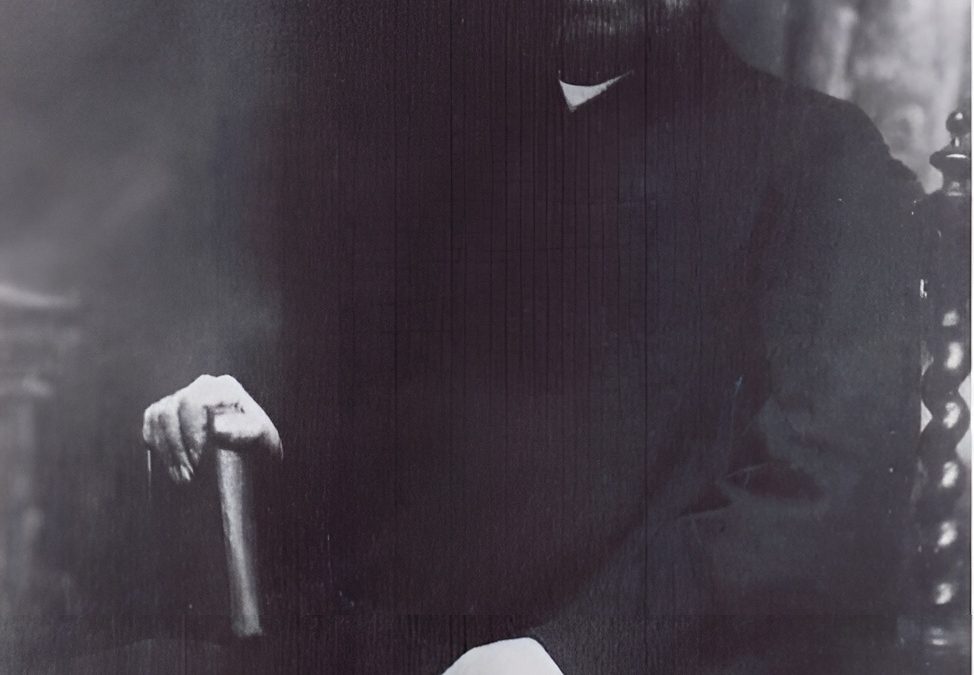
Shyamji Krishna Varma (4 October 1857 – 30 March 1930) was an Indian scholar, lawyer and nationalist who founded India House, the Indian Home Rule Society and the journal The Indian Sociologist in London in 1905. India House became the meeting place of a generation of young revolutionaries, and Varma, who financed them from his own fortune, was among the first to argue openly from abroad for complete independence from Britain.
Quick Facts
| Full name | Shyamji Krishna Varma |
| Born | 4 October 1857, Mandvi, Kutch (now Gujarat), India |
| Died | 30 March 1930 (aged 72), Geneva, Switzerland |
| Occupation | Scholar, barrister, journalist |
| Known for | India House, London; The Indian Sociologist |
| Education | Balliol College, Oxford (B.A., 1883); Inner Temple |
| Spouse | Bhanumati |
Early Life
Varma was born into a poor family in the port town of Mandvi and lost his mother early. A gift for Sanskrit took him to school in Bombay, where he impressed visiting scholars and became a follower of Dayananda Saraswati, the founder of the Arya Samaj, touring as a lecturer on the Vedas while still in his teens. He married Bhanumati, the daughter of a wealthy Bombay merchant.
Oxford and the Princely States
The Oxford Sanskritist Monier Monier-Williams invited him to England as his assistant in 1879. Varma entered Balliol College, took his degree in 1883 and was called to the bar at the Inner Temple, and he read papers at learned congresses in Europe. Back in India he served as diwan, or chief minister, of Ratlam and later held high office in Udaipur and Junagadh. A bitter dispute with a British official at Junagadh in the 1890s ended his faith in British fairness. He had by then made a considerable fortune through investments in cotton mills.
India House
He returned to England in 1897 and, influenced by the writings of Herbert Spencer, moved towards radical politics. In January 1905 he began The Indian Sociologist, a monthly “organ of freedom”, and the next month founded the Indian Home Rule Society. On 1 July 1905 he opened India House, a hostel for Indian students in Highgate, north London. He also endowed travelling fellowships for Indian graduates on condition that they would never accept service under the British government.
Among those who lived at or frequented India House were Vinayak Damodar Savarkar, Lala Har Dayal, V. V. S. Aiyar, Virendranath Chattopadhyaya and Madan Lal Dhingra. Varma himself advocated passive resistance and non-cooperation with the rulers more than violence, but he defended the right of a subject people to resist.
Exile
As the press and Parliament attacked him, he moved to Paris in 1907 and continued the journal from there. In 1909, after Dhingra shot an official of the India Office in London, India House was closed and the Inner Temple struck Varma off its rolls. Fearing extradition when Britain and France became allies, he settled in Geneva in 1914. Under the restrictions of Swiss neutrality he was largely cut off from Indian politics, and he spent his last years in isolation. He died in Geneva on 30 March 1930.
Legacy
He had arranged with the Geneva authorities to keep his and his wife’s ashes for a hundred years until they could be sent to a free India. They were brought home in August 2003 by Narendra Modi, then Chief Minister of Gujarat, and a memorial with a replica of India House, Kranti Teerth, was opened near Mandvi in 2010. In 2015 the Inner Temple posthumously restored him to the bar.
Frequently Asked Questions
When and where was Shyamji Krishna Varma born?
Shyamji Krishna Varma was born on 4 October 1857 in Mandvi, Kutch (now Gujarat), India.
When did Shyamji Krishna Varma die?
Died: 30 March 1930 (aged 72), Geneva, Switzerland.
What is Shyamji Krishna Varma known for?
Known for: India House, London; The Indian Sociologist.
Featured image: Shyamji Krishna Varma, undated photograph. Photo by an unknown photographer, licensed under CC BY 4.0, via Wikimedia Commons.



